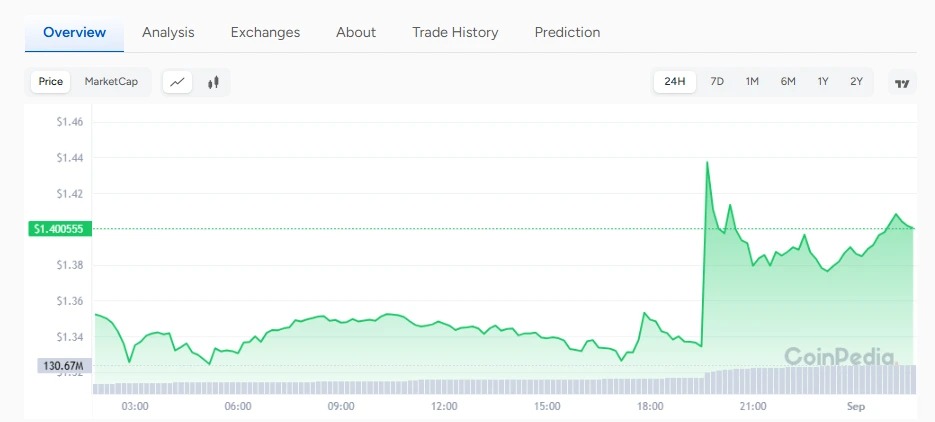


After briefly breaking above $81,000 last week, Bitcoin fell back and is currently hovering around $78,700. Market participants believe that whether this rebound in August can continue will depend on whether funds continue to flow into the ETF spot market, as well as whether U.S. economic data will further boost expectations for the Federal Reserve to raise interest rates in September.
ETF Cash flow has become the key at present
Analysts from Bitfinex stated that this round of gains did not show typical signs of overheating. The number of open Bitcoin contracts exceeded $55.6 billion, an increase of over 20% from the beginning of August, but the growth was relatively modest, and the basis level remained within a relatively mild range. This indicates that the current market trend is more driven by spot buying rather than rapid accumulation through high leverage.
The institution mentioned that $77,100 is a support level that deserves attention in the short term. If this level can be held, and at the same time, there is continued buying interest in the spot market, the overall market should still be able to maintain a relatively balanced state.
ETF Capital flow is another direct indicator for observing whether demand continues. From August 17th to 27th, US spot Bitcoin ETF recorded net inflows for 9 consecutive trading days, attracting a total of about $3.04 billion. However, last Friday, the capital flow turned into net outflows, with an outflow of about $201.9 million in a single day, and on that day, Bitcoin also fell below $81,000.
Despite single-day redemptions, these funds still recorded a net inflow of approximately $924.5 million last week, with a cumulative net inflow of about $2.8 billion in the previous two weeks. Looking at the products individually, IBIT under BlackRock saw outflows of about $33.4 million last Friday, while ARKB and BITB together had outflows of about $164.6 million.
$80,000 to $83,000 faces supply challenges
CoinEx Chief Analyst Jeff Ko believes that part of the momentum for Bitcoin's rebound in August came from the U.S. Treasury's repurchase operations, which pushed down yields and the dollar. At the same time, the market had accumulated a large number of short positions earlier on, which led to short covering.
However, he pointed out that this mechanical drive brought about by the squeeze has largely been released. Moving forward, the range of $80,000 to $83,000 is more likely to be a testing area for real buying interest, rather than just a technical resistance level. If new funds cannot continuously absorb the selling pressure in this range, the rebound may slow down.
Bitfinex also mentioned that large traders significantly reduced their positions during the upward trend. Since the end of June, whale addresses holding between 1,000 and 10,000 BTC have decreased by approximately 50,500 bitcoins in total; at the same time, institutional custodial holdings related to exchanges and ETF platforms have increased by about 59,100 bitcoins. This indicates that some of the selling pressure has been absorbed by institutional demand.
Analysts believe that funds entering regulated products are generally less likely to withdraw quickly due to a single macroeconomic event compared to short-term trading funds. Therefore, whether the ETF funds will continue to support the market remains an important clue for predicting subsequent trends.
The Fed expects to rein in risk appetite again
The main variable facing the market at present is the renewed tightening of interest rate expectations. Reports mention that after the speech at the Jackson Hole Conference, market bets on a Fed interest rate hike in September have significantly increased, with the implied probability rising to around 57%. At the same time, the yield on two-year U.S. Treasury bonds has returned to around 4.31%, and the dollar has also strengthened again.
BTSE, the Chief Operating Officer, stated that higher interest rates may mean a reduction in the liquidity that can flow into crypto assets. If Bitcoin is to maintain a sustained rebound, on one hand, it needs to continue to attract capital inflows from various ETF sources, rather than relying solely on IBIT; on the other hand, it also requires subsequent inflation data to ease, to reduce the pressure for the Federal Reserve to continue tightening its policies.
Next, employment and inflation data from the United States will become the focus of the market. Analysts are particularly concerned about the August non-farm payroll report, as it is the last key employment data before the Federal Reserve's September meeting. If the data continues to be weak, it may ease expectations for interest rate hikes; however, if inflation and employment remain resilient, concerns about liquidity in the market may continue to limit the upside potential for Bitcoin.