

Waymo has begun providing Robotaxi services to the public in Denver, San Diego, and Tampa, bringing the total number of commercial operation cities in the United States for this autonomous driving company, a subsidiary of Alphabet, to 14.
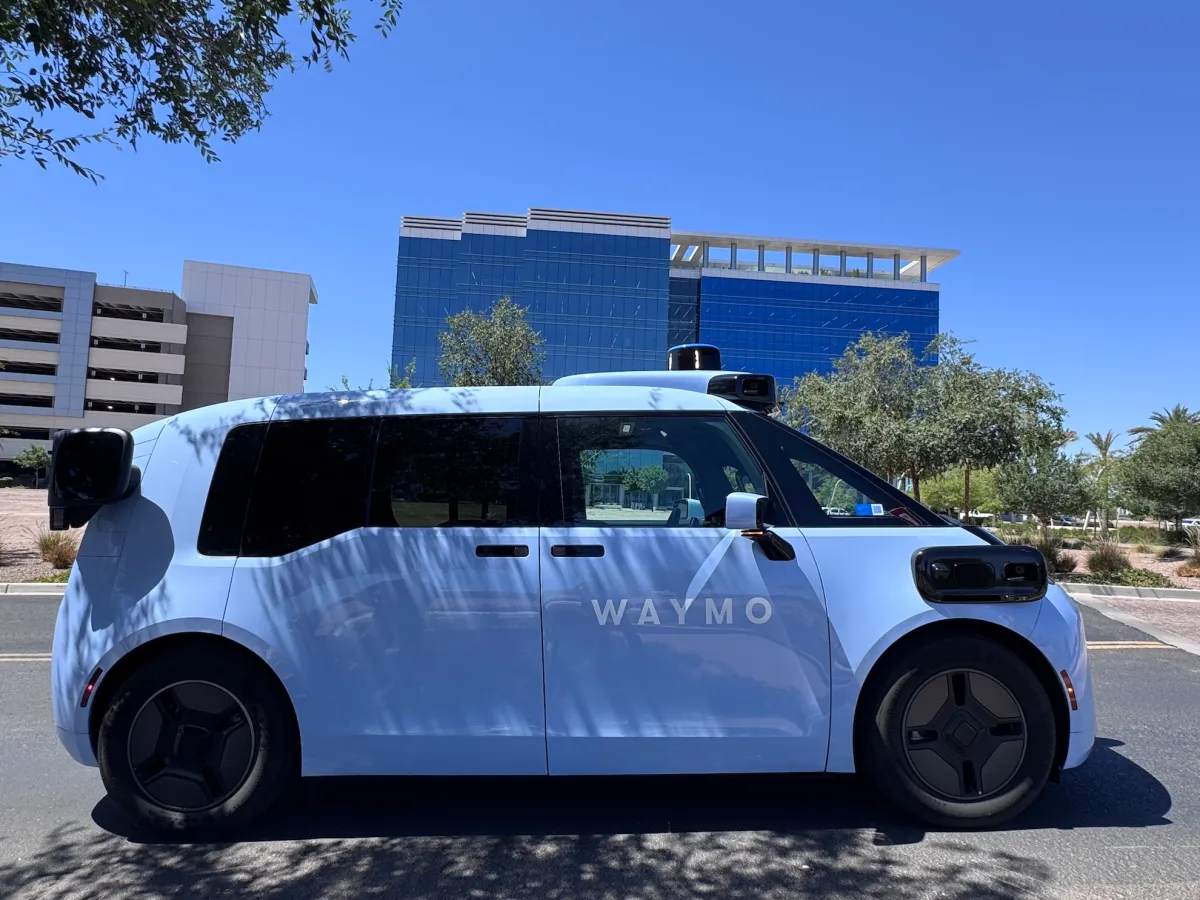
The company stated that these three cities will invite passengers in phases as per usual, gradually expanding the scope of opening up. With the launch of new markets, the number of autonomous driving fleets of Waymo has exceeded 4,000, including Jaguar I-Pace as well as a new type of small van named Ojai.
Competition with Tesla intensifies
This expansion comes at a time when market competition in the US Robotaxi is intensifying. Tesla is currently charging for its autonomous Model Y ride-hailing services in Austin, Dallas, Houston, Miami, Orlando, and Tampa. Although the service coverage in some cities is still limited, Tesla continues to add more vehicles and expand its coverage area.
The advancement pace of Waymo took shape earlier. After operating Robotaxi in Phoenix for several years, the company obtained the necessary permits for autonomous passenger transportation in San Francisco in August 2023. Subsequently, it gradually expanded its services to the entire road network of the Bay Area and entered Los Angeles in 2024.
Continuous expansion over the past 18 months
The real acceleration occurred in March 2025. Waymo At that time, through cooperation with Uber, Robotaxi services were launched for passengers in Austin. Subsequently, the company gradually entered cities such as Atlanta, Dallas, Houston, Miami, Nashville, Orlando, and San Antonio.
Last month, the Nevada Department of Transportation unanimously approved a permit that allows Waymo to operate up to 1,000 autonomous vehicles in Clark County over the next year, covering the area around Las Vegas. Tesla and Uber have also obtained similar permits.
Apart from the United States, Waymo also plans to launch Robotaxi services in London and Munich, indicating that its expansion is not limited to its home market.
New car models will be launched first in two cities.
Entering new markets usually follows a similar process: first, complete map collection and road testing; then, remove the safety officers; subsequently, open trials to employees, media, and invited users; and finally, gradually open it to paying passengers. The speed of opening up often depends on local regulatory requirements.
There is also one difference between Denver and San Diego this time: passengers will only be able to ride in the Ojai model. This small van, manufactured by Xpeng, is equipped with the Waymo sixth-generation autonomous driving system, with the goal of reducing manufacturing, operating, and maintenance costs.
Currently, the Ojai team has a scale of about 300 vehicles, which is significantly less than that of Jaguar I-Pace. However, it is expected that the Waymo model will expand rapidly, aiming to improve profitability while also expanding its business.