

UK government bond yields continued to rise, and markets began to re-evaluate the UK's budgetary space for October. Meanwhile, global bond sales continued, and rising oil prices also fueled concerns about inflation. After falling from a high of $81,000, Bitcoin remained around $76,500 on September 2.
UK 10-year yield reaches 18-year high
On September 2, the yield on UK 10-year government bonds rose to 5.268%, reaching its highest level in about 18 years. The yield on 30-year government bonds approached 5.9%, near its highest level since 1998, and the cost of borrowing for 5-year bonds was around 4.75%.
Rising bond yields mean falling bond prices, which also increases the cost for the government to refinance and issue new bonds in the future. For the UK Treasury, this will directly increase the pressure on debt interest expenditures, thereby reducing the room for budget maneuvering.
Pantheon Macroeconomics It is estimated that after the increase in borrowing costs, the UK government's fiscal buffer may have decreased from around £23.6 billion as stated in the spring statement to around £13 billion. This figure is not an official prediction by the UK Treasury or the Office for Budget Responsibility, but it reflects market concerns about the narrowing of fiscal room.
October budget pressure increases
The UK government plans to announce its budget on October 28th. The updated fiscal forecasts at that time will determine whether the government will need to raise taxes, cut spending, or adjust other policies in order to comply with fiscal rules.
The former Prime Minister Truss stated on that day that the continuously rising debt and borrowing costs might ultimately force the UK to take emergency spending reduction measures. However, this is her personal judgment, and the current government has not announced any emergency reduction plans.
The article mentions that the increase in UK debt costs will not be immediately reflected across all existing debt, but will gradually become apparent as old debts mature and new debts are issued. If spending on inflation-linked government bonds also increases simultaneously, fiscal pressure will further intensify.
Global bond markets drag down risky assets
The borrowing costs of the governments of the United States, Japan, Germany, and France have also recently risen. The yield on 10-year U.S. Treasury bonds has climbed to around 4.81%, the highest level since November 2023. Meanwhile, Brent crude oil briefly approached $95 per barrel, with markets concerned that conflicts between the United States and Iran could affect energy supply.
Rising oil prices will strengthen inflation expectations and may also reduce the room for major central banks to cut interest rates. With expectations of higher and longer-lasting interest rates, the attractiveness of fixed-income assets increases, while gold and Bitcoin, which do not generate interest income, are more likely to come under pressure.
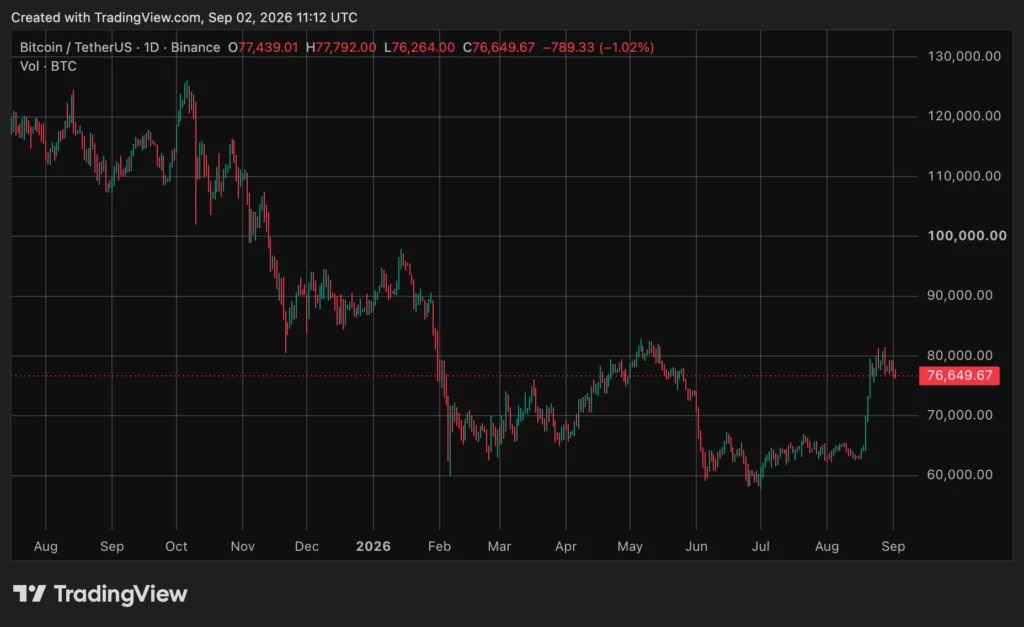
On September 2, Bitcoin traded at around $76,500, a decrease of about 2% in 24 hours, after previously rising from around $64,000 to above $81,000. Gold also fell from near $4,700 per ounce to around $4,300. The article argues that this indicates that in short-term market fluctuations, neither gold nor Bitcoin serve as a stable hedge against currency devaluation.