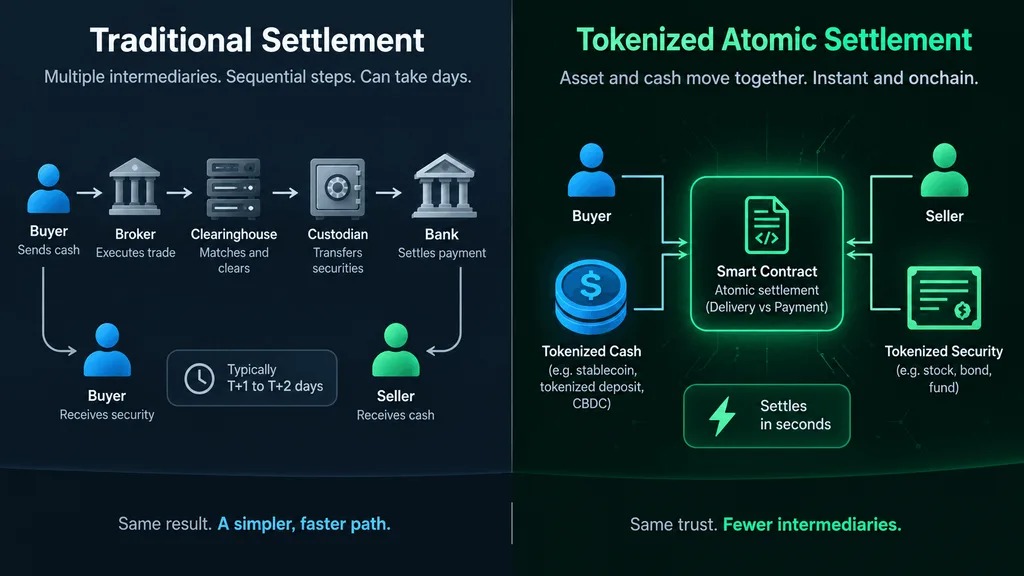







Tokenized stock trading is entering a larger scale phase. Data from Grayscale shows that in early August, the weekly spot trading volume in this market approached $3 billion, with Robinhood Chain, BNB Chain, and Solana accounting for the majority of the transactions.
This means that investors are increasingly obtaining exposure to the prices of traditional stocks through public blockchains. Unlike the previous landscape dominated by a single network, current tokenized stock trading has clearly shifted towards multi-chain parallelism.
Three public chains dominate the main transactions.
Grayscale pointed out in the latest research that Robinhood Chain, BNB Chain, and Solana are the three chains with the highest trading volumes for tokenized stocks currently. The trading infrastructure is mainly provided by decentralized protocols such as Uniswap, PancakeSwap, and Raydium.
Robinhood Chain is one of the new entrants that has seen relatively rapid growth. This network launched its public beta mainnet on July 1st, is compatible with Ethereum, and is built on Arbitrum technology, targeting financial services and the tokenization of real-world assets.
Robinhood indicates that eligible users can trade Stock Tokens through Robinhood Wallet. This covers over 120 countries and regions, with the specific scope of availability depending on the local jurisdiction. The system supports 24/7 trading and also allows users to integrate related assets into decentralized trading as well as potential lending and collateralization scenarios.
The scale of use on the chain has risen to over $110 million.
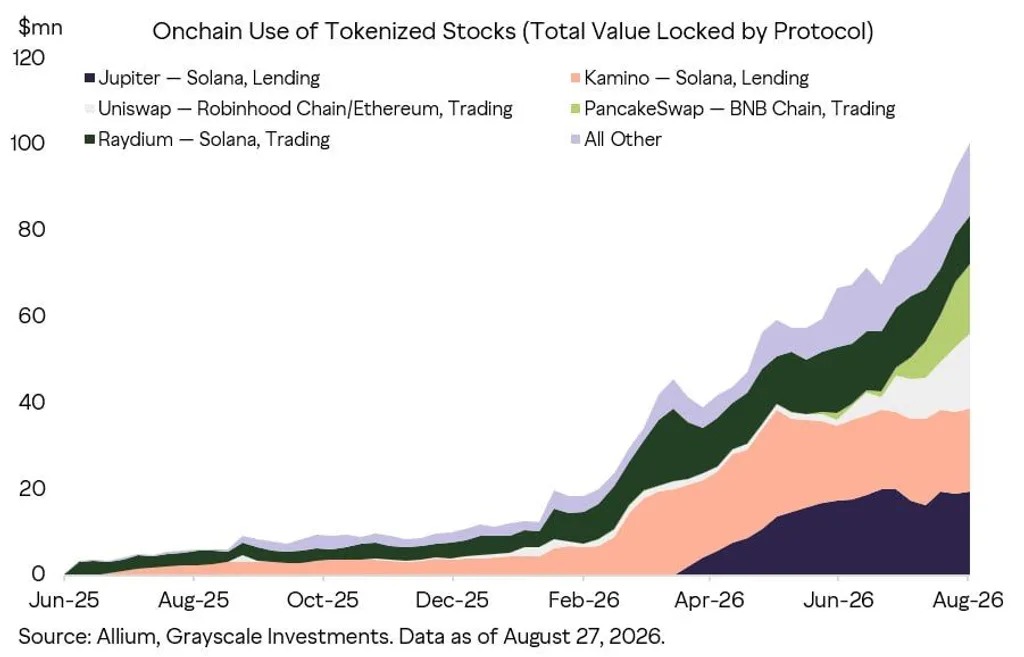
In addition to the growth in trading volume, the use of tokenized stocks in blockchain finance is also expanding. Grayscale data shows that the total locked-up value of protocols using tokenized stocks has risen to over $110 million, whereas for most of 2025, this figure was below $10 million.
One of the main protocols that drove early growth was the Kamino of the Solana ecosystem, and subsequently, Jupiter also became a new source of lending activities. At the same time, the trading platforms on Solana, BNB Chain, and Robinhood Chain also contributed to the overall expansion.
However, according to Grayscale, currently only about 5% of the market value of tokenized stocks is deployed in blockchain financial applications. This means that at this stage, the market is still dominated by buying and selling transactions, with lending, mortgages, and other uses still accounting for a limited proportion.
With a market value of about $3 billion, it is still smaller than that of tokenized funds.
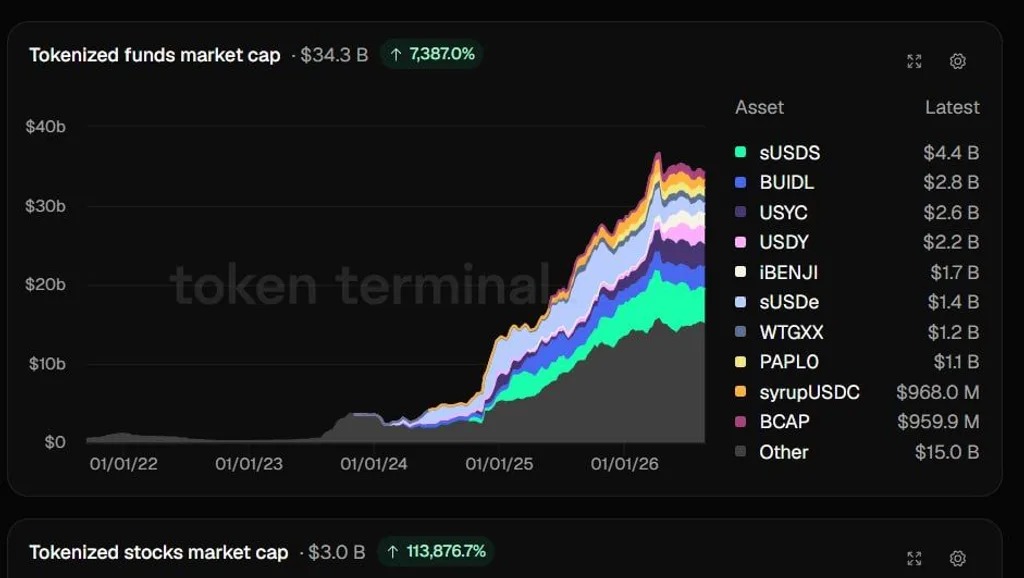
Token Terminal data shows that the current total market value of tokenized stocks is approximately $3 billion. In contrast, the scale of tokenized funds has reached $34.3 billion, with representative products including sUSDS, BlackRock's BUIDL, and USYC.
It is important to distinguish that the approximately $3 billion mentioned in Grayscale refers to the weekly trading volume, which reflects the scale of turnover within a week; whereas the $3 billion provided in Token Terminal represents the total value of tokenized stocks in the market. Although these two figures are close, they have different meanings.
At this stage, the growth of tokenized stocks is still mainly driven by trading demand. If more assets are subsequently used for collateral and lending, the role of this market in DeFi may further deepen.