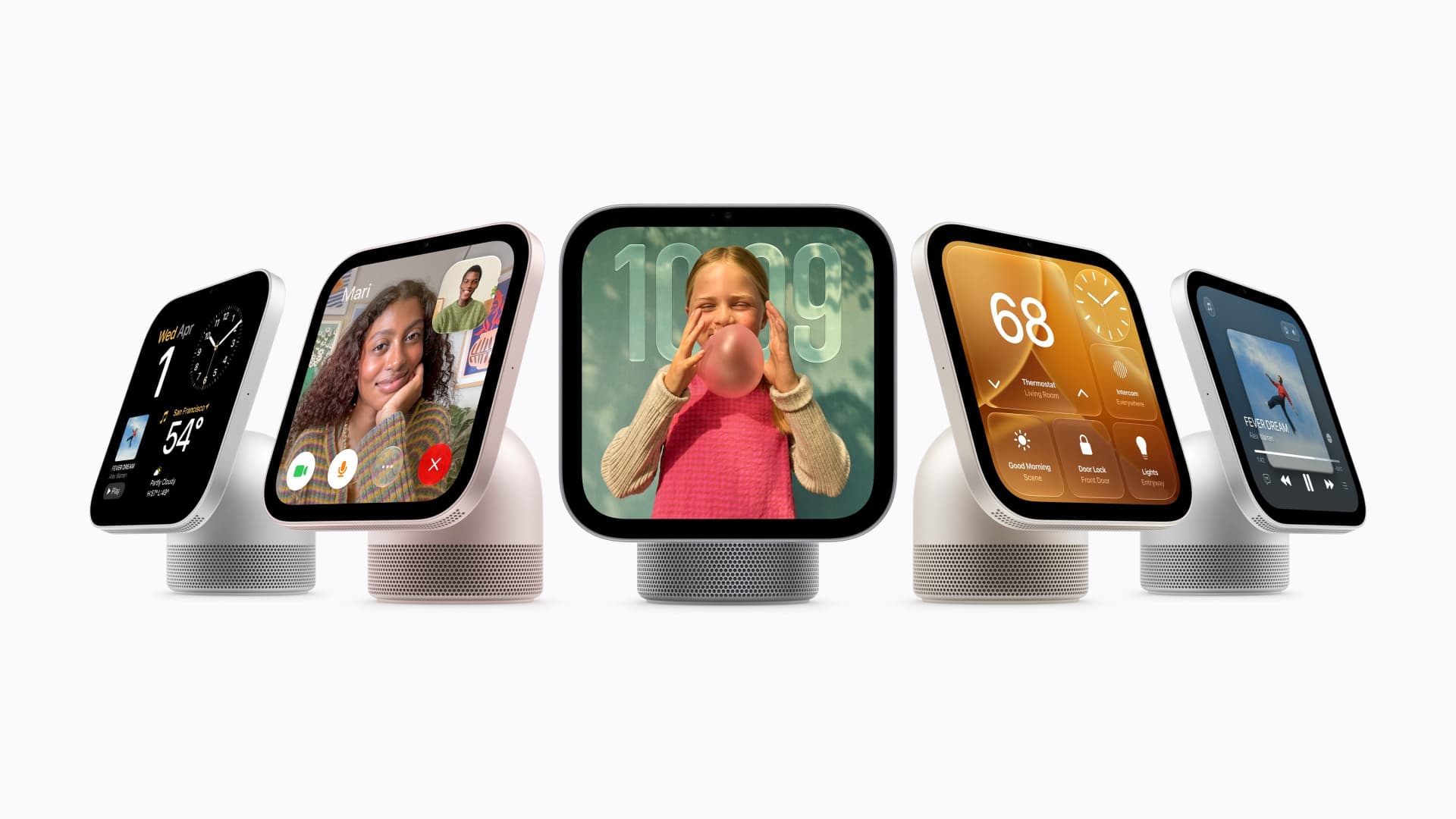
Apple is making another push in the smart home market. On Tuesday, the company released the long-rumored smart home hub HomeView, which can serve as a central control point for smart home devices and can also be used for FaceTime calls, playing music, watching videos, displaying photo slides, and more.
This new device, priced at $299, has an appearance that resembles a cubed version of the HomePod with a screen. The HomeView comes in two versions: one that can be placed on a desk top and another that can be mounted on a wall. The unit is 7 inches wide, with a single FaceTime camera on the front, and a microphone and speaker built into the base. There is no camera on the back.
Apple has pre-installed several of its own apps on the device, including Calendar, Messages, Photos, FaceTime, Notes, Reminders, Music, and Podcasts. This means that if users want to check their schedules, send messages, play music, or browse photos, they don't have to pick up a iPhone.
Apple believes this device is particularly useful in scenarios such as the kitchen. For example, someone cooking dinner can access recipes, watch videos, check the calendar, or initiate a FaceTime call without using their phone.
One of the more interesting aspects of this device is how it works in collaboration with different members of the family.
This central unit runs on Apple's updated Siri AI assistant and is capable of recognizing individual identities within the household. Once a person is identified, the screen displays information tailored to that person, such as messages, contacts, calendar appointments, reminders, and preferred applications. When another family member approaches the device, the interface automatically switches accordingly.
HomeView makes the competition between Apple, Amazon, and Google more direct, as both of the latter two companies already have mature smart display products: Amazon has the Echo Show series, while Google offers the Nest Hub.
However, Apple's history in the smart home field has been mixed. For example, the popularity of HomePod has not reached the level of its competitors' devices. This new hub provides Apple with an opportunity to combine home control with its own products and services, leveraging its broader ecosystem, in order to change this situation.
This device has been rumored for some time now, and related reports indicate that some of the delays are due to issues with Siri AI. It is reported that these problems have also affected Apple's broader smart home plans.
This may just be the first step in Apple's smart home layout. Bloomberg's Mark Gurman previously reported that Apple might eventually upgrade this concept further, launching a more advanced version equipped with a robotic arm. Such devices would be able to move displays and interact in a more tangible way.
Reservations are available from today, and the device will go on sale on November 13th. It is available in four colors: silver, starlight, rose pink, and deep space gray.