Google announced on Tuesday that applications generated using the “vibe coding” method can now run more conveniently on Android smartphones without the need to be publicly released on the Google Play store first. The new feature will allow users to launch their personal applications on their own devices using a standard Google account and Google Play, but these applications will remain completely private.
The background of this idea is that more and more people are trying to build their own applications using AI to meet their specific personal needs. However, in the past, if one wanted to use such applications on their Android device, it meant that they had to release them on Google Play, making them available to approximately 3 billion users in the Play store. As a result, many people have limited their "vibe coding" efforts to Web applications that can run on any device, rather than native Android applications.
Now, Google says that Android device users can use Google AI Studio to create applications through “vibe coding”, and then launch them for their own use.
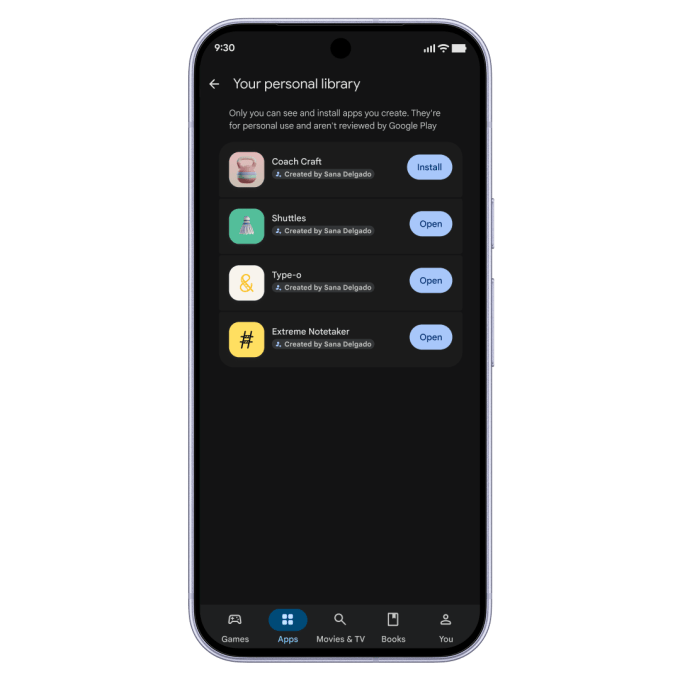
These applications still need to comply with the existing policies of Google Play, but this allows users to more directly attempt to build applications for Android.
This feature will initially be available to users over the age of 18 in the United States.
Google's Vice President and General Manager of the Developer Ecosystem, Sam Bright, stated at a pre-release media briefing on Tuesday: "This is why the future of applications on Google Play is personalized, secure, and built together by everyone – and this is also why Play is leading this transformation, from 'there's always an app that suits you' to 'this app is made just for me.' Our initial intention when we created Google Play was simple: to connect you with the apps you love. But from today on, we hope it's clear that Play has evolved into so much more than that."
Regarding the topic of the impact on application development with AI, Google also stated that it is working on creating a better way to curate Google Play experiences. For example, Google is using its own AI to create a personalized game recommendation engine called Game Finder. This feature will be launched first in English in the United States, and recommendations will be based on the content that users enjoy playing, combined with the insights Google has gained from its 1.2 billion players in the gaming community.
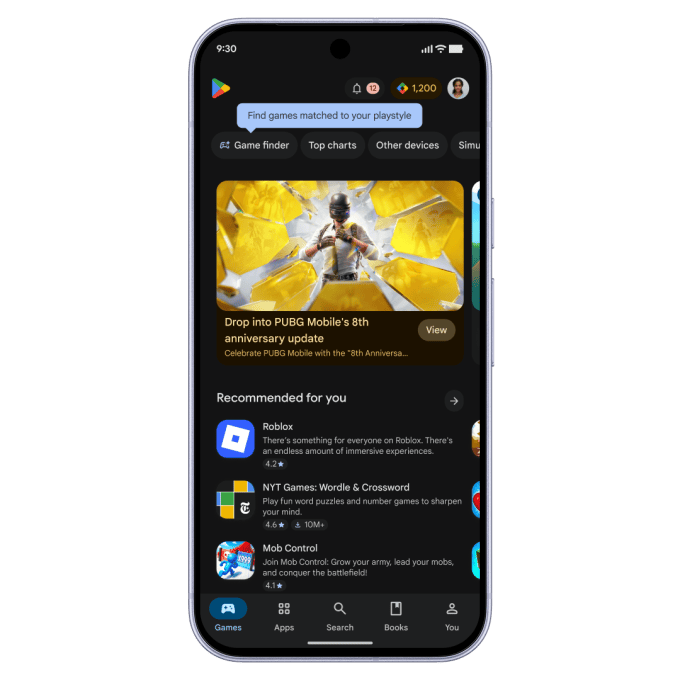
In addition, Google will also allow users to organize their own game lists, post game-related questions in the new Community Posts section, and participate in a series of game-related feature updates such as the 48-hour game challenge called Sprints.
In addition, the Ask Play assistant built into the Play store will also be updated to include a comparison feature, allowing users to see the key differences between similar applications. The applications and games on Google Play will also be more deeply integrated into the conversations on Gemini.