Key Points
- Semiconductor stocks erase a market value of $1.64 trillion
- NVIDIA, AMD, and Micron face increasing selling pressure
- Concerns about expenditures related to AI overshadowed the strong performance of chip manufacturers.
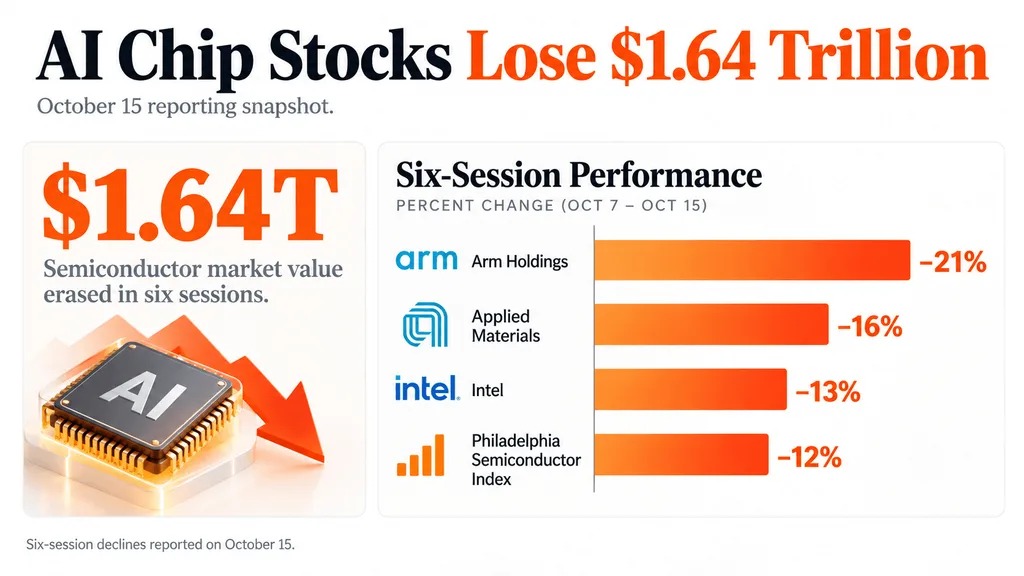
Due to concerns about artificial intelligence spending, corporate debt, and higher interest rates, one of the most severe sell-offs in the industry in 2026 occurred, with U.S. semiconductor stocks losing approximately $1.64 trillion in market value over six trading days.
The Philadelphia Semiconductor Index fell another 3.3% during trading on October 15. If this downward trend continues, the sector's cumulative losses could approach $2 trillion. NVIDIA, AMD, and Micron are among the main companies under pressure once again.
According to Reuters, despite semiconductor manufacturers still reporting strong demand, investors are re-evaluating the huge costs of building AI infrastructure.
Semiconductor stocks lost $1.64 trillion in value over six trading days.
The Philadelphia Semiconductor Index has fallen by approximately 12% in this recent round of declines, reflecting a widespread withdrawal of funds from companies that have benefited from the AI investment boom.
This round of selling off affected chip designers, storage manufacturers, and semiconductor equipment suppliers, indicating that investors are questioning the valuation levels throughout the industry's supply chain.
Market data cited by Bloomberg shows that over these six trading days, Arm Holdings fell approximately 21% in total, Applied Materials fell 16%, and Intel fell 13%.
The above data corresponds to the six trading days covered by the reports as of October 15th. The subsequent performance of individual stocks may differ from their trading performance thereafter.
AMD tumbled another 5.7% on October 14, recording the largest single-day percentage decline since August 5.
This pressure continues the broader wave of selling off AI chips. Even though ASML announced strong quarterly results and there is still a persistent demand for advanced manufacturing equipment, it was not able to avoid being affected.
AI Concerns over spending and debt trigger a sell-off in semiconductors
This round of decline reflects that the market is becoming increasingly uncertain about whether AI infrastructure spending can generate sufficient financial returns to justify its substantial costs.
Large technology companies are investing tens of billions of dollars in computing power infrastructure, but data center developers often rely on substantial borrowing to finance construction and equipment purchases.
Higher borrowing costs may ultimately affect chip manufacturers, especially when their largest customers postpone infrastructure projects or cut back on planned equipment purchases.
The U.S. inflation report for September has added another layer of concern. Consumer prices rose by 3.7% year-on-year, raising market expectations that the Federal Reserve may continue to maintain restrictive monetary policies or even raise interest rates again.
TSMC's financial report shows that the demand for AI has not disappeared.
Despite the market facing selling pressure, semiconductor companies are still reporting considerable revenue and profit growth.
TSMC's quarterly financial report shows that its net profit has increased by 69%, and it expects revenue in the fourth quarter to be between $52.3 billion and $54.3 billion.
This performance indicates that the demand for advanced computing remains strong, despite investors becoming more skeptical about the industry's long-term profitability.
This distinction is particularly important for AI infrastructure stocks, as contracted revenues and operational growth do not necessarily translate into positive cash flows after accounting for financing costs.
At present, this round of semiconductor sell-offs seems to reflect a re-pricing of the growth expectations for AI rather than evidence of a significant collapse in chip demand.
Next, the financial reports to be released by major cloud service providers and chip manufacturers will help determine whether spending remains strong enough to support the currently high valuations in this industry.
Author: Emir Abyazov