Federal Reserve Chairman Powell refused to give a clear signal on further interest rate hikes, allowing the market to stabilize after this week's shock from inflation data. Global stock markets generally rose, while the US dollar came under pressure and declined.
Traders have reduced their betting probability of a Fed interest rate hike this month from over 25% on Thursday to 15%. The US dollar index fell by 0.1%, following a previous trading day that had already seen a cumulative decline of 0.3%, marking the largest single-day drop in over a month.
DBS Bank Macroeconomic Strategist Wei Liang Chang pointed out: "The market is relieved by Walsh's reiteration that AI will boost productivity in the medium term, which helps to ease inflation expectations and reduce concerns about consecutive interest rate hikes."
S&P 500 index futures rose 0.2%, Nasdaq futures rose 0.18%, and Dow Jones futures rose 0.19%. Tesla's stock price increased by 4.7% before the market opened in the U.S. The European Stoxx 50 index rose 0.4%, Germany's DAX index rose 0.5%, France's CAC 40 index rose 0.3%, while the UK FTSE 100 index fell slightly by 0.4%. South Korea's Seoul Composite Index closed up 2% at 5,668.05 points, Japan's Nikkei 225 index rose 1.4% to 65,324.29 points; Japan's Tosei Index rose 1.7% to 4,066 points.
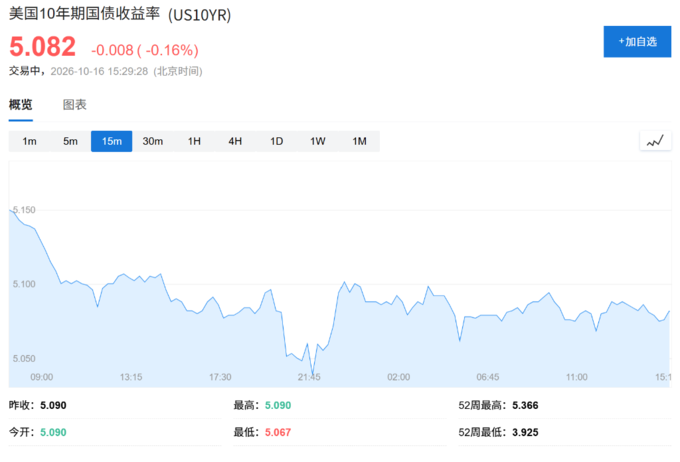
The yield on 10-year U.S. Treasury bonds rose by 3 basis points to 5.09%; the yield on 10-year Japanese government bonds rose by 4.5 basis points to 2.935%; the yield on 10-year Australian bonds rose by 2 basis points to 5.23%. The U.S. dollar index fell by 0.1%. Gold prices remained relatively stable at $4,172 per ounce. Brent crude oil fell by 0.7% to $105.20 per barrel; the decline in WTI crude oil futures expanded to 1%, reaching $96.95 per barrel.
Rising interest rate expectations ease, providing a breather for risky assets
Saxo Markets Chief Investment Strategist Charu Chanana stated: "Wash's refusal to commit to another interest rate hike led to the closing of some bets on a Fed rate hike. After the release of strong inflation data, he said 'I will not predict the outcome of the meeting,' a statement that put pressure on the dollar."
The Federal Reserve raised interest rates by 25 basis points in September, marking the first rate hike since 2023, and the decision was unanimously supported by all 19 policy makers. Most members also expect further rate hikes within the year. In the weeks that followed, several officials reiterated the potential need for further tightening, but emphasized that there is sufficient time to collect economic data before making further decisions.
Chip stocks stop falling, and markets in Asia and Europe generally rise.
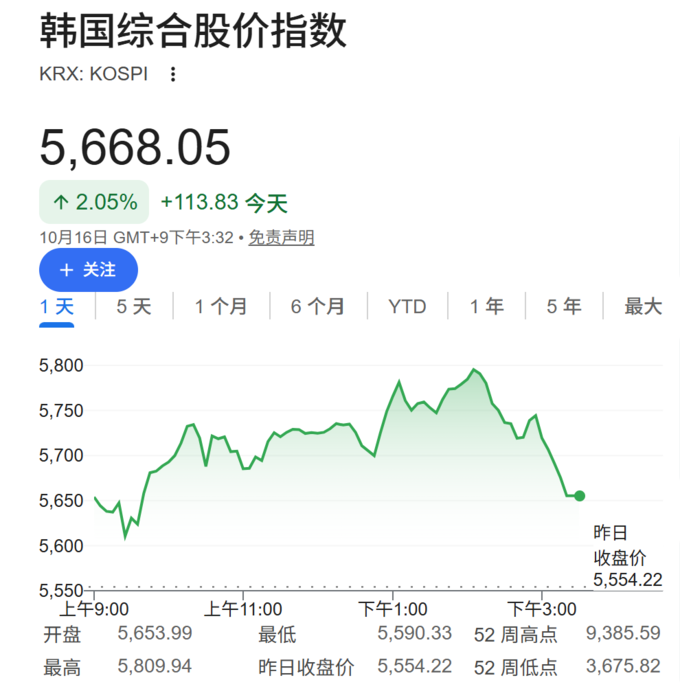
Before Walsh's speech, global stock markets had already begun to rise due to a slowdown in the sell-off of chip stocks. In the Asian markets, Samsung Electronics and SK Hynix both rose by more than 4%, driving the South Korean Kospi index up 2% to close at 5,668.05 points, rebounding from its lowest closing price since April on Thursday. The Nikkei 225 index rose 1.4% to 6,532.49 points; the Japanese Tosei index rose 1.7% to 4,066 points.
The European markets also opened on a strong note, with the Stoxx 50 index rising by 0.4%, Germany's DAX index rising by 0.5%, France's CAC 40 index rising by 0.3%, while the UK FTSE 100 index fell slightly by 0.4%.
It is worth noting that the Indonesian stock market tumbled by more than 11% at one point during trading, recording the largest decline since January 1998. The reason was that MSCI announced that Indonesia would be removed from the emerging markets index, and the Indonesian rupiah also weakened slightly.
The sustainability of the rebound is in doubt, and the risks concentrated in the technology sector still exist.
The gold price remains relatively stable at $4,172 per ounce. Brent crude oil fell by 0.7% to $105.20 per barrel. High oil prices continue to support inflation expectations; since the outbreak of conflicts in the Middle East, oil prices have been a significant factor contributing to the persistent high levels of inflation in the United States.
Whether this round of stock market rebound can continue depends to some extent on whether the upward trend can spread from the technology stocks that have led most of this year's gains to a wider range of sectors. This week's sharp fluctuations have exposed the risk of the market being overly dependent on AI concept stocks, and the participation of a broader range of sectors will help to reduce this concentration risk.
Oriental Securities strategist Ryuta Otsuka stated, "At present, it seems to be a technical rebound, and the overall market sentiment has calmed down somewhat." He also reminded that next week, as investors continue to track financial report data and 'seek bottoming out,' market volatility may still remain relatively high.