Good morning. I always make time to read a new piece from Shawn Tully, and today is no exception.
My renowned colleague from Fortune – who has written about a wide range of figures from Donald Trump to the Pope – has now turned his attention to investors’ views on Anthropic IPO. A venture capitalist told him, “Anthropic can definitely slow down its pace and still retain tremendous value.”
This venture capitalist predicts that IPO of Anthropic will exceed SpaceX to become the largest IPO in history; for the reasons, click here to read more. Today's tech news is as follows, wishing you a pleasant weekend. —— Andrew Nusca
Have any ideas? Suggestions? Important clues? Send me an email.
Headline News
Broadcom CEO Hock Tan: AI Investors "have no idea what they're actually investing in"
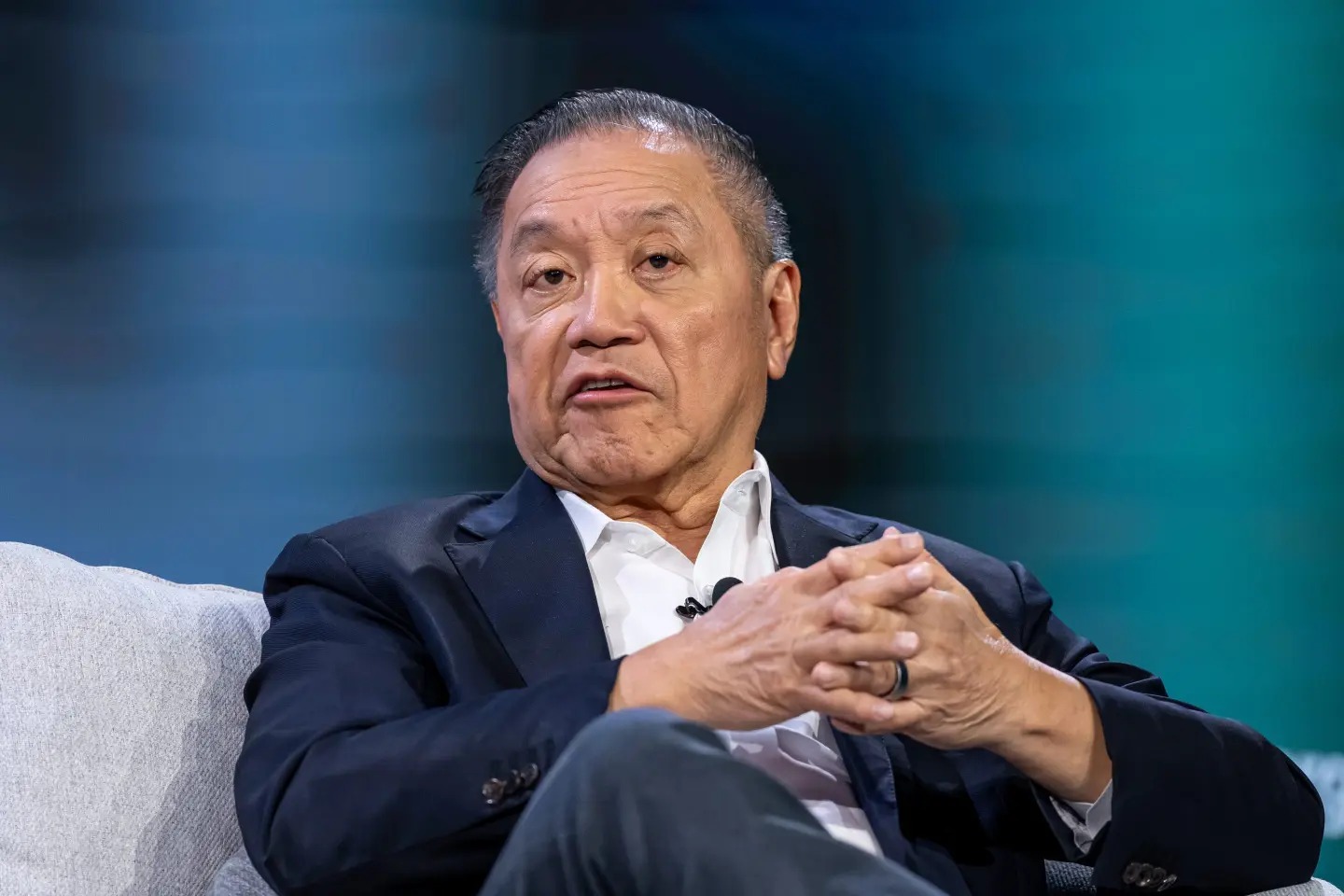
Hyper-large-scale cloud service providers are investing billions of dollars in data centers, and Broadcom, which designs and customizes AI chips for them, has always been one of the biggest beneficiaries. Since the end of 2023, the company has achieved approximately $68 billion in AI semiconductor revenue.
But on Monday, Broadcom CEO Hock Tan compared many investors attracted by the AI craze to gamblers and questioned the economic viability of the AI laboratory; Wall Street is debating whether the AI bubble will burst.
It is alleged that he stated at the DBS Asia Future Forward Conference held in Singapore: "Many investors have no idea what they are actually investing in." He said that they "set extremely aggressive expectations, only to find out that it's almost as if they were in a casino."
Broadcom provides the necessary hardware support for the system construction of the cutting-edge AI laboratory. However, Broadcom can profit by selling chips, while the AI laboratories that purchase computing power still have to find enough paying customers to cover the costs of model development and operation.
The challenge lies in transforming demand into sustainable revenue. Annualized revenue is an extrapolation of the company's current sales pace over a full year, but during that period, the laboratory still has expenses to cover. Taking OpenAI as an example, the company expects that training expenses alone this year will exceed $25 billion.
Tan said, "Currently, it is still losing money because they have spent a lot on training. So to be honest, this doesn't really indicate anything at this point, except that there is significant potential for revenue growth by providing cutting-edge generative AI models."
In addition, Tan also criticizes the fervor of the business community towards AI as being a "waste of money" on purchasing token to test AI, rather than focusing on identifying where the use of AI would truly generate returns. He compares this to children throwing in game coins into arcade machines only to end up with nothing in return.
He said, "When you were a child, you went to the video game arcade and your parents gave you 10 dollars in tokens; you spent it all in 10 minutes, yet you learned nothing in return. That’s exactly what’s happening in companies today."
His concerns resonate with a recent McKinsey survey on the return on investment of AI. Although 80% of respondents stated that AI improved their personal productivity, only 37% said that it contributed to the EBITDA of their organizations. Approximately one-fifth of the respondents indicated that AI related operating expenses, including token costs, actually limited their organizations' ability to utilize this technology. —– Mia Osmonbekov
Blind box
Today, the gaming industry is a multi-billion-dollar sector, and we believe that AI will turn it into a trillion-dollar industry.
Click here to read the full article.
Overview
- Accenture will limit the expenses of Anthropic Claude to $29 per employee per month.
- JPMorgan prevents Meta and other external AI proxies from taking action against customer accounts.
- A former federal official stated that Marc Andreessen's favorite AI policy is "no policy at all."
- Eight states in the United States have filed lawsuits against OpenAI, accusing ChatGPT of harming children and lying to adults.
- Amazon launches new AI wearable devices: a wristband for $75 and a mobile phone accessory for $100.
- TSMC is currently in talks with Elon Musk about joining his “Terafab” campus near Houston.
- Who funded Trump's White House ballroom for the tech community? Apple and Nvidia each donated 25 million dollars, Microsoft and Palantir each donated 10 million dollars, and Amazon and Meta each donated 5 million dollars.
- A former Tesla executive raised $45 million in an attempt to challenge China's dominant position in the battery industry.
Final Strike

Look: What will the Sony Walkman look like in 2026? How much does it cost? Just $5,900.