News from the IT community on October 17th: Microsoft announced on October 8th that its Microsoft 365 font library has included the Michelangelus font. This font is designed inspired by the handwriting of the Renaissance master Michelangelo, transforming the structure, rhythm, and aesthetics of his writing into a clear and everyday-useable font.
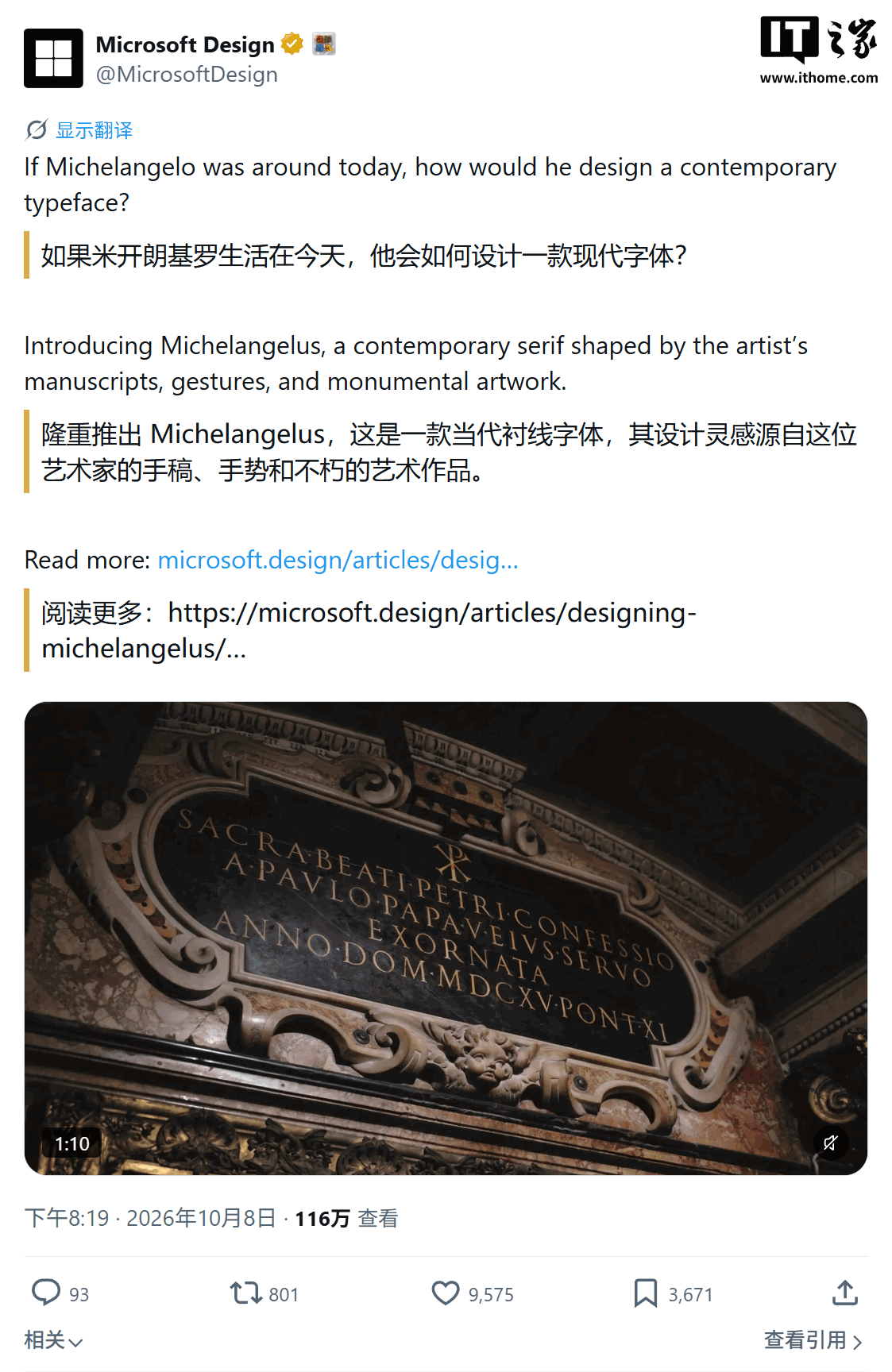
According to a blog post cited by IT, to commemorate the 400th anniversary of the consecration of St. Peter's Basilica in Rome, St. Peter's Factory, which is responsible for maintaining the church, collaborated with the Italian design firm studiogusto to transform Michelangelo's handwriting into a modern digital font called “Michelangelus”.
Michelangelo Buonarroti ( Michelangelo Buonarroti, 1475–1564) was one of the most representative artists of the High Renaissance in Italy, embodying the talents of sculptor, painter, architect, and poet. His works are renowned for their grand scale, precise anatomical depiction of the human body, intense emotional tension, and religious spirituality, and have had a profound influence on the history of Western art.
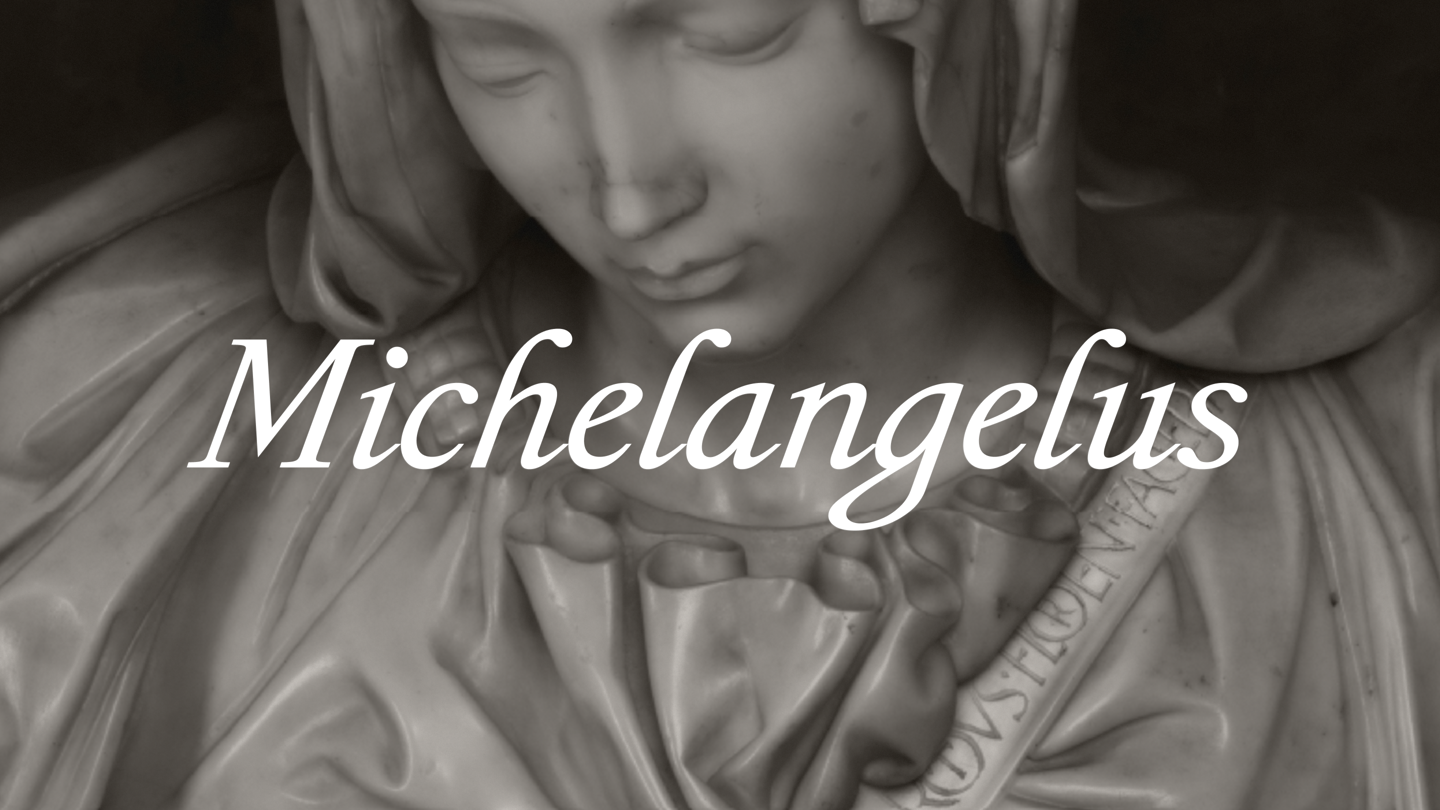
The Microsoft 365 font library currently includes Michelangelus. Users can download it from the official Microsoft website for use in digital content, printed materials, and interior signage in churches, among other applications.
The design team delved into the Vatican archives to study Michelangelo's original manuscripts, extracting the geometric patterns, spacing techniques, and writing rhythms from his handwriting. The lowercase italic letters were primarily derived from Michelangelo's own handwriting; the regular and uppercase letters were based on his signature carved on the "Pietà," as well as some inscriptions within St. Peter's Basilica.
Since no digital handwritten samples left by Michelangelo have been found, the digital font shapes are inferred from letter forms; for example, the number "1" is based on the letter "I." The entire font set includes four styles: regular, italic, bold, and bold italic, with each style containing more than 500 characters.
refer to
Click to visit Microsoft's Design blog for more details.