Waymo announces its official entry into the Canadian market, with Toronto (the capital of Ontario), Canada's largest city, as the first destination. It is expected to provide driverless ride-hailing services to the public in 2028.
Waymo, Co-CEO Tekedra Mawakana, stated that entering Canada is an important milestone in the company's global expansion process. To support operations in Toronto, Waymo has reached a partnership with Element Fleet Management, which is headquartered in Toronto. The latter specializes in intelligent fleet management and mobility solutions and will provide Waymo with fleet management services covering the entire operational process.
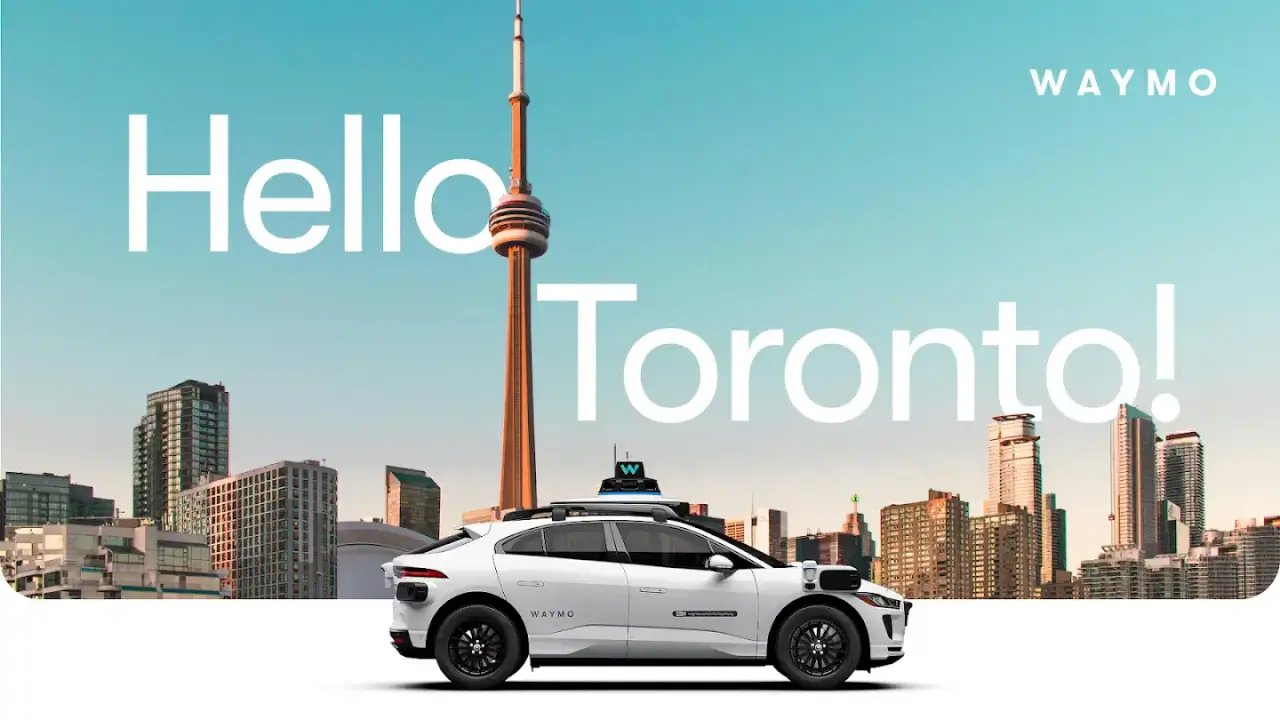
Waymo states that before official operation, the company will collect road information locally, map out street networks, and test the performance of vehicles in real traffic environments. This phase is aimed at helping the Waymo Driver autonomous driving system to adapt to the road layouts and driving conditions of different areas in Toronto, in preparation for future driverless services.
In terms of safety, Waymo emphasizes that its autonomous driving system is capable of adapting to various weather conditions and has the potential to provide new options for Toronto's existing public transportation and mobility systems. According to data published by Waymo, the company's autonomous driving system has accumulated a driving distance of over 400 million kilometers. Compared to human drivers, in the cities where it is in operation, the number of collision accidents resulting in serious injuries or more severe consequences has been reduced by 95%, meaning that the incidence of such accidents is about one-twentieth that of human drivers.
However, the aforementioned safety data comes from the statistical results published by Waymo itself, and actual performance will still be affected by factors such as the area of operation, road conditions, and the methodology of statistics. As the testing work in Toronto unfolds, whether Waymo can successfully adapt to the local traffic environment and open services to the public as planned in 2028 remains to be seen.