AI saw a reversal on Monday. The Philadelphia Semiconductor Index rose by more than 3% in a single day, before the gain narrowed to a 1.6% increase by the close. The panic of "AI capital spending peaking" that had previously enveloped the market was re-evaluated as several Wall Street analysts continued to be optimistic about the fundamentals.
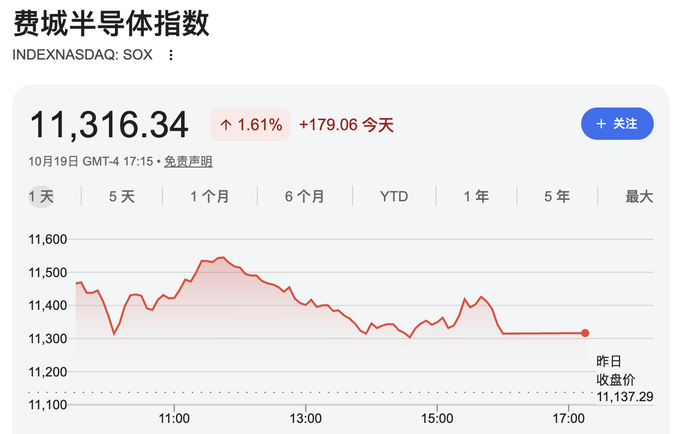
Counterattack to cover the hard-hit areas from last week. Sandisk rose by 5.3%, SK SK Hynix ADR rose by 4.7%, Micron rose by 3%, Intel rose by 2.4%; South Korea's KOSPI index reversed sharply with a V-shaped recovery, rising by 1.76%, and Samsung Electronics pulled back from a loss of over 4% in the morning session to close up 1.16%.
Goldman Sachs raised its rating on CoreWeave from “neutral” to “buy” on Monday, believing that after the significant decline, the stock’s valuation has become attractive.
Star technology analyst Dan Ives cited CoreWeave's backlog of orders at around $104 billion by the end of the second quarter, indicating that the 'committed customer promises' on the demand side have not wavered; UBS Wealth Management CIO also raised its global AI capital expenditure forecast for 2026 to $900 billion, a year-on-year increase of 84%.
Goldman Sachs raises rating of CoreWeave to 'Buy': Debt concerns are overstated
Goldman Sachs raised its rating on CoreWeave from “neutral” to “buy”, sending a clear bullish signal for the cloud computing company after it experienced sharp fluctuations due to debt issues.
Last week, the stock price of CoreWeave tumbled by 25% in a single week, recording the largest weekly decline since November last year. The trigger for this round of selling was when the company's bond prices dropped to levels that usually indicate financial difficulties, and at one point during the trading day, the cost of bond default protection soared to a record high. On Monday, the stock price surged by 7.4% during trading, but then turned down, closing with a loss of 0.4%.
Goldman Sachs analyst Gabriela Borges admitted that there are reasonable concerns in the market about whether and at what pace CoreWeave will be able to raise funds for the next phase of growth, but believes that the stock price valuation has become attractive after the significant decline.
In her research report, she wrote: 'We estimate that the blended debt cost of CoreWeave could rise by 100 to 200 basis points, but it is highly unlikely to exceed this range. This actually sets an upper limit for the increase in the weighted average cost of capital ( WACC ), ensuring that the equity return structure remains attractive.'
Borges further pointed out that the company's internal rate of return ( IRR ) is 'expected to show an upward deviation' over the next 24 months, due to the current tight supply, and that CoreWeave has a differentiated competitive advantage over other emerging cloud service providers in terms of performance and cost indicators, as well as the execution of new capacity expansion.
Goldman Sachs has lowered the target price of CoreWeave from $139 to $106, but even so, it still represents a potential increase of over 40% compared to the stock's closing price last Friday. According to Bloomberg, current analysts' average target price for CoreWeave is $135.23, implying a potential increase of about 120%.
Multiple Wall Street analysts are bullish on the future market.
As of last Friday, the Philadelphia Semiconductor Index closed down for eight consecutive trading days, setting a new record for the longest streak of declines since 2008, with a cumulative decline of over 13% and a market value evaporating by approximately $2 trillion.
Moor Insights & Strategy founder Patrick Moorhead said bluntly: "I think this is just another round of panic... Because the increase in AI transactions is so large, people are now looking for reasons to sell, not reasons to buy."
Dan Ives compared this sell-off to the “SaaSpocalypse” moment in the AI infrastructure sector, and expects that after the panic subsides, the upward trend driven by fundamentals will continue. He stated that CoreWeave had approximately $104 billion in backlogged orders at the end of the second quarter, which are confirmed customer commitments rather than indicative demand.
UBS Wealth Management's research report provides support from the perspective of total capital expenditure. It has raised its forecast for global AI capital expenditure in 2026 to $900 billion, a year-on-year increase of 84%; it is further expected to rise to $1.2 trillion in 2027, a year-on-year increase of 33%. The report states that the direct trigger is the recent overall increase in costs along the AI server supply chain.
Market divergences still exist; pay attention to short-term liquidity risks in the United States.
Bank of America strategist Michael Hartnett previously suggested that in the coming weeks, risk aversion may dominate the market as investors seek to avoid the volatility brought about by rising interest rates, the U.S. mid-term elections, and AI thematic trading.
CICC pointed out in its report "The United States in the 'Cotton Candy' Era AI" that the short-term liquidity risks in the United States cannot be ignored, and there is a possibility of liquidity tightening exceeding expectations. Once this occurs, it could affect global markets, and concerns about the sustainability of capital expenditures of AI companies may also increase accordingly.
Huaxin Securities pointed out that for the short term, one should be cautious about U.S. stocks and focus on defense. In the past week, trading of AI has significantly cooled down. Healthcare, essential consumer goods, and utilities can be considered as temporary defensive investments.
Guolian Minsheng believes that inflation in the United States has exceeded expectations, driving up U.S. Treasury yields. Coupled with the slowdown in revenue growth in the third quarter of 2026 as indicated by Anthropic, and the widening credit spreads of computing power operators such as CoreWeave, concerns about the sustainability of AI's capital expenditure and return on investment have intensified. In the short term, high-leverage and high-valuation assets may continue to face pressure.