


Converse accounts for only 2.5% of Nike's sales, yet last quarter it was responsible for 20% of the company's sales decline.
Two years after Elliot Hill ( Elliott Hill ) took on the role of CEO at Nike, this company, with a history of 118 years and producing Chuck Taylor, has become a major drag on Nike's recovery plan. Nike's recovery has not truly taken shape, with Quiksilver's sales declining by 28% in the latest quarter, and analysts have also openly speculated whether Nike will continue to keep it in its portfolio.
Converse's Chuck Taylor high-top shoes have become popular and then faded out several times over the past few decades, but today their vulcanized rubber soles and thick, stiff shoe designs no longer conform to current trends. The brand is currently going through an exceptionally long and deep downturn.
Over-reliance on a single style
In 2003, Nike acquired Converse for $305 million, seeing the great potential to revive this iconic brand. Converse had dominated the sports shoe market for decades, but by the 1990s it was in trouble and eventually filed for bankruptcy protection in 2001.
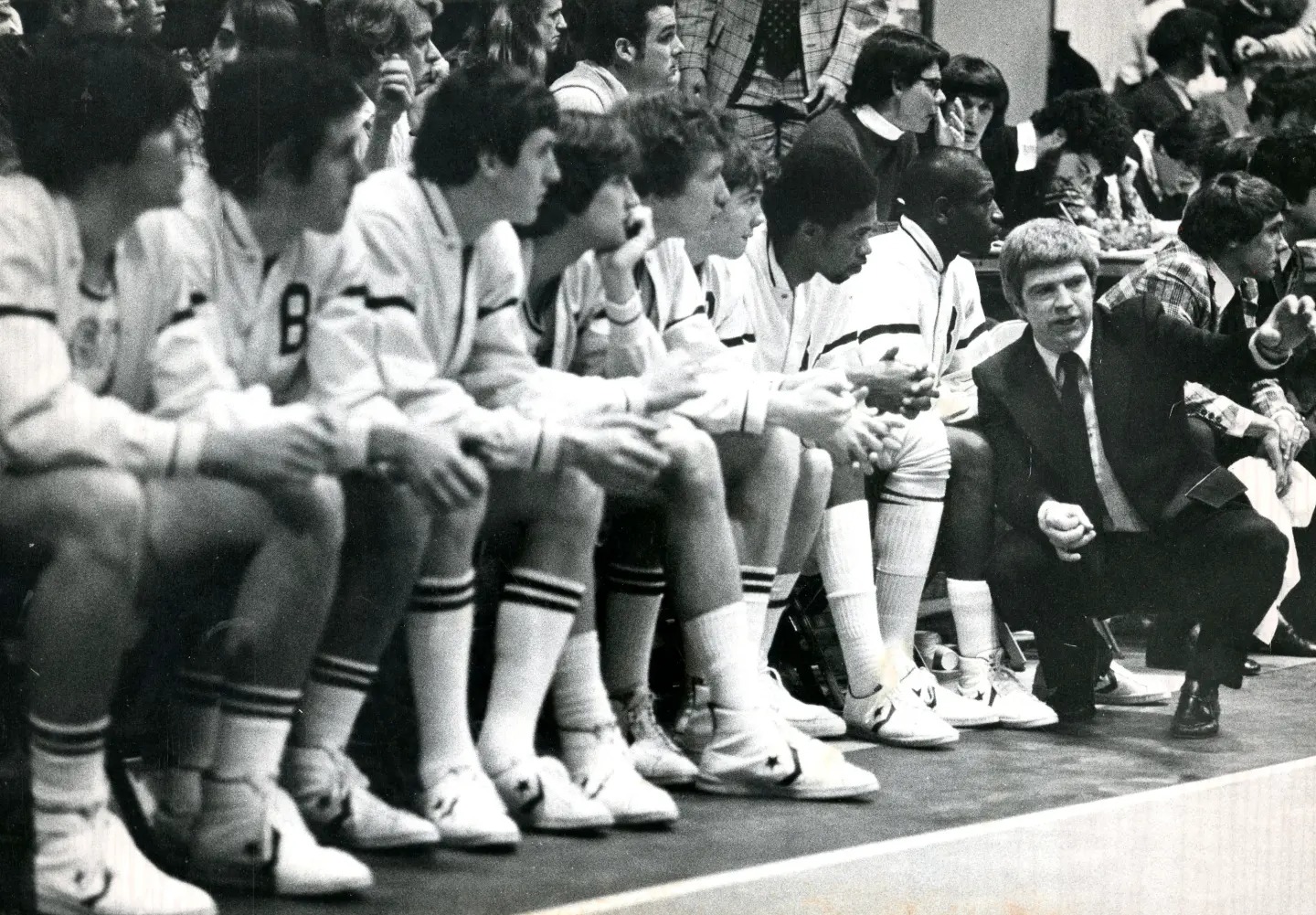
Converse initially started out as a rubber shoe manufacturer in 1908, with early products including rubber-soled shoes and overshoes suitable for winter wear. In 1916, the company produced its first basketball shoes, and the following year it launched the Converse All to Star models. This style became the first real hit in the emerging sports shoe industry. In 1932, Converse introduced a re-designed version by Chuck Taylor (Chuck Taylor), a semi-professional player who also worked as a sports shoe salesman for the company. Since then, this shoe has been named after him and also featured an "All-Star" ankle tag. Several generations of athletes have worn this style, from Kurt Cobain (Kurt Cobain) to Charli XCX.
But today, Converse is in its most severe downturn since the 1990s. Converse reached its peak in 2023 with sales reaching a record high of $2.43 billion; however, by the previous fiscal year, this figure had been cut in half to $1.17 billion. If the current downward trend continues for the remainder of this fiscal year, sales will fall below $1 billion for the first time since 2010.
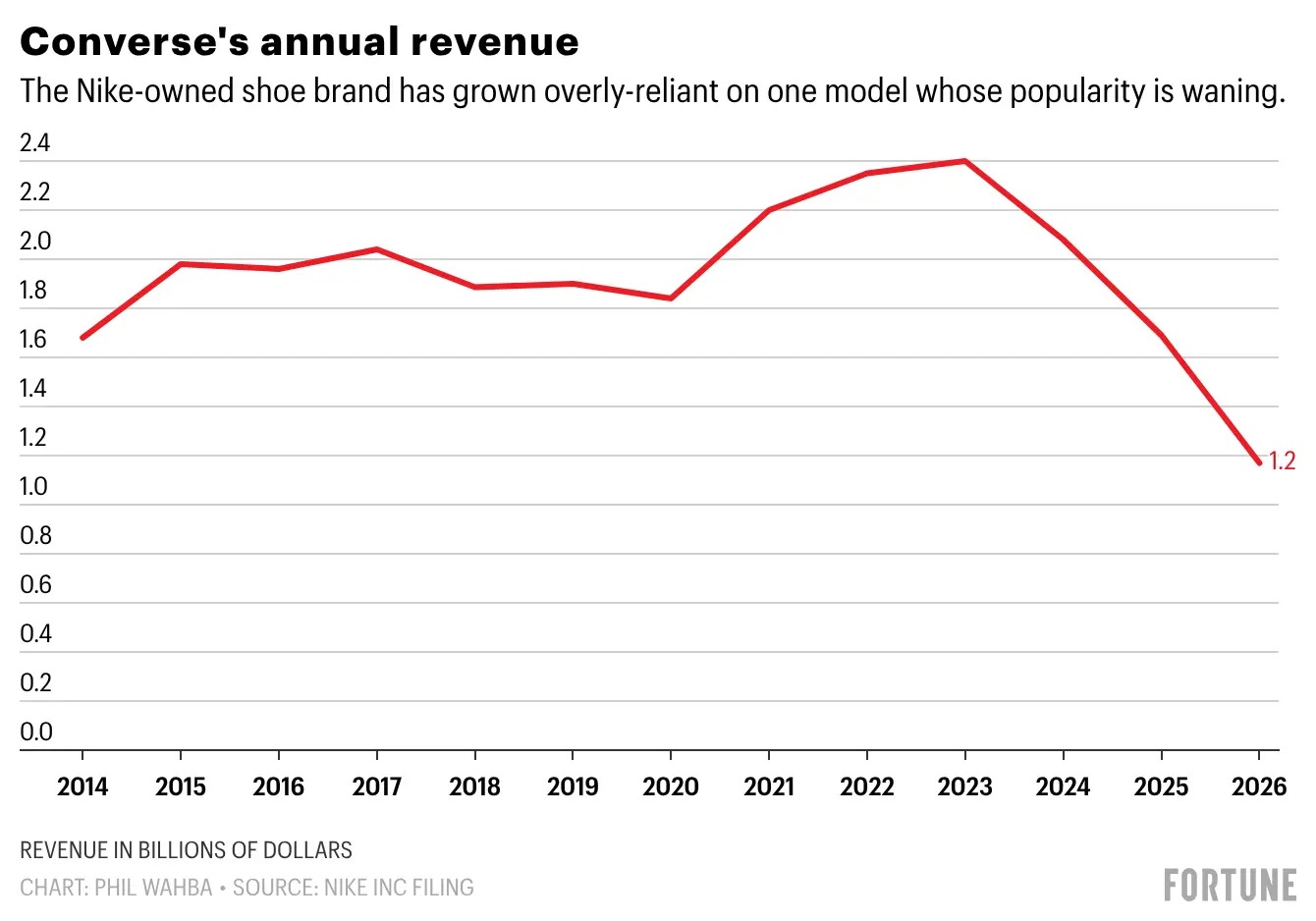
Analysts attribute this decline to Converse's lack of innovation and over-reliance on the Chuck Taylor style.
“They’re too dependent on a single product, and when that product cools down like it is now, there’s nowhere to hide,” said Matt Powell ( Matt Powell ), the current senior advisor to BCE Consulting and a veteran in the footwear industry. “This is a fashion business; nothing ever stays popular forever.”
Converse operates independently from Nike, has its own CEO, and reports to Hill. It also offers several other shoe models; for example, there is one named after a famous Canadian badminton player from the 20th century ( Jack Purcell ), which has also achieved some success. However, Chuck Taylor still constitutes the majority of its business. ( Vans , under VF Corp , has also faced similar difficulties in recent years due to over-reliance on its iconic checkerboard skateboard shoes.)
Competitors are poaching the same group of consumers.
Converse occupies a delicate position in the footwear market, situated between casual shoes, fashion sports shoes, and lifestyle shoes. In the past few years, this niche market has become increasingly competitive. From On Running to APL, and then to HOKA and New Balance under Deckers Brands, each has successfully catered to the ever-changing tastes of consumers.
Powell stated that Adidas (Adidas) can serve as an example for Converse, as this German sports brand has achieved great success by tweaking its classic styles. By introducing new variations, such as the recent laceless versions, Adidas ensures that its classic (Samba) shoes remain highly relevant.
However, the significant decline in Converse' sales has also raised a legitimate question: is this more than just a cyclical downturn? Laurent Vasilieusku, a senior analyst ( Laurent Vasilescu ), mentioned the deterioration of Converse' sales in the fiscal quarter up to November 2025, writing, "We have never seen a brand experience a 44% decline in demand before." This analyst stated that he would not be surprised if Nike ultimately decides to sell Converse.
Last month, Nike's CEO Hill stated that he was focused on bringing Converse "back to financial health." A Nike spokesperson said, "Converse remains an important part of our portfolio," and refused to provide specific details about Hill's plans to revitalize the brand, adding that the company would provide updates at next month's investor day.
The last brand acquired by Nike
In recent years, Nike has sold most of the brands it acquired: Cole Haan, Umbro, Starter, Bauer, and Hurley. Now, only Converse remains. Vasilisku stated that, given Converse's recent performance, and considering that the parent company needs to focus its efforts on improving other weak areas of its business, such as sales in China and the Jordan brand, Converse may follow the same fate.
Powell believes that Converse still has great vitality—whether as part of Nike or as an independent entity—especially after launching lighter, softer, and more breathable versions.
"If this pair of shoes becomes popular again, it will achieve incredibly remarkable success," he said.