Over 2,000 teams from 78 countries and regions have used the 3D native base model Tripo AI to develop games, film and visual effects, applications, immersive experiences, as well as physical design works.
San Francisco, October 27th / PRNewswire / -- Tripo AI announced the winners of its first World Build Hackathon Tripothon S1.
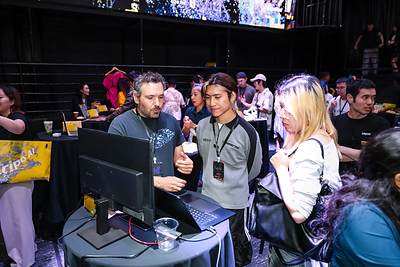
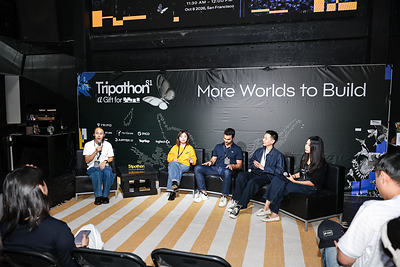
Held from September 15th to October 20th, Tripothon set a record with over 2,000 teams participating, coming from America, Europe, Asia, Africa, and Oceania. The countries and regions with the most participants included China, the United States, Brazil, India, and South Korea. The theme of the competition was “A Gift for __”. The entries were divided into five categories: games, film and visual effects, VR / XR / AR, applications, and physical design. In addition to the online competition, Tripo also organized five offline events in San Francisco, São Paulo, Seoul, Barcelona, and Shanghai.
The first prize was awarded to a third-person shooting survival game, TPS, titled Somehow Still Alive; the second prize went to an immersive experience game, A Long Farewell. The third prize was given to an application developed by students from Keio University in Japan, which transforms children's handmade crafts into 3D creatures, connecting children around the world. The top three winners will receive $5,000, $4,000, and $3,000 respectively.
Dr. Cao Yanpei, co-founder and chief scientist of Tripo AI, stated: " Tripothon has put Tripo's 3D native base model and Tripo API into the hands of 3D enthusiasts around the world. The participants demonstrated ingenious ways of using these tools. From interactive games to medical devices, the submitted works reflect the infinite possibilities of generative 3D."
The San Francisco event was held during SF Tech Week. The event attracted enthusiastic participation from competing teams and spectators; nearly 60 teams participated, with over 800 spectators in attendance. The winner of the American event Demo Day showcased a 3D interactive adventure and puzzle game that incorporated real-time dialogues with historical figures. The runner-up was an WebXR application called “Dear Little Me” which could transform paintings into 3D interactive games. The developer of this project, Dulce Baerga, stated that she used the Tripo process to create a imaginative space for children, turning the entire game into a bonding experience between parents and children. The VR project “Space Archaeology” by a student from the University of California, Berkeley, Yichi Zhang, won third place. In this project, players explored the solar system and collected artifacts.
The offline event in São Paulo attracted over 250 participants, while the event in Shanghai drew more than 400 attendees.
Many outstanding projects in the field of generative 3D also emerged at the Barcelona station. From 3D web applications to interactive fashion design and virtual try-on based on sketches, the participants made full use of the 3D native base models provided by Tripo to apply generative 3D to real-world scenarios. Charles David from the UK, along with Purdon, participated in the Barcelona Tripothon S1 Demo Day. He said that this event inspired him greatly and he plans to continue developing his Tripothon project, which aims to help people overcome their fear of bees ( apiphobia ).
In addition to the three overall champions, Tripo also announced the top three winners in each of the five categories.
About Tripo AI
Tripo AI is a globally leading developer of 3D native base models and world models. The company was founded in 2023 by top scientists in the fields of artificial intelligence and computer graphics. Around its proprietary 3D native base models and world models, it has built a complete end-to-end product ecosystem. With the help of Tripo Studio and Tripo API, Tripo AI has transformed the way 3D is generated. Driven by a world-class AI 3D research team, the company is pushing AI towards the goal of understanding, generating, and interacting with 3D environments.
The models and products of Tripo AI have been widely adopted by individual users and enterprises around the world, serving industries such as intelligent manufacturing, virtual reality, interactive entertainment, and embodied AI. They help enterprises unleash new productivity and expand the scale of generative 3D applications.