

How to buy BNB? What is BNB's development potential in 2026? The most direct path in 2026 involves only three steps: deposit USDT, convert to BNB, and enable BNB fee deductions. Confirm the quote and execute immediately; there is no need to place limit orders or watch candlestick charts. After the 38th burn, BNB's circulating supply has dropped to 131.51 million. Tokenized stock trading volume surged to $25.6 billion in a single quarter, and the SEC'sdismissal of its lawsuit has substantially resolved US classification risks. Buying is just the starting point; the burn pace, tokenized stock expansion, and MiCA access divergence in 2026 will determine whether it is worth holding.
Table: Overview of BNB's Latest Key Data
| Data | Value |
|---|---|
| BNB Price | Approx. $737–$765 |
| Market Cap | Approx. $9.7–$9.9 Billion |
| 38th Quarterly Burn | 1.646 Million BNB Removed |
| Cumulative Reduction Progress | Reduced to 131.51 Million |
| Q3 Network Revenue | $54.2 Million |
| Q3 Tokenized Stock Trading Volume | Approx. $25.6 Billion |
| Tokenized Stock Supply and Holders | Supply at $1.13 Billion |
| BSC Daily Active Addresses | 2.1 Million |
| BSC 24-Hour On-Chain Fees | $793,900 |
| MiCA Status | Not Yet Implemented |
Note: The above content is compiled and summarized by CoinMeta based on public market data. Please refer to actual data if there are any fluctuations.
How to Buy BNB on Binance App in 3 Steps
For the vast majority of users, the most hassle-free path is "deposit → convert → hold," skipping limit orders and in-depth trading pair research. The prerequisite is that the account has completed identity verification (KYC); purchase and withdrawal permissions for unverified accounts will be restricted.
Step 1: Deposit
Open the Binance App and find the "Buy/Sell Crypto" entrance on the homepage or the "Trade" page. Choose to buy USDT via bank card, bank transfer, or P2P. Bank cards have the fastest arrival time, but fees are usually 2.5%-3.5%; P2P quotes are provided by merchants with instant release; bank transfers are suitable for larger amounts and users sensitive to fees.
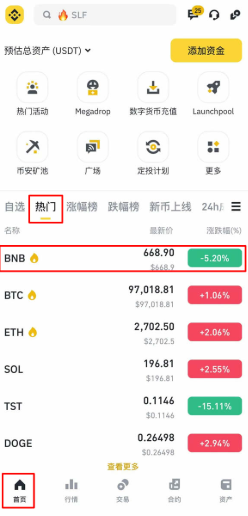
Image: "Buy/Sell Crypto" Entrance
Step 2: Use Convert to Swap USDT for BNB
Find the "Convert" entrance on the homepage or trading page, select "USDT → BNB," enter the amount, confirm the quote, and execute immediately. The asset goes directly into your spot wallet without the need to place orders for matching. This step is close to a "one-click swap" and is the most beginner-friendly for first-time buyers.
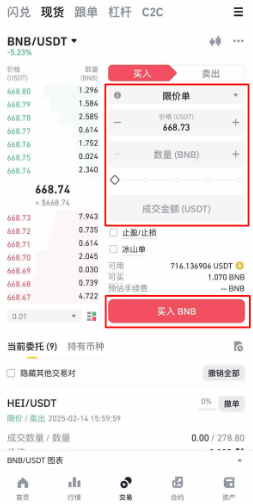
Image: Swapping USDT for BNB
Step 3: Enable BNB Fee Deductions
In the fee settings, check "Pay fees with BNB." The spot trading fee can be reduced from 0.1% to 0.075%. BNB itself is the most liquid asset within the Binance ecosystem; keeping a small balance in your account allows you to automatically enjoy the discount.
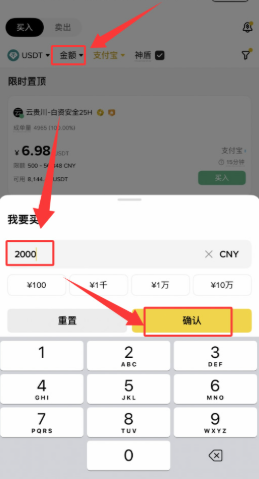
Image: Enabling BNB Fee Deductions
Our advice is: the operation to avoid most during the purchase process is skipping KYC or using unverified proxy buying channels just to save a few dollars in fees.
What Are the Development Potentials for BNB in 2026?
Deflationary Burn Baseline
In our view, BNB's burn actually runs on two mechanisms simultaneously. One is the quarterly automatic burn, executed every three months, with the amount calculated by an on-chain formula rather than decided arbitrarily by the team. The other is BEP-95, which burns a fixed 10% of every gas fee in real time. The 37th quarterly burn completed on October 19, 2026, removed 1.6462 million BNB at once, worth approximately $1.197 billion at the time, reducing the total circulating supply to about 131.51 million. Together, these two mechanisms have been running continuously for over eighteen quarters.
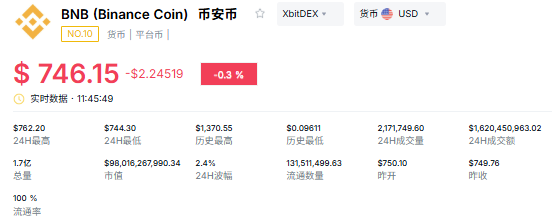
Image: BNB Price After Burn
Our view is that the price support from BNB burns is real. BNB's supply contraction is not just icing on the cake during a bull market; it automatically applies pressure during downturns. For example, on the day of the 37th burn announcement, BNB's price fluctuated between $730 and $745, and did not spike despite the roughly $1.2 billion burn.
RWA and Tokenized Stocks
In Q3 2026, BNB Chain's tokenized stock trading volume reached approximately $25.6 billion, about 11 times the previous quarter. As of September 30, tokenized stock supply reached $1.13 billion, doubling from $560 million at the end of Q2, with about 1.8 million holders. Among chains tracked by Blockworks, it ranked first in tokenized stock trading volume, supply, and holder count.
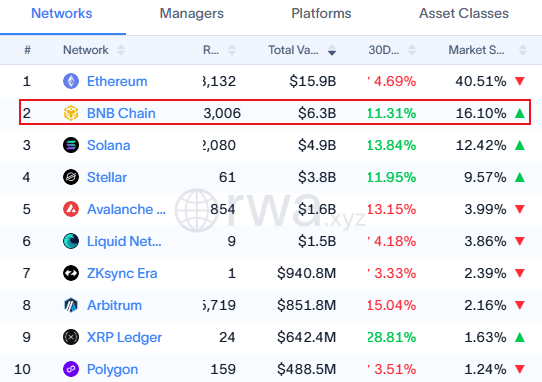
Image: BNB Chain Tokenized Stock Trading Volume
Among this, the bStocks product contributed $810 million in supply, with the single product QQQB accounting for about 80% of bStocks DEX trading volume.
In our view, the potential of RWA for BNB lies in the fact that it gives BNB Chain activity a source outside of crypto for the first time. We recommend tracking it as an independent growth curve after 2027 to stay closer to reality.
What Are the Three Risks of Holding BNB?
The Transmission Efficiency Between Price and Network Usage Is Asymmetric
For example, in September 2026, BSC's daily protocol revenue once reached a 11-month high of about $3.2 million, but BNB's price during the same period was still about 47% lower than its peak of around $1,375 in October 2025. We can analyze that only about 10% (roughly $320,000) of daily gas fees are burned, with most flowing to validators. The efficiency of converting network value into token value capture is limited, and BNB's price may not respond with the same magnitude.
Regulatory Risk
The SEC withdrew its lawsuit against Binance in early 2026 and determined that BNB is not a security under US securities law, which is a substantive institutional positive. However, Binance voluntarily withdrew its MiCA application on June 24, 2026, subsequently losing local registration in six EU member states. After the July 1 deadline, it continues to maintain limited operations in an unlicensed status. In our view, this is the most significant single regulatory risk since 2023.
Competitive Position Is Not Secure
BSC lags behind Solana in annual fees, and the latter's continuous expansion in on-chain activity and DEX trading volume is substantively challenging the BSC ecosystem. Taking DefiLlama's 24-hour on-chain fee data from October 3 as an example, Solana ranked first with $1.09 million, the only chain to break $1 million; Tron was at $922,900, and BSC at $793,900, ranking third. BSC's fee volume is about 73% of Solana's, and the gap is real.
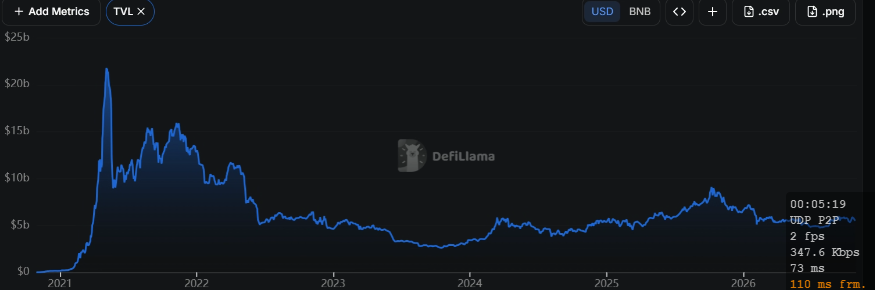
Image: BSC Ecosystem Trading Data
In our view, the biggest cognitive trap of holding BNB in 2026 is equating deflation directly with price increases. Deflation provides a lower-bound narrative, RWA provides upper-bound imagination, but between the two lies a "revenue → burn → price" transmission mechanism that has not yet been fully connected.
FAQ
Q1: What is the fastest way to buy BNB on Binance App?
Convert is the fastest. Three steps: first deposit USDT (bank card/P2P/transfer), then go to "Trade - Convert," select USDT→BNB, confirm the quote and execute immediately. The asset enters your spot wallet. Then enable BNB fee deductions in settings, reducing the spot fee from 0.1% to 0.075%. No limit orders are needed throughout the process.
Q2: Did BNB become scarcer after the 38th burn?
Yes, the circulating supply did decrease. The 38th quarterly automatic burn in October 2026 removed 1.646 million BNB, reducing total supply to about 131.51 million, a cumulative reduction of about 34% from the initial 200 million.
Q3: If BSC transactions increase, will BNB price definitely follow?
Not necessarily. Under the BEP-95 mechanism, the gas fee burn ratio is fixed at 10%, with most fees flowing to validators rather than being burned.
Conclusion
Returning to the original question: how to buy BNB? On Binance App, deposit, convert, and enable BNB deductions—three steps complete the process. But whether you can hold it after buying depends on whether you accept a less-than-perfect 2026 picture: deflation is continuing, RWA is scaling, SEC classification risk is receding, but EU access remains unresolved, the efficiency of transmitting network revenue to token price is still debated, and Solana's competitive pressure is real.
Our advice is: the holding logic for BNB in 2026 is to judge which side carries more weight between several verifiable positive variables and several unresolved structural risks.
Disclaimer: Readers are strictly advised to comply with local laws and regulations. This article is compiled based on public market data for reference and educational purposes only, and does not constitute investment advice. Follow CoinMeta for the latest updates.