News from the IT community on October 29th: On October 28th, Microsoft announced the release of the official version 1.620 and the preview version 1.722 of DirectX, bringing a number of updates to DirectX ray tracing ( DXR ).
New preview SDK introduces features such as cluster geometry (Clustered Geometry), partition top-level acceleration structure (PTLAS), and indirect acceleration structure construction, aimed at reducing the computational overhead of ray tracing in complex dynamic scenes. Microsoft claims that this is the most significant update to DXR since its launch in 2018.
Traditional ray tracing requires the construction and updating of acceleration structures in order to GPU quickly determine the intersection relationship between rays and scene geometries. These structures typically adopt forms such as bounding volume hierarchies ( BVH ). In scenes that contain a large number of animations, streaming loading of geometries, and frequently changing objects, repeatedly constructing acceleration structures can result in significant computational overhead.
Microsoft's newly introduced cluster geometry feature divides geometric data into reusable small clusters, with each cluster containing up to 256 triangles and 256 vertices. Developers can combine these clusters to build larger ray tracing acceleration structures, reducing the workload of repeatedly processing geometric data, and thus using high-precision models for ray tracing more efficiently.
This means that developers are expected to be able to reuse the same high-precision geometric data in both rasterized rendering and ray tracing, reducing the need to create simplified models specifically for ray tracing, and improving the match between reflections and shadows and the actual scene.
Another top-level acceleration structure for partitioning ( PTLAS ) is mainly aimed at improving the update efficiency in large-scale dynamic scenarios. The traditional top-level acceleration structure ( TLAS ) requires managing object instances within the scene, and when the scene size is large, even if only a small number of objects change, the update process can still incur significant overhead. PTLAS allows developers to divide the scene into multiple partitions, updating only the changed parts while preserving the existing structure of the unchanged areas.
Combined with the acceleration structure construction function driven by GPU, developers can also allow GPU to directly participate in the construction and update operations, reducing the preparatory work on the side of CPU. These functions can be used individually or in combination to lower the construction and maintenance costs of acceleration structures in complex scenarios.
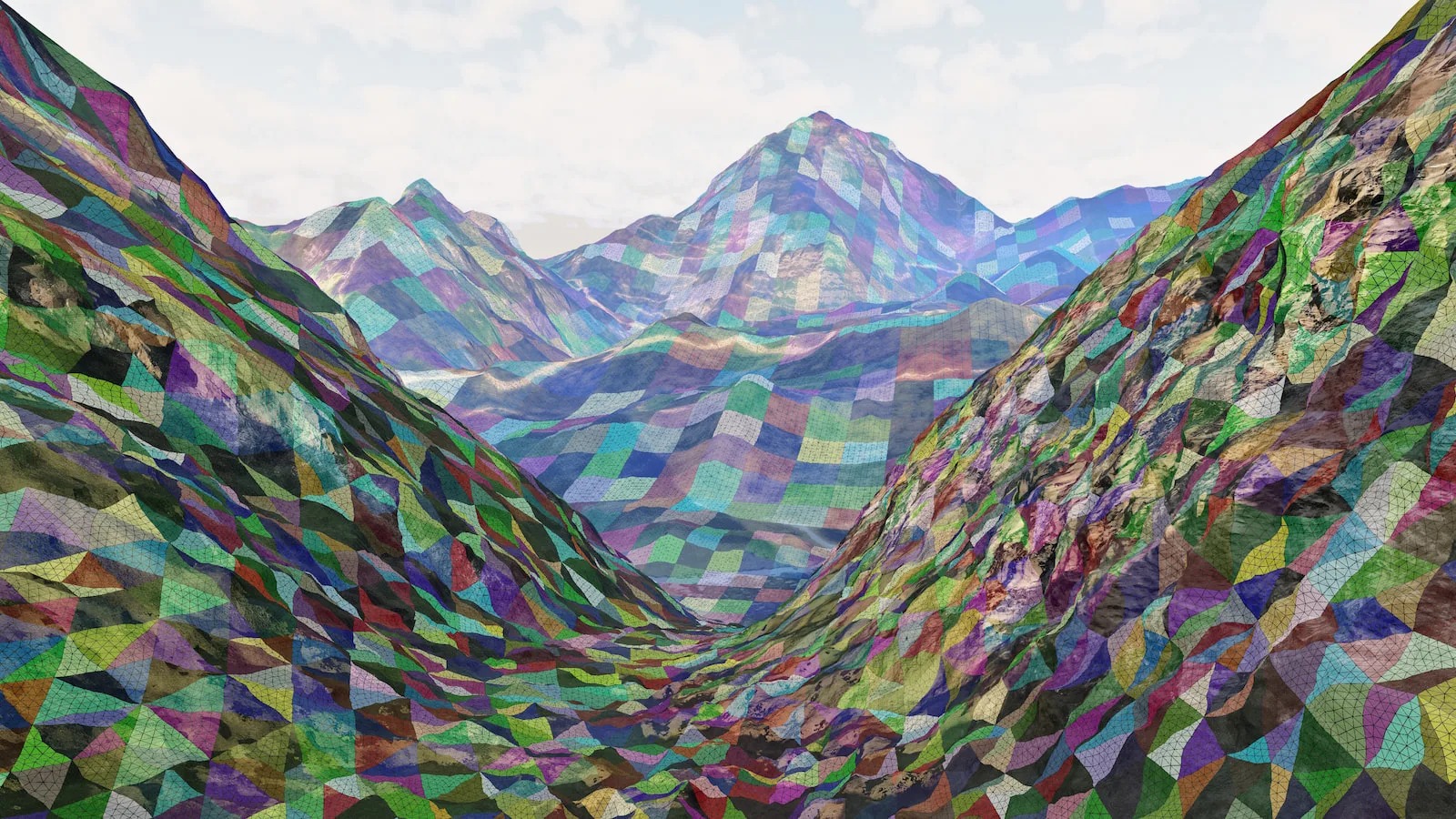
According to the example published by Microsoft ( D3D12RaytracingClusteredGeometry ), in a set of test configurations using AMD Radeon RX 9070 graphics cards, after adopting cluster geometries, the performance increased from 1.2 FPS of the traditional underlying acceleration structure ( BLAS ) scheme to 79 FPS , which is approximately 66 times the original; the time required to build the acceleration structure was reduced from 788 milliseconds to 3.11 milliseconds. The total memory usage of the acceleration structure also decreased from about 7.3 GiB to 774 MiB , a reduction of nearly 90%.
Microsoft emphasizes that the aforementioned data comes from specific development examples and test configurations, and does not represent that all games will experience the same level of improvement. The actual effect depends on the specific workload, the implementation of the engine, and the GPU architecture.
In terms of hardware support, Microsoft has announced that the initial range of supported products includes all NVIDIA GeForce RTX graphics cards, AMD Radeon RX 9000 series graphics cards, as well as Intel Arc B series discrete graphics cards and some Core Ultra processor integrated graphics cards.
Microsoft stated that these new features DXR do not require brand-new hardware capabilities beyond the existing ray tracing capabilities GPU, but they still need corresponding driver support from graphics card manufacturers.
In addition, Microsoft also mentioned the RTX Mega Geometry technology used in NVIDIA in "War Machines: Incident Day" as an early example of a similar approach. This DirectX standardized update is expected to allow developers from different graphics card manufacturers to use technologies such as cluster geometry through a unified interface, but the specific scope of support still depends on the implementation and verification progress of each manufacturer's drivers.
In addition to the Guangzhu update, DirectX 12 Agility SDK 1.620 official version has also improved the advanced shader delivery (Advanced Shader Delivery, ASD) technology.
Among them, some graphics programs (Partial Graphics Programs) allow developers to reuse precompiled shader components across multiple rendering pipeline configurations, which is expected to reduce the size of shader packages and compilation overhead. However, this optimization currently only supports the AMD Radeon RX 7000 and RX 9000 series of graphics cards, and support plans from other manufacturers are still to be pursued.
The official version 1.620 also includes updates such as the DirectX Dump Files GPU crash diagnosis function, Fence Barriers Tier batch asynchronous command list, API, as well as the DirectX Compute Graph Compiler runtime interface tailored for machine learning workloads.
Microsoft also confirmed that Shader Model 6.10 is still in the preview stage at present and is planned to be launched along with the official version of Agility SDK 1.621, which will be released at the beginning of December.