

Bank of America analysts have observed that the U.S. stock market has recently shown a market trend similar to that of the late 1999 internet bubble: defensive sectors such as healthcare and consumer goods have seen rapid gains, while funds have shifted to other areas amid increased volatility in stocks related to the artificial intelligence ( AI ) concept.
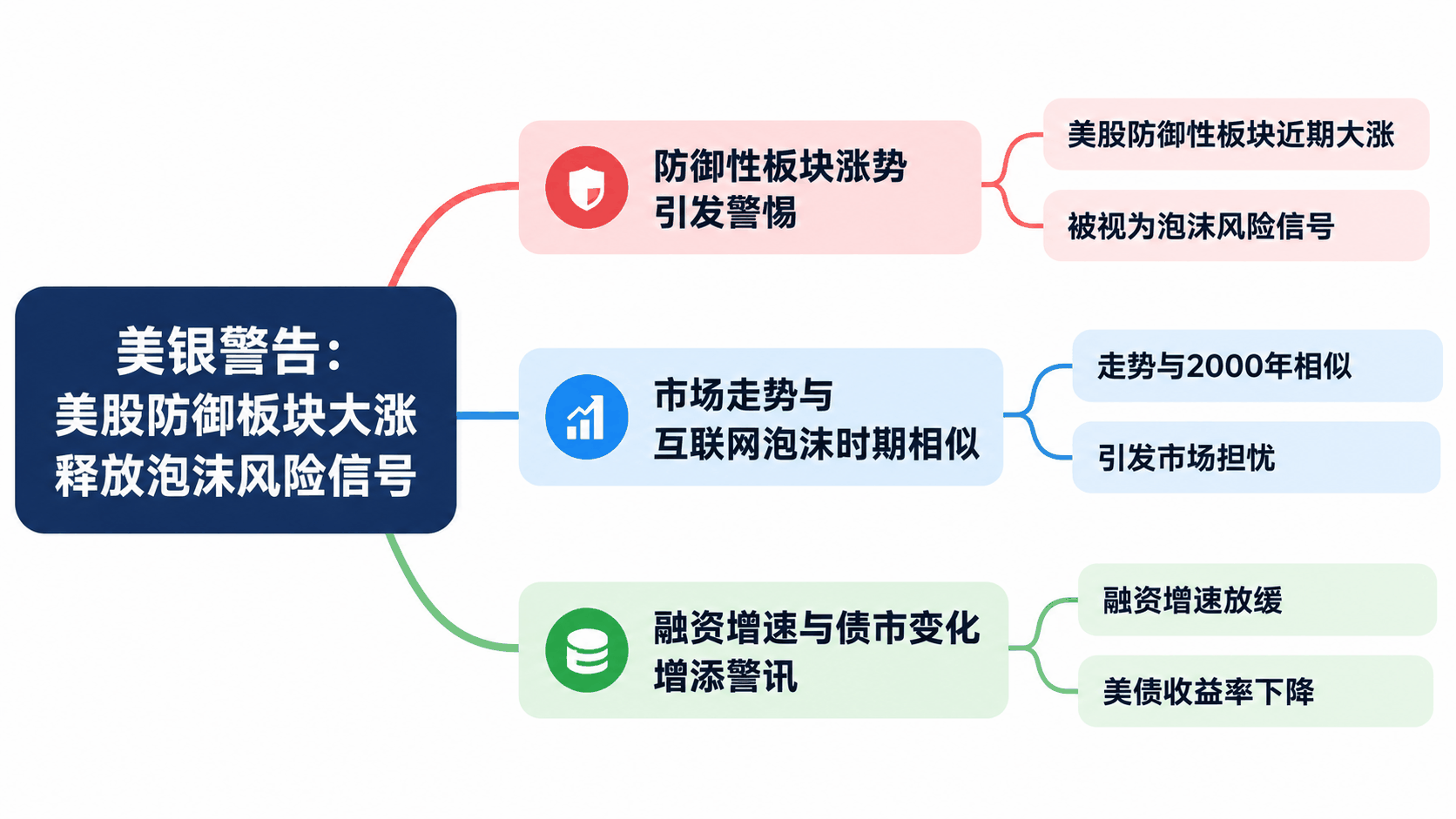
Bank of America believes that this abnormally strong sector rotation is bringing its proprietary bubble risk indicator close to dangerous levels, indicating that the U.S. stock market is exhibiting more signs of bubbling.
Defensive sectors' upward trend raises concerns
Since 2026, the healthcare, materials, and consumer goods sectors of the U.S. stock market have risen by 15%, 14%, and 12% respectively, becoming the strongest-performing market sectors.
The energy sector led the main sectors of the U.S. stock market with a gain of 52%, about 20 percentage points higher than the technology sector. However, the rise in energy stocks was mainly driven by the war in Iran and the historic surge in oil prices, which have different underlying factors compared to the capital rotation in other sectors.
Bank of America pointed out that investors have recently become more cautious about the risks associated with the AI industry, and funds have begun to flow towards traditionally less volatile and relatively stable defensive industries.
The continuously expanding AI capital expenditures of technology giants have become a focal point of market attention. On one hand, investors are concerned that such substantial investments may not be converted into sufficient profits, and on the other hand, they are also worried that the slowdown in AI investment growth could have a chain reaction on upstream suppliers and related industrial chains.
Market trends are similar to those during the Internet bubble period.
Bank of America analysts reviewing history found that on the eve of the bursting of the internet bubble in January 2000, the healthcare and materials sectors briefly outperformed the S&P 500 index, followed by a widespread sell-off of risky assets.
Similar capital rotation also occurred before the sharp decline in U.S. stocks triggered by the pandemic in 2020. Analysts believe that the rapid rise in defensive assets may reflect investors reducing their risk exposure, and the concentrated inflow of funds could in turn push up the valuations of these sectors.
Bank of America's proprietary bubble risk indicator is mainly used to identify price behaviors in the market that are similar to bubbles. Analysts at the bank stated that the recent upward trend in defensive sectors further indicates that the market is moving towards a more pronounced state of bubbling.
Previously, Bank of America also pointed out that there was a divergence between the volatility of individual U.S. stocks and the overall market volatility, showing characteristics similar to those in the later stages of the internet bubble.
Funding growth rate and changes in the bond market add to concerns
In addition to the rotation of sectors, Bank of America also noted a significant slowdown in the growth rate of U.S. stock financing transactions.
According to the analysis of Paul Siana, a technical strategist at Bank of America cited by CNBC, data from the U.S. financial regulatory authorities shows that the year-on-year growth rate of margin trading debt has decreased from 53.7% in May this year to 31.4% in September.
The growth rate in May this year was the fourth highest since 1998. The previous three times when higher rates were recorded were in 2000, 2007, and 2021, followed by declines in the U.S. stock market each time.
As of September, the scale of financing and securities lending debt in the United States was approximately $1.48 trillion, which is 1.5% lower than the record of $1.5 trillion set in June. Bank of America believes that the momentum behind the growth in financing has declined from extreme levels, a phenomenon that has historically been associated with market peaks.
Changes worthy of attention have also occurred in the bond market. Bank of America noted that recently, when AI concept stocks were sold off, U.S. Treasury yields declined simultaneously, which may reflect investors' expectations of interest rate cuts and their concerns that a cooling of AI investment could trigger an impact on economic growth.
Despite the increasing number of warning signs, Bank of America has not asserted that the U.S. stock market is about to collapse. The bank believes that the market may be approaching a stage of concentrated risk release, after which there is still a possibility that investor sentiment could turn optimistic.