The developer of smart TV operating systems in Barcelona, Titan OS, announced on Wednesday that it has secured $46 million in new financing, which includes both equity and debt.
This funding comes from debt arrangements provided by funds and accounts managed by BlackRock, as well as existing investors such as Highland Europe and Mangrove Capital Partners. The startup just completed a $58 million financing round last year, and now its total financing has reached $110 million. The company stated that it could have chosen not to raise funds and grow slowly, but it aims to be more ambitious in order to establish more partnerships and expand into more regions.
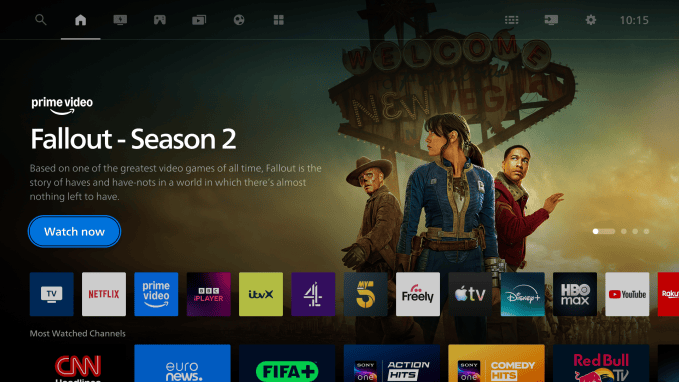
Titan OS promises TV manufacturers that by pre-installing the operating system on their devices, it can bring greater value to the manufacturers' individual unit sales; manufacturers can generate revenue through FAST channels (free advertising to support TVs) as well as advertising partnerships on different screens.
The company currently serves 30 million users, which is higher than last year's 18 million. This includes sales partners who act as TiVo in some regions, as well as cooperation with Tubi in the UK.
Compared to last year, this startup has also added Sharp, AOC, Vestel, and Skyworth as new partners. Its collaboration with Philips has also been successful; this Dutch electronics manufacturer has switched to Titan OS in its 2026 models and abandoned Google TV.
"Our core business is to monetize the inventory within our own network. But the key is that we are going beyond that. This is why our coverage has significantly expanded, creating a flywheel effect that has also attracted more sales partners and more agents who wish to place their products on our platform, whether through our own operations or through our extended services," Titan OS, the new Chief Financial Officer, told TechCrunch over the phone.
With new funds in place, the company hopes to focus on advancing in several areas. The first is content discovery. It still takes a long time for people to find the content they want to watch. To this end, the company is enhancing content discovery capabilities through interface adjustments and AI, while also collaborating with more content providers, such as the FAST channels.
"The difference between us and closed ecosystems is that we don't have our own content products. For example, Google tries to direct users to YouTube, but we don't have such content; our role in content discovery is neutral. We are working hard to reduce the time users spend searching," said Tobias Pfalzgraff, the senior vice president in charge of personnel and marketing at Titan OS.
Pfalzgraff also emphasized that the company is using AI to improve advertising recommendations and audience segmentation. Although the company holds a dominant position in Europe, it believes that there are not many manufacturers that develop their own operating systems; more TV manufacturers may adopt its operating system like Philips. The company also stated that as AI raises hardware costs and consumer electronics sales slow down, manufacturers are considering longer-term revenue generation opportunities.