Elon Musk now claims that the orders for the Cybertruck "far exceed" Tesla's production capacity, and that this pickup truck was not "cut out" due to being unprofitable. This is his second explanation for ending the production of this pickup truck within just three days.
The problem is that Tesla's own data seems to indicate the opposite. The operating capacity of the Cybertruck production line is only about a quarter of its installed capacity, yet Tesla spent the entire year of 2026 trying to find buyers by lowering prices, adjusting configurations, and re-pricing its products.
The following is what Musk posted on X last night:
"The order volume for Cybertruck far exceeds our production capacity. We will try to produce as much as possible before shutting down the production line in about 8 months, but we will have to refund deposits to many people. This is not because Cybertruck is unprofitable, as traditional media reports; rather, it's the opportunity cost associated with the complexity of Cybertruck that far outweighs the value of increasing production by Cybercab."
He was forwarding a post from a Tesla fan, urging everyone to “act now while you still can buy.” So, yes, this is also a form of sales rhetoric.
Last Friday, Musk announced that Tesla would gradually stop producing Cybertruck at its superfactory in Texas around mid-2027, “to make room for increasing the production of Cybercab.” That was the initial statement. Now, the reasons have shifted to “complexity” and “opportunity cost.” Let’s take a look at each one.
"Order speed far exceeds production speed"
Tesla controls its own production rhythm, and this is precisely the flaw in that argument.
If at any point this year orders actually exceeded production, Tesla still had approximately 95,000 units of annual idle capacity available, but it didn't make use of it.
Moreover, companies with backlogged orders do not act like Tesla. In February, Tesla launched the dual-motor version of Cybertruck for $59,990, and it was "available only for the next 10 days." The single-motor rear-wheel-drive version was taken off the market after only 173 units were sold. Tesla also leveraged Musk's own company: SpaceX to purchase 1,279 units of Cybertruck in the fourth quarter of 2025; if we add in his other companies, this accounts for about 19% of the total registrations in the United States that quarter.
Cox Automotive It is estimated that sales in the United States Cybertruck decreased from 14,416 units in the third quarter of 2024 to 3,519 units in the first quarter of 2026 and 3,744 units in the second quarter of 2026. The demand issue is now obvious to everyone.
So, if there is a sudden surge in orders this weekend, the reason is obvious: Musk announced on Friday to the world that this car will be discontinued. The last-minute rush to buy a model that is about to be discontinued does not prove that it has always sold well.
"Having to refund deposits to many people"
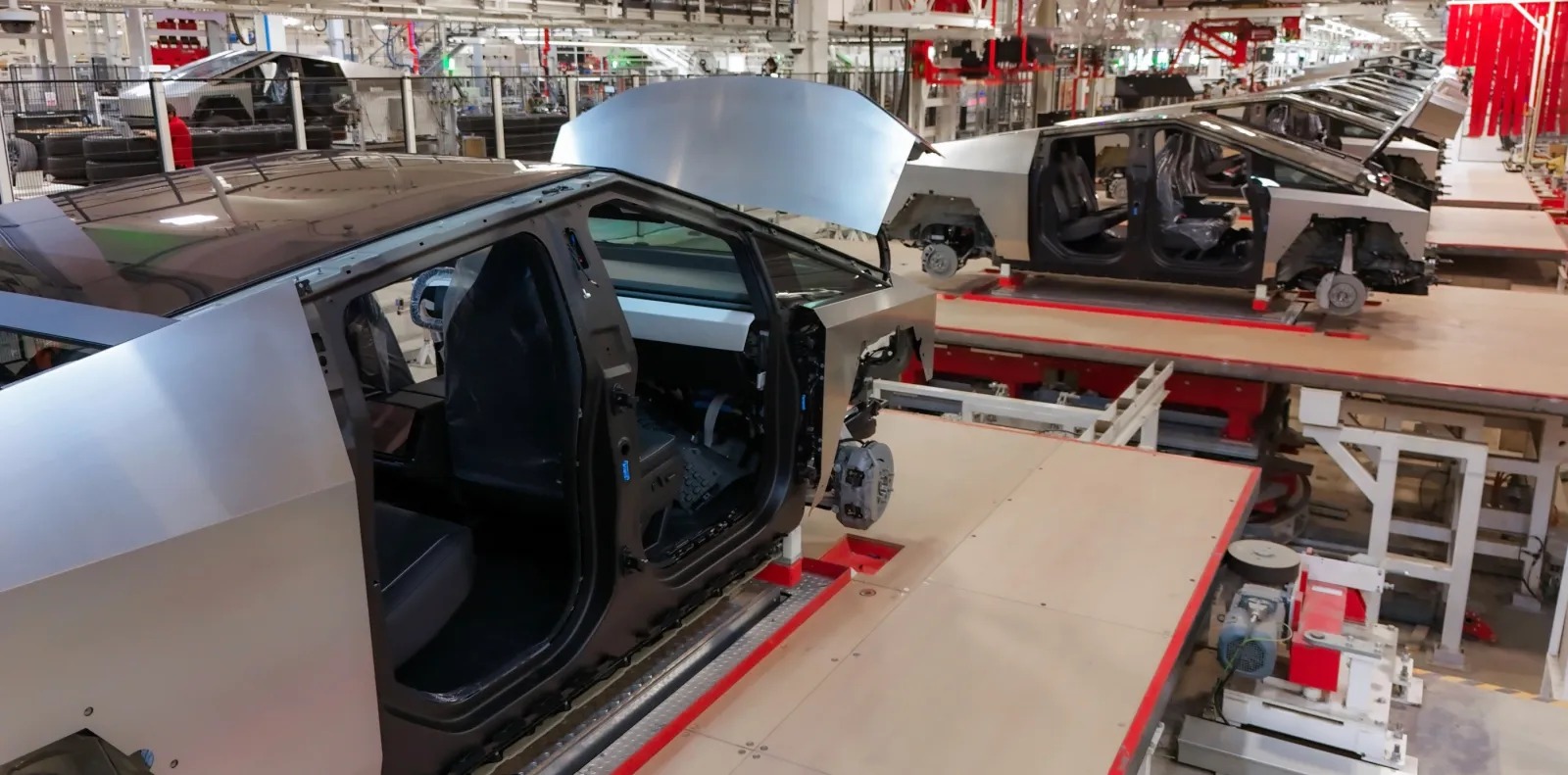
For many years, Tesla has held onto some Cybertruck deposits that it had no intention of fulfilling at all.
Elon Musk once boasted that the number of pre-orders exceeded 1 million, while crowdsourcing statistics indicated that by 2023 it was close to 2 million. According to the estimation of Cox Automotive, in its best quarter in the United States, only 14,416 units were sold. The pre-order book is just a vanity figure; it is not an actual order book.
Two weeks ago, Tesla canceled its Cybertruck in the Australian and New Zealand markets and refunded the deposits that people had paid in 2019. Tesla has been doing this refunding earlier on because it couldn't sell products in these markets, not because it had too many orders to handle.
"It's not that Cybertruck is unprofitable."
This is a straw man argument. Our reports, as well as most of the related reports on Friday, discussed sales volume, not profit margins. The sales volume of this car is only about 12% of Tesla's original plans.
Tesla has not disclosed the profit margin of Cybertruck, so Musk can say whatever he wants on this topic without anyone being able to verify it. However, in 2023, he himself stated that Tesla had "buried itself in a grave" with Cybertruck because it is very difficult to produce this model in a profitable manner.
Let's take a look at what Tesla did on the day it announced the production halt: it increased the price of the Cybertruck by up to 10% and suspended orders for the cheapest version. The cheapest model, which can be ordered as Cybertruck, rose from $69,990 at the beginning of August to $92,490. This move was made to extract more profits from the last batch of cars produced, rather than because this production line was generating huge profits.
The "opportunity cost" argument actually supports our viewpoint.
Take Musk's logic to its extreme. If Cybertruck truly generates profits, and if orders indeed exceed production capacity, then shutting it down would mean giving up a product that is definitely profitable in favor of betting on robot taxis—as of late October, only 463 of these robots were registered in Texas, and their business model has not yet been verified.
This kind of transaction only makes sense when the annual production reaches 30,000 units in Cybertruck. In other words, it means they don't sell enough units.
The area of the Texas superfactory also exceeds 10 million square feet, and Cybercab operates on its own independent “unboxed” production line. Tesla is unable to make use of the Cybertruck production line and factory space, yet space has never been a limiting factor. In order to further adjust his statement about stopping the production of Cybertruck, Musk shifted his argument from “space” to the need for some “smart people” on the Cybercab production line, implying that these people were originally working on the Cybertruck project.
On Saturday, Musk wrote, "There are very few truly smart and focused people," but the Michael So who led the introduction of the new product and was an employee at Tesla's Gigafactory 1 in Texas resigned in April to join a fusion startup called Aalo Atomics. Last month, Tesla also lost its Cybercab head of final assembly, who switched to work on R2's project at Rivian just weeks after the project was announced. If the bottleneck is talent, then it is actually the Cybercab team that is experiencing talent loss.
Views of Electrek
Elon Musk doesn't want Cybertruck to go down in history as a failure, and we understand that. It's his car. He approved this controversial design, hyped it up for four years before its launch, and even boasted that 1 million reservations might correspond to an annual production of 500,000 units.
But you can’t run the production line at a quarter of its capacity, offer discounts that are only valid for 10 days, then remove certain configurations after just 173 units have been sold, and at the same time sell those cars to your own rocket company. After all that, you still claim that demand has never been a problem. The data is public. Tesla’s own delivery reports are also available for everyone to see.
Our judgment of the sequence of events is quite simple: demand collapsed in 2025 and has never recovered since. Tesla tried all possible pricing strategies. When none of them worked, it came up with a reason that looked forward to the future to end production of this car. Now, it is packaging the inevitable pre-production rush buying as evidence that this car was always popular from the very beginning.
Elon Musk really likes to talk about large markets. In the IPO document of SpaceX, the total serviceable market is valued at $28.5 trillion, and last month he went a step further by stating that he believes there is a path for SpaceX that will be worth several orders of magnitude more than the current Earth's economy.
So, let's apply the same perspective to Tesla. The pickup truck market is one of the largest and most profitable in the world. Last year, Ford sold 801,525 F-series pickup trucks in the United States, General Motors sold a total of Silverado and Sierra units (the total sales volume for these two models), and Ram sold 374,059 units. Together, these three automakers sold over 2.1 million pickup trucks, which, at current transaction prices, easily exceed $100 billion per year.
Bobb Bobb's pinned comment
Interestingly, such a person who 'absolutely supports freedom of speech' is unwilling to disclose even simple information like the operating profit margin of its automotive business... This proves my point: Tesla after Musk's acquisition is essentially only focused on producing products that meet the criteria for electric vehicles and green tax credits.
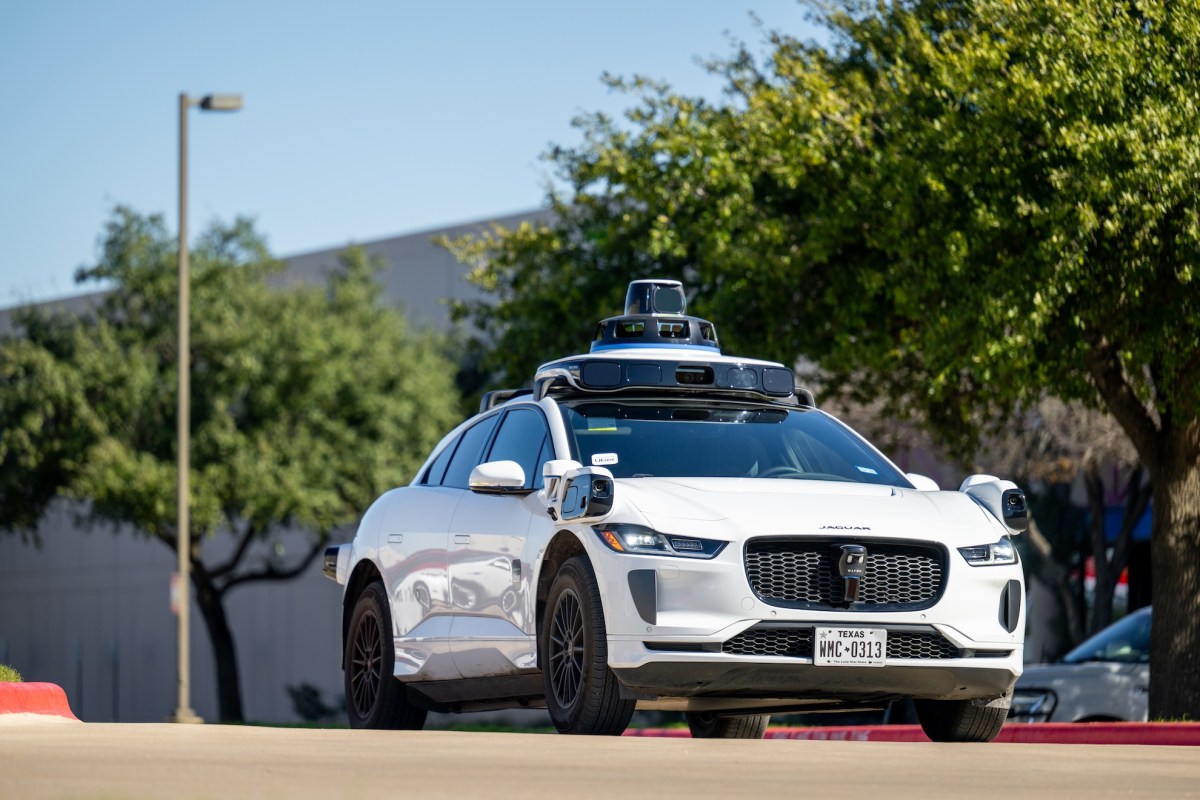
As for robot taxis? The currently leading Waymo completes approximately 500,000 paid rides per week, and earlier this year, analysts estimated its annual revenue to be around $355 million. Tesla has not even disclosed its robot taxi revenue separately, so we expect its scale to be just a small fraction of that of Waymo.
Maybe one day the situation will turn around. But that’s the bet being made here: Tesla is giving up a huge market where it could sell products today, in favor of betting on a market that will only truly take off in the coming years once the issues with autonomous driving are solved. Musk has made similar bets before. He promised that there would be 1 million robot taxis on the roads by 2020, and since 2016, he’s said almost every year that unmonitored autonomous driving would be a reality “in just another year.” Every time, he lost.
Moreover, the rush to buy is indeed real, and it's worth mentioning at least. Some people really want to acquire the last few of these peculiar yet truly impressive trucks. But that doesn't mean it's a good business deal.
If you want to buy an electric vehicle and charge it using household solar energy, you can reduce the fuel cost to almost zero. With electricity prices rising by nearly 10% last year and expected to continue to increase, installing solar panels is one of the best ways to offset these rising costs. Moreover, through leasing and the PPA program, you can start using the vehicle with almost no down payment and start saving money immediately. If you're looking for the best option, you can check out EnergySage. This is a free service, and hundreds of selected installers will compete for your order, so you can save 20% to 30% compared to searching on your own. There will be no sales calls before you choose an installer. Click here to get a free quote.
FTC: We use car alliance links that can generate income. For more information.