


As the minutes from the Federal Open Market Committee ( FOMC ) meeting suggest a possible interest rate hike in December 2026, the Fear and Greed Index in the crypto market has fallen into the "extreme fear" zone.
According to the data obtained from CoinMarketCap by Coinpedia, as of November 19, 2026, this index has been hovering around 11.
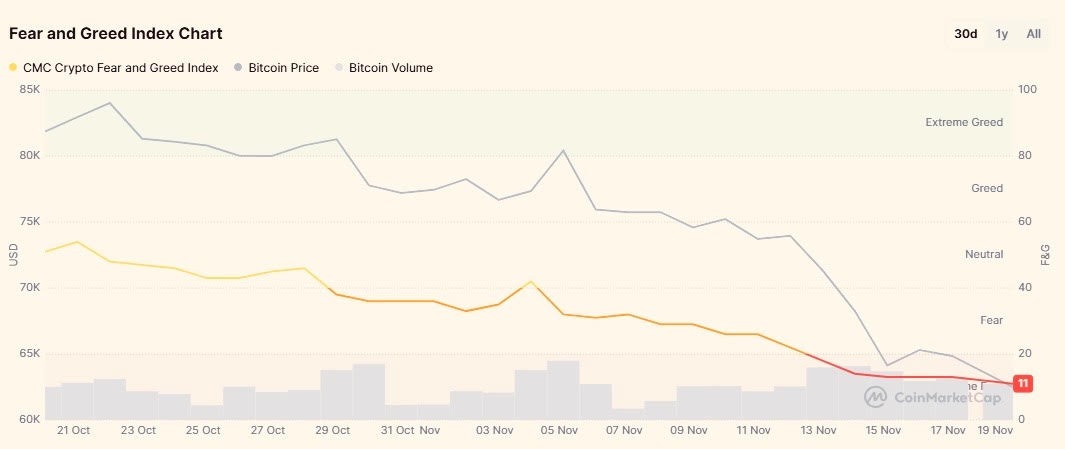
In the past 30 days, the index has plummeted from 51, which represents a "neutral" state, to a level indicating "fear," and recently has entered a state of "extreme fear." Cryptocurrency traders are concerned that adverse macroeconomic conditions and uncertainties in U.S. regulation may further trigger selling pressure.
As of press time, Bitcoin ( BTC ) has fallen by more than 16% over the past 7 days, trading at $62,450. Ethereum ( ETH ) has also fallen by more than 15% over the same period, sitting at $1,758 at the time of this report.
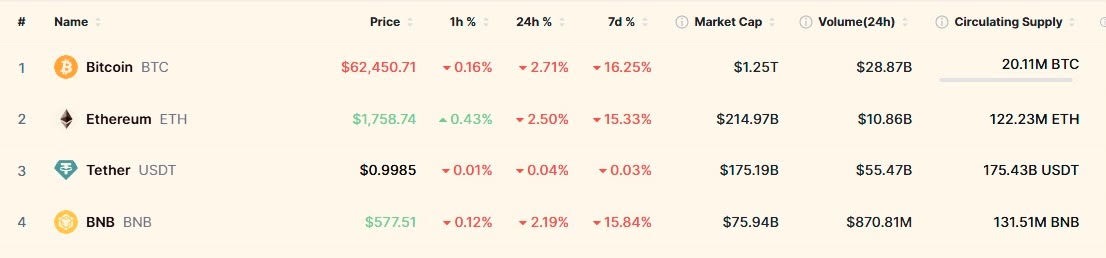
Therefore, as of the time of publication, the total market value of cryptocurrencies has fallen by nearly 2% in the past 24 hours, to about $2.13 trillion.
It is worth noting that the last time there was extreme fear in the crypto industry was after the market crash in May/June 2026, as well as during the selling period in February 2026. In the past few weeks, large-scale crypto liquidations that occurred after major crypto exchanges were hacked also played a significant role in the current extreme fear.
Predicting market bets on the federal resolution in December
The extreme fear in the crypto market has been amplified by the increased likelihood of the Federal Reserve raising interest rates next month. At the time of publication, the leading prediction platform based on web3, Polymarket, showed that the probability of a 25-basis-point rate hike in December was 92%.
The platform indicates that the probability of a fixed interest rate and a 25-basis-point interest rate cut are 2.2% and less than 1%, respectively.
As the Federal Reserve emphasizes stubborn inflation driven by the boom in artificial intelligence ( AI ), cryptocurrencies face a tough outlook in the medium term, as the macroeconomic prospects do not support their strength.