The Trump administration insists that the recent surge in cyber disruptions is not caused by cyberattacks, but those responsible for the federal government's emergency response are not so certain.
Two officials from the Federal Emergency Management Agency (FEMA) told The Washington Post that they are concerned about these interruptions and find it difficult to believe that they are just coincidences.
One of the officials took out extra cash, while another official stated that they were constantly receiving inquiries from former classmates asking whether they should prepare for emergency situations.
"Such a large-scale incident has never occurred in so many industries and in such a short period of time," one of the officials told The Washington Post. "It's frightening, and there is no leadership at all."
FEMA did not respond to the request for comment.
Before everything seemed to get out of control, Americans were already on high alert. Prior to that, the Pentagon launched a program named FORTRESS, aimed at ensuring that each major U.S. military base could operate for 90 days without external assistance in the event that a war cut off electricity and supply chains.
Subsequently, within a month, a series of cyberattacks occurred, affecting hundreds of companies and institutions around the world. The scope of this hacking campaign was so widespread that it came to be known as "Black October." The NVIDIA espionage scandal also did nothing to ease tensions.
Last Thursday, Microsoft's email and other office tools were temporarily paralyzed. Last Friday, the Federal Aviation Administration of the United States () ordered all flights to be grounded for over four hours. () later attributed the issue to a problem with a copper wire during the upgrade to fiber optic cables.
A few days later, companies such as JPMorgan Chase, Wells Fargo, United Airlines, and Apple also experienced brief service interruptions. A malfunction in the internal confidential communication network of the National Security Agency (NSA) further exacerbated tensions.
U.S. officials stated that there is no evidence to suggest that these incidents were caused by cyberattacks, and they mentioned that the network upgrades intended to fix the newly discovered vulnerabilities were deployed in a hasty manner before all issues were resolved.
National Intelligence Director Jay Clayton told the House Homeland Security Committee on Wednesday: "These are independent service interruptions related to maintenance and technical changes. They are not coordinated attacks, nor are they attacks supported by any nation."
Despite the government denying that cybersecurity is the issue, the White House still replaced the U.S. National Cyber Director, Sean Cairncross, on Thursday. CNN On Friday, it was also reported that the Federal Bureau of Investigation (FBI) is investigating what appears to be an intrusion into its national criminal information database – this is the second such intrusion in recent months.
Continuous negative news has caused panic among many Americans. Costco and Walmart have noticed that more customers are starting to stockpile emergency supplies.
"After Microsoft Outlook interruptions, the suspension of all flights in the United States, and the growing doomsday fears on social media, consumers' anxiety has contributed to an increase in sales of emergency preparedness items at Costco," wrote Mizuho analyst David Berlinger in a recent report.
What further adds to the unease is that the British government has launched a publicity campaign, urging Britons to stock up on canned food, bottled water, and cash in preparation for a three-day disruption.
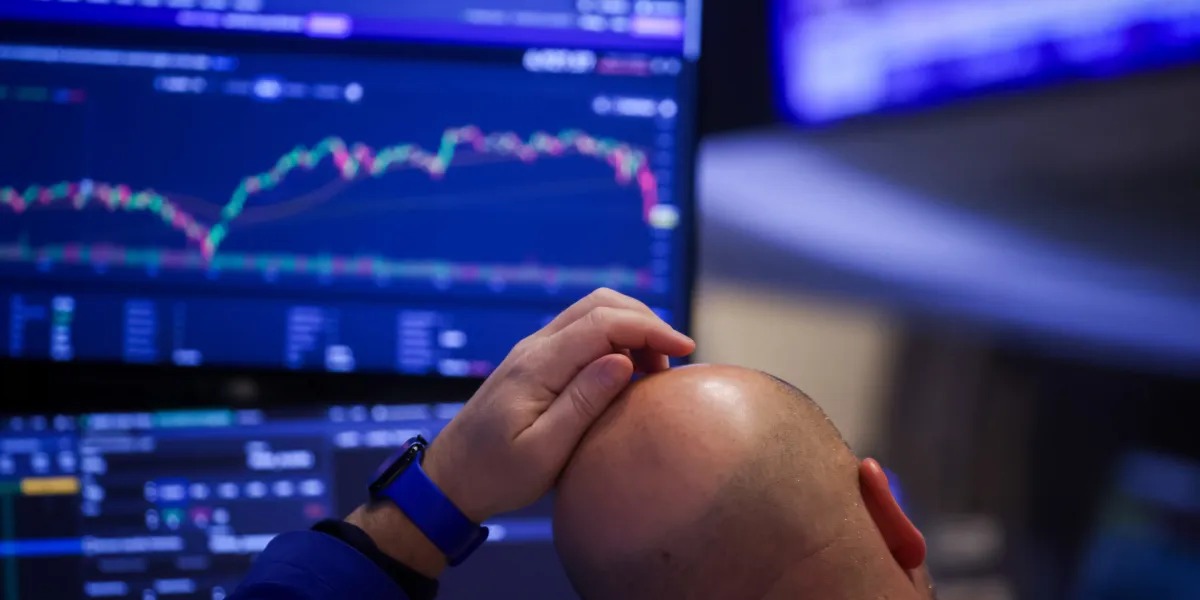
In addition, the stock market also suffered a heavy blow, with declines that were among the most severe since the early stages of the COVID-19 pandemic. Investors are concerned that the end of the artificial intelligence boom could drag the U.S. economy down as well.
The cumulative effect of a series of interruptions has made Americans start to worry about the worst-case scenario. Chuck Amasio, a 68-year-old resident of Ravine, New Jersey, told The Associated Press last week while being stranded at Newark Liberty International Airport that "a lot of strange things were happening" and wondered if all of this was part of some kind of attack.
"We often say that wars are no longer fought with bombs," he added. "They can shut down airspace or power grids. They can paralyze a country's economy."
However, Mark Gilles, the director of Ookla Research, the parent company of Downdetector, stated in an interview with Catherina Gioino, a journalist from Fortune, that there is no connection between these interruptions.
"This is a significant wave of anomalies, but in terms of the long-term trend we've observed, it's also within expectations," he explained. "Most of the time, these issues are quite localized and can be resolved quickly. What really makes it into the headlines are situations where you can't withdraw your money or are unable to access your emails."