According to a report by technology media Wccftech yesterday, Qualcomm has been trying for years to break away from the stereotype of being overly dependent on smartphones. After all, with the rapid price increases in DRAM today, its mobile chip business is facing significant pressure. The latest industry data indicates that the company's largest diversified strategy is starting to yield results ahead of schedule.
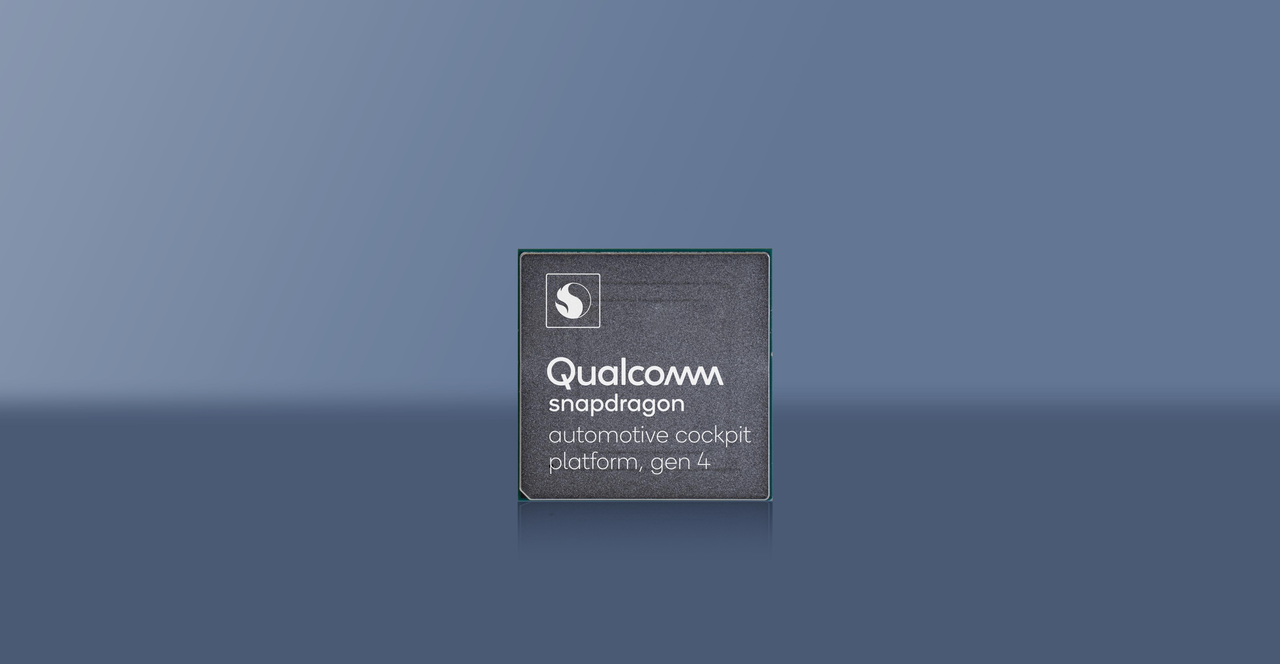
According to the latest analysis, Qualcomm's annual revenue from its automotive chip business has reached $8 billion (note: at current exchange rates, this is approximately 53.451 billion yuan), and it is expected to surpass competitors such as Infineon and NXP to become the world's largest supplier of automotive semiconductors by 2027.
SemiAnalysis Reports show that Qualcomm's automotive business revenue is approximately $1.99 billion (about 13.296 billion yuan at current exchange rates), which is behind Infineon's revenue of $2.22 billion (about 14.833 billion yuan) and NXP's revenue of $2.07 billion (about 13.83 billion yuan). However, it leads Diodes & Semiconductors with $1.77 billion (about 11.826 billion yuan), STMicroelectronics with $1.32 billion (about 8.819 billion yuan), Renesas with $1.19 billion (about 7.951 billion yuan), ADNOC with $1 billion (about 6.681 billion yuan), and ON Semiconductor with $780 million (about 5.211 billion yuan).
What is even more noteworthy is that Qualcomm has already achieved all of its previously set performance targets ahead of schedule. The company originally planned to generate $8 billion (approximately 53.451 billion yuan at current exchange rates) in revenue from automotive chips by 2031, but it has now met this goal five years ahead of time. This also implies that Qualcomm may be experiencing a shift in its business focus, no longer relying solely on its mobile chip business.
Qualcomm's design project reserve for its automotive chip business has also seen a significant increase, growing from $3 billion at the beginning of 2018 (approximately 20.044 billion yuan at current exchange rates) to $65 billion as of June 2026 (about 434.287 billion yuan at current exchange rates), an expansion of 22 times. This scale exceeds that of the Mobileye $24.5 billion (about 163.693 billion yuan at current exchange rates) project reserve by 2.6 times.