

From rule-driven trading to proxy-based execution
Overall, proxies may exacerbate many existing issues in the crypto market, including short-term price movements and reversals, dangerous herd behavior, as well as more pronounced pullbacks.
Automation is not a new concept in this field. From simple rule-driven trading (where a set of established rules are executed when X occurs), to algorithmic trading (which uses algorithms to distribute trading activities to avoid market shocks), the current trend seems to be a shift from human-made strategies to allowing AI to make decisions and execute them.
A study published in February 2026 by Journal of Futures Markets found that in the BTC / ETH perpetual contract and spot markets, sub-second trading patterns exhibited behavioral characteristics consistent with algorithmic trading for liquidity. This increased volatility and transaction costs, but had no significant impact on prices.
In August 2026, Binance launched Agent OS, allowing developers to access the trading functions and data of the exchange through AI proxy.
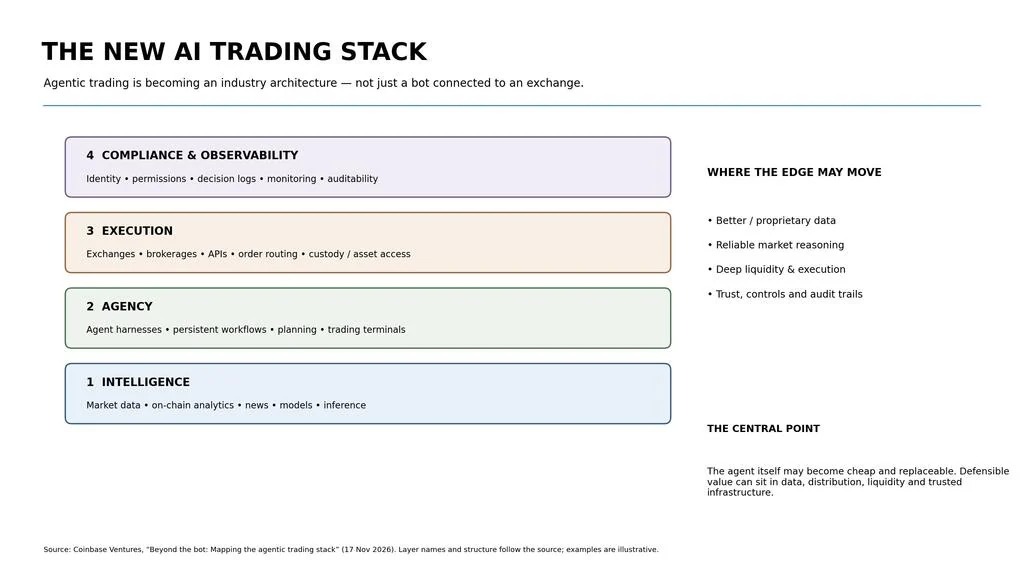
Coinbase Ventures released a comprehensive breakdown of the encryption proxy technology stack in November, covering data, proxy building tools, as well as execution and compliance. The article suggests that in the future, users may not need to issue individual transaction instructions; instead, they can set high-level goals (such as following momentum, hedging positions, etc.), which will be executed by the proxies around the clock, 24/7.
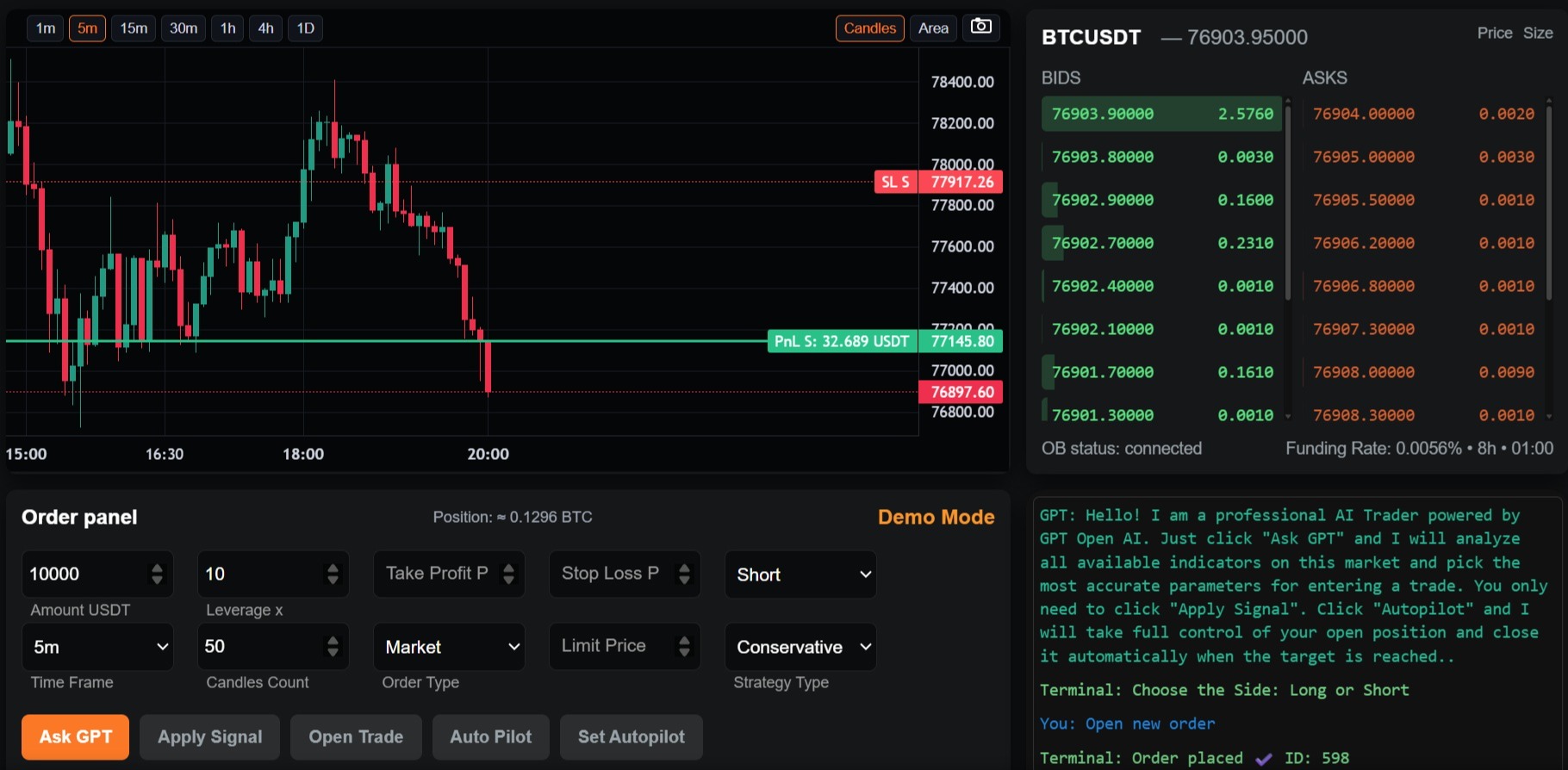
Automation is likely to accelerate across the entire cryptocurrency sector. Although macroeconomic events, ETF capital inflows and outflows, and the movements of large traders will still affect Bitcoin, it is very likely that more aspects of the market and more transactions will become automated.
To what extent proxy trading will ultimately become popular remains to be seen. However, the era in which a handful of traders, internet celebrities, or chat rooms manipulated the market through FOMO and hype seems to be facing fierce competition from the "never-resting" AI.
Speed does not guarantee an advantage.
AI is not necessarily truly "intelligent." A 2026 study published in Frontiers in Blockchain examined machine learning strategies that utilized data from the crypto market and found that many of these strategies exhibited severe overfitting. Once real-world transaction fees were taken into account, these strategies did not provide a viable advantage for retail traders.
In addition, a strategy that performs well on one cryptocurrency may not necessarily be effective on another. Faster processing speeds cannot turn poor data into good data, nor can they identify all false narratives, nor can they protect a strategy from the sudden changes in market mechanisms.
Institutional and human judgment are still important.
Are institutional investors still important? Can they protect themselves? The answer is yes.
Institutions have always been, and will continue to be, an important source of capital, liquidity, and price discovery, especially in the case of Bitcoin. A study from 2026 that utilized data from 2012 to 2025 BTC found that as the market matured, the trading volume of Bitcoin increased, transaction costs decreased, and market efficiency improved.
Wintermute reports that in the first half of 2026, institutional clients accounted for 72% of the total spot trading volume at its over-the-counter trading desks (Note: This only refers to the OTC desks of Wintermute, and does not represent the entire market). It is also worth noting that many institutional investors themselves adopt quantitative strategies and state-of-the-art execution technologies.
Although large investors may have better data, faster infrastructure, cross-platform monitoring capabilities, and more stringent risk management mechanisms (and are able to limit exposures and monitor abnormal order flows), the means that institutional investors can use for self-protection are ultimately limited.
Institutional investors cannot control a global market that operates 24/7, with liquidity dispersed across multiple trading venues and derivatives markets. Nor can they assume that all AI are equally reliable or secure. The article mentions that when Binance introduces its own AI, it reveals risks of potential manipulation, as well as limitations in visibility regarding the external AI trading logic and reasons for such transactions.
Finally, during periods of market stress, the risk management and emergency response mechanisms used by many investors may lead to a simultaneous withdrawal of funds that adopt similar strategies.
The future is not about “AI replacing every trader.” It is more likely that certain aspects of trading will continue to be automated, such as execution and short-term alpha capturing; at the same time, the additional value that humans can provide will also continue to shift, such as capital allocation, risk management, original research, and granting trading permissions to funded/trading robots.
After all, Bitcoin will still be bought and sold. The only question is who will ultimately make these decisions.