

Beijing – Gu Hongdai, co-president of Xpeng Motors, stated to CNBC that household robots may soon become a reality. This Chinese electric vehicle company has entered the field of humanoid robots.
"Perhaps after successful deployment in commercial scenarios, in one to two years, we can start considering deployment in home scenarios," said Gu Hong, "The pace of technological progress is much faster."
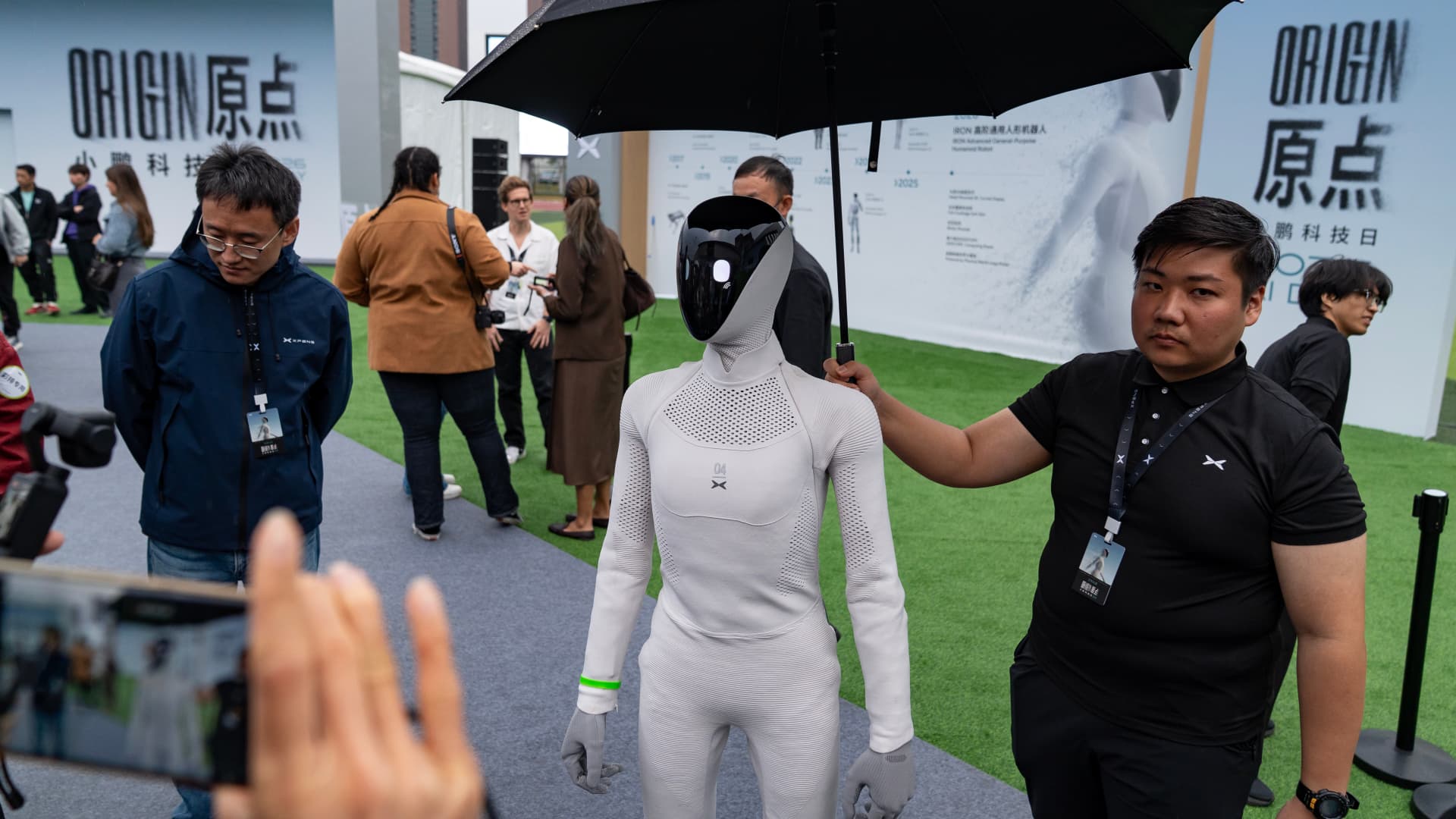
Xpeng released its latest general-purpose humanoid robot, Iron, on Wednesday. The company plans to train this robot to serve as an assistant in retail stores starting from the first quarter of next year, provided that mass production begins in January. Sales are scheduled to start in the second quarter, with deliveries expected to commence later this year.
Xpeng was founded in 2014 and was initially an electric vehicle company that pioneered driving assistance features in mainland China, leading ahead of Tesla. This Chinese automaker has also developed its own artificial intelligence chips and has expanded into the fields of personal aircraft and robotics. The company's robotics division completed its first round of financing this summer, led by IDG, with $900 million raised and a valuation of $6.3 billion.
However, investors seem to be cautious about these developments of Xpeng, and the decline in the Chinese automotive market is also dragging down the company. The stock of Xpeng, which is listed in New York and Hong Kong, has fallen by more than 55% this year due to the overall weakness in the industry.
In recent months, following YuShu Technology's high-profile IPO, the stock price has plummeted significantly, and with capital pouring into this field, the Chinese humanoid robot industry is now facing stricter financing regulatory scrutiny. This has also raised doubts from the outside world regarding the commercialization prospects and the effectiveness of core technologies.
Gu Hongdi stated that the standout feature of Xpeng's robotics business lies in the rare combination of hardware, software, and real-world usage scenarios. He expects that after the Iron plan is commercially launched next year, the company will attract even more investors.
"You can always make the head speak, you can always make the legs move, you can always make the hands perform certain tasks," said Gu Hong, "but completing tasks and answering questions while walking is the most challenging part. And then, you have to do all of that without falling or getting distracted. The models must work together seamlessly."
Most humanoid robot startups, especially in China, focus on a particular aspect of technology, such as the hands or the artificial intelligence-driven “brain.” Some companies in the industry also see themselves as original equipment manufacturers, with other companies integrating these components into finished robots.
But it's easier said than done.
Gu Hong said that He Xiaopeng, co-founder and CEO of Xpeng, is a software engineer who used to believe that software could solve "everything." "But after entering the electric vehicle business, he realized how difficult it is to make hardware truly safe and stable enough to accomplish what you want it to do."
On Wednesday, Xpeng announced the launch of “Turing Physical AI Architecture”, which is used to control cars and humanoid robots through artificial intelligence and real-time decision-making technology.
Gu Hongdui stated to CNBC, that Xpeng's robot development only requires the driving assistance chips they already possess, which means that the US restrictions on NVIDIA selling advanced chips to China will have a limited impact on the company.
"At present, we have not seen any changes in the supply chain, nor have we observed any impact on the ability to obtain these chips."
In 2023, Wu Xinzhou, who was in charge of autonomous driving at Xpeng at the time, resigned to take on leadership of NVIDIA's automotive chip business.
As Xpeng accelerates the advancement of its humanoid robot business, Gu Hongdi stated that the company's existing expertise in autonomous driving technology can be easily applied to the new product line, and the profit margins will be much higher as well. "The robot business is more profitable than the automotive business."
Gu Hong said that the robotics business may become an important part of Xpeng's operations within two to three years, and profitability could potentially emerge next year. He noted that as robots enter households, this value will "significantly" increase.
However, Gu Hongdi pointed out that compared to the commercial environment, home scenarios require robots to move safely around the elderly, children, and pets, and also to be able to handle emergency situations. This raises the demands for battery life and consistent performance, he said.