


Cryptography vulnerability bounty platforms are expanding the use of artificial intelligence to keep up with the growing number of security reports assisted in generation by AI.
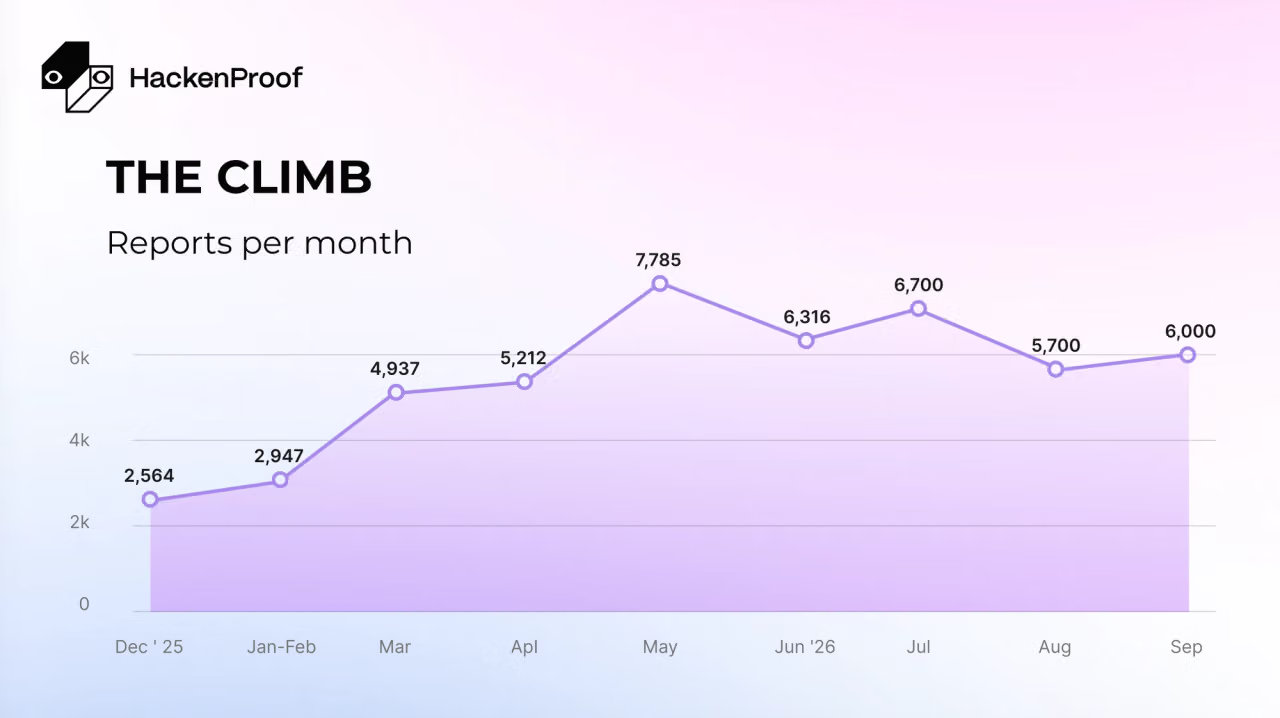
HackenProof, which focuses on the encryption field, stated in October that it was using AI to automatically divert 70% of submissions, with the goal of increasing this proportion to 85% by the end of 2026. The company mentioned that in the third quarter, it received an average of about 6,100 vulnerability reports per month, which is 2.4 times the number of reports in December last year.
Competitor Immunefi stated last week that on their platform, the number of submissions in the first nine months of 2026 increased by 136% year-on-year. At the same time, the platform launched a tool that can identify duplicate content before researchers submit their reports.
Vulnerability bounty programs pay researchers for discovering and reporting potential security flaws. AI has helped researchers find more real vulnerabilities, but it has also led to a surge in invalid and duplicate submissions, making it more difficult for security teams to identify threats that require urgent attention.
The founder of the encrypted wallet provider Bron, Dmitry Tokarev, stated to Cointelegraph that for security teams that have not yet adopted AI for report screening, it's like “going into a gunfight with a knife”.
AI A Turning Point in Auxiliary Vulnerability Mining
Multiple bounty platforms for vulnerabilities have identified February as a turning point for a surge in reports of AI auxiliary vulnerabilities, which coincides with the release of a more powerful AI model, including Anthropic's Claude Opus 4.6.
HackenProof indicates that Claude Opus 4.6 is capable of handling larger codebases and can continue to execute tasks for longer periods of time. HackerOne indicates that after a more powerful AI model and tools appeared that month, the submission environment suddenly shifted from "limited to manual submissions" to another state.
Some crypto developers are also trying to discourage low-quality submissions through economic penalties.
The Firedancer team, which developed the Solana verifier client created by Jump Crypto, also uses AI for screening reports and took additional measures in October.
To curb spam submissions, the team has begun requiring researchers to destroy 1 SOL token for each vulnerability report they wish to have evaluated for a bounty. Even if the report is later proven to be a duplicate submission, that token will still be permanently destroyed.
HackerOne, the Vice President of Operations, stated in the November update released on Tuesday that the company began requiring researchers to verify their identities before submitting reports in the third quarter. The company also expanded its triage team and started using AI agents to automatically close obvious cases, such as spam and duplicate reports.
In October, the company also granted customers more control over how many reports their public projects would receive.
Security teams are preparing for more vulnerability reports and attacks.
Lee indicates that after the number of reports in the third quarter increased by 22% compared to the previous quarter, he expects that the number of vulnerability reports will continue to rise in the "foreseeable future."
Meanwhile, insurance company QBE and risk consulting firm Control Risks predicted on Wednesday that in the 14 markets they studied, there will be more disruptive cyber incidents in 2027, and they listed "the industrialization of AI" as one of the factors contributing to this.
R3, the chief product officer of a blockchain infrastructure company, also stated that he expects the number of hacker attacks to increase significantly in 2027. However, he believes that encryption teams should focus more on the potential damage that a single vulnerability can cause, rather than the number of attacks themselves.
Blank said, "The real difference will lie between two types of protocols: one allows for a complete reset after the keys are stolen, while the other can only be temporarily suspended from operation."
Magazine: Ethereum's new DeFi security tool raises questions about censorship