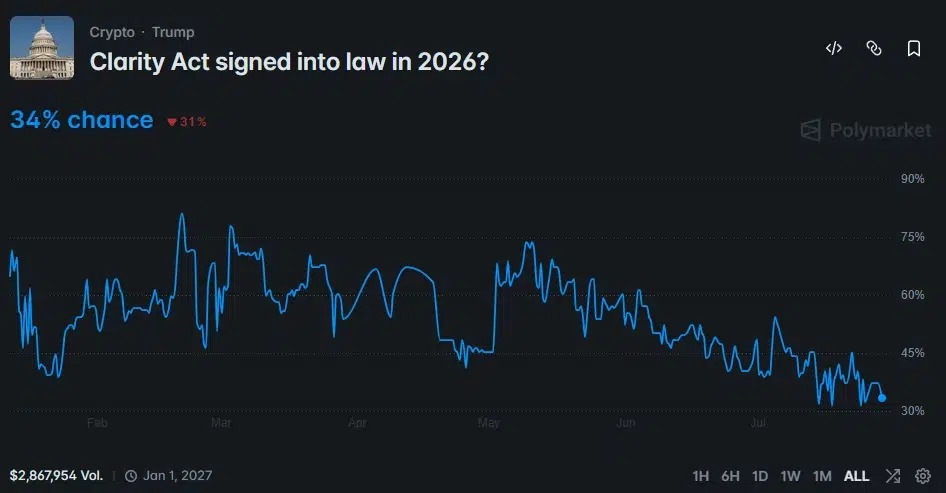


US Crypto Regulatory ActCLARITY ActThe bill is entering a crucial phase in the Senate, with only days remaining before the August recess. Anthony Scaramucci, founder of SkyBridge Capital, stated that if the bill reaches the Senate vote stage, its chances of passing remain high; however, if a vote is delayed, this round of progress could stall.
Disagreements over ethical terms slow down progress
Scaramucci stated that Democrats initially demanded the White House include stronger ethical constraints in the bill, along with enforceable penalties. The report states that the White House agreed to these demands, but members of Congress subsequently proposed granting state attorneys general more authority to enforce federal ethical guidelines.
He believes this requirement presents new legal challenges. According to him, allowing state-level enforcement to target only crypto-related matters, without covering other potential violations of federal ethics codes, creates inconsistencies in the legislative structure. This means that related provisions may require broader adjustments, necessitating continued negotiations between the two sides.
Senate procedures become a greater obstacle
Aside from the disagreements over the terms, Scaramucci believes the more pressing issue is the extremely tight timeframe for Senate procedures. With only about 14 days left before the August recess, senators need to complete the necessary procedural steps to get the bill to a vote in the Senate within this limited time.
- There are only about 14 days left until the August recess.
- Whether the program starts or not becomes a short-term key variable.
- If a vote cannot be scheduled, this round of progress may be interrupted.
He stated that if the bill is to continue moving forward at its current pace, lawmakers need to provide a clear signal that the process has commenced by Thursday afternoon at the latest. The next few days may be the window of opportunity to decide the fate of this bill.
Whether or not a vote is held will determine the fate of the bill.
Despite remaining disagreements, Scaramucci remains optimistic about the bill's prospects once it reaches the Senate vote. He believes that once the bill is actually put to a vote in the Senate, its chances of passing are not low.
His assessment is primarily based on political considerations. Scaramucci stated that with the November election approaching, some younger Democratic lawmakers may not be willing to publicly oppose the crypto industry at this stage, especially given the growing influence of crypto political action committees.
The industry may continue to evaluate its overseas expansion.
Scaramucci also stated that if the CLARITY Act cannot proceed, regulatory uncertainty in the United States may prompt some crypto companies to shift more of their development and expansion to overseas markets.
He stated that some companies in the industry that have already invested significant time and resources in the bill may reassess the cost and feasibility of expanding their operations in the United States if they do not see clear legislative progress in the long term. With the August recess approaching, the Senate's next moves will be a key focus.