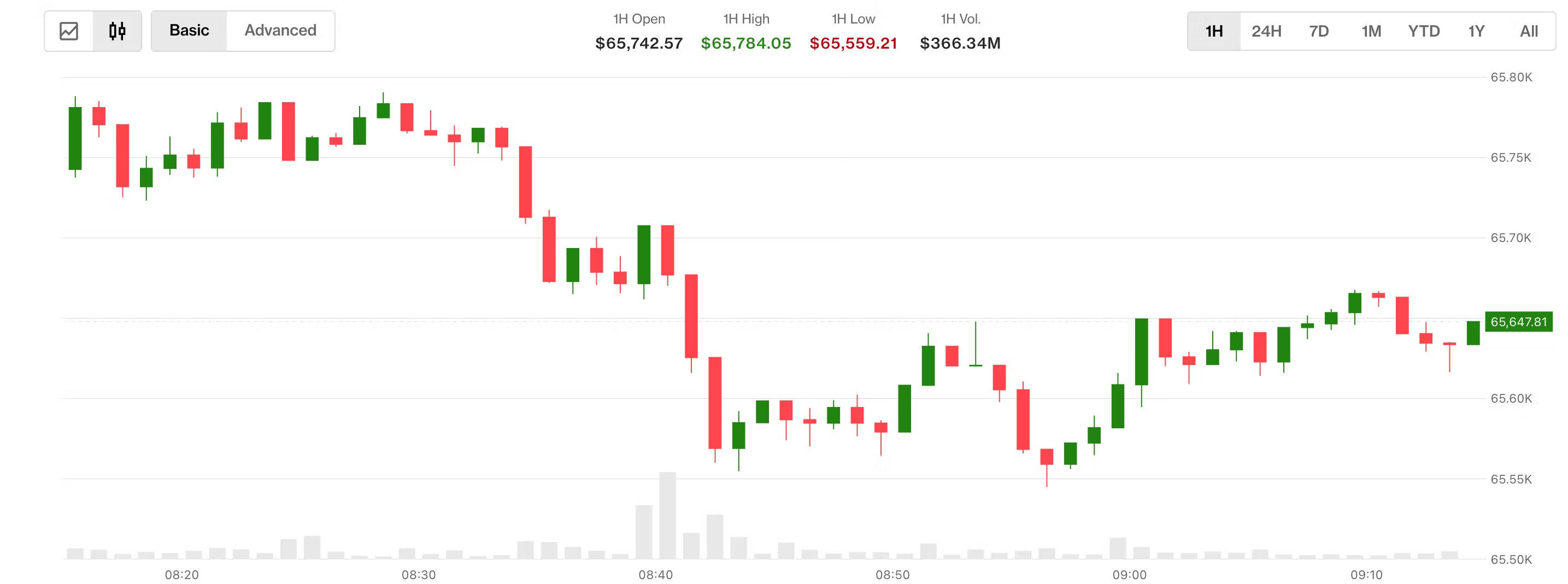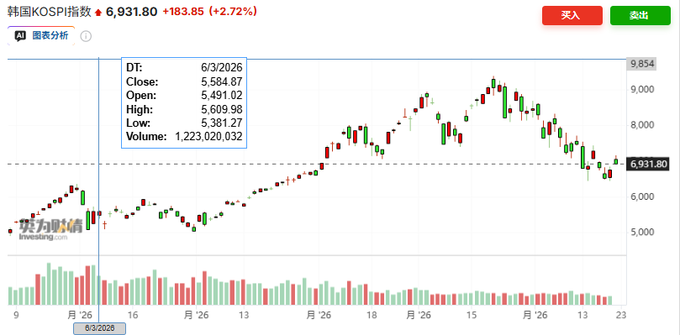


South Korean stocks plunged on Tuesday, and the U.S. Senate's decision to halt the passage of a cryptocurrency market structure bill put pressure on the crypto market. Bitcoin fell by about 2% in overnight U.S. trading, while Ethereum continued to be under pressure, failing to break through the $2,000 mark.
Two factors suppress risk appetite
CoinDesk reported that the South Korean KOSPI index fell 11% in a single day, marking one of its worst single-day performances in recent years, with a decline in chip stocks being the main drag. Risk assets subsequently weakened across the board, with Nasdaq 100 futures, gold, and silver also falling in tandem.
Another source of pressure comes from the US Congress. The US Senate has temporarily shelved the Crypto Clarity Act, prioritizing the Russia sanctions bill and federal personnel appointments. With only two weeks remaining before the August 8 recess for deliberation, market expectations for the bill's progress this year have weakened.
Bitcoin and altcoins generally declined.
As of the time of this report, Bitcoin had fallen approximately 0.53% since midnight UTC, after previously dropping about 2% during the US session. Ethereum fell to around $1,880, continuing its downward pressure after failing to break through $2,000 on Monday.
AI and Layer 1 tokens saw larger declines. FET fell 9.48% in the past 24 hours, while NEAR, HYPE, and WLD fell between 8% and 9%. PUMP gave back 3.07%, but its price remains above weekend levels. A few tokens bucked the trend and rose, including Lighter (LIT), MORPHO, and ENA.
- FET fell 9.48%.
- NEAR, HYPE, and WLD fell 8% to 9%.
- LIT rose 3.97% to $2.21.
Derivatives data turns bearish
The structure of active buying and selling volume in futures has weakened, with short positions accounting for 51.5%, a significant reversal from the bullish trend of the previous few days. XRP futures open interest rose to 2.35 billion contracts, an increase of nearly 6% from the previous day; however, the open interest of BTC, ETH, and SOL remained largely unchanged, indicating that participation from mainstream cryptocurrencies remains limited.
Futures open interest for tokens such as SHIB, AVAX, LINK, and DOGE declined, reflecting some capital outflows. The 24-hour cumulative volume difference adjusted for open interest also turned negative, marking the first time in at least three weeks that the top 25 tokens have shown an overall negative CVD, indicating more active selling pressure in the market.
In terms of funding rates, BTC is close to 0%, indicating a relatively balanced market between bulls and bears; ETH, SOL, XRP, and TRX have turned negative, suggesting an increase in short-term bearish positions. The options market is also biased towards defense, with increased demand for put options on BTC and ETH on Deribit, although the bearish bias for ETH is weaker than that for BTC.
This week, the focus remains on the Federal Reserve and inflation data.

The market's focus remains on the Federal Reserve's interest rate decision on Wednesday and the US core PCE inflation data to be released this week. Despite weakening sentiment in both spot and futures markets, the 30-day implied volatility of BTC and ETH remains at recent lows, indicating that the options market has not yet priced in expectations of greater volatility.