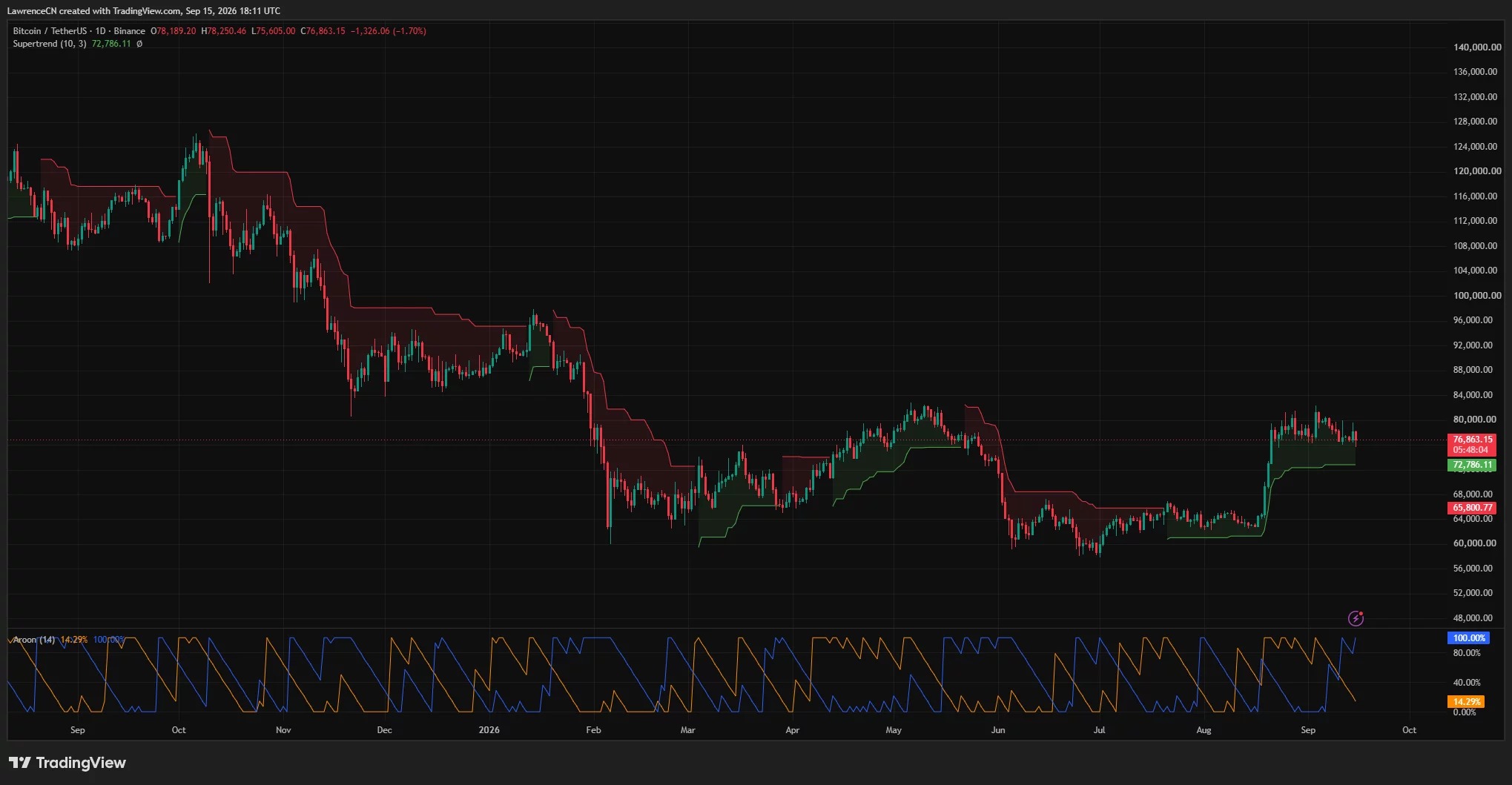


Foreign media commentators believe that the price logic of STX depends not only on market sentiment but also on whether Stacks can keep Bitcoin funds and application activities on the blockchain. The article regards STX as an asset that is highly correlated with the Bitcoin cycle but has greater volatility: on one hand, it is driven by the trend of BTC, and on the other hand, it is affected by the expansion of the Stacks ecosystem.
STX Currently, there are three types of demand sources.
The article states that STX performs three main functions within the Stacks network. The first is to pay for network fees; users need to use STX when conducting exchanges, lending, or interacting with smart contracts on the chain. The second is to participate in the Stacking mechanism, where token holders can lock in STX and then receive rewards paid in BTC through Proof, of, and Transfer ( PoX ). The third is a proposed Bitcoin staking product; in the future, if BTC holders wish to participate in this mechanism, they will need to provide a certain proportion of STX corresponding to their position.
Different from the common PoS model, the Stacking rewards of Stacks are not paid in the form of directly issuing the same token, but come from the Bitcoin invested by miners when competing for block generation. The article mentions that since the launch of PoX in January 2021, this mechanism has distributed over 4200 BTC to participants.
Bitcoin staking remains the biggest variable
The article argues that the most noteworthy source of demand in the future is the self-managed Bitcoin staking products planned under Stacks. According to this concept, users can lock BTC on the Bitcoin mainchain, while matching it with approximately 5% of the position value in STX to obtain participation quotas. In other words, STX will determine how much Bitcoin staking capacity users will be able to utilize.
The text provides an example: if 5,000 BTC enter this mechanism, and considering the then Bitcoin price of about $65,960, the corresponding value would be approximately $330 million; if 5% are paired with STX, then about $16.5 million worth of STX would be required as support.
However, this product was still in the testing phase at that time. The article mentioned that as of July 16, 2026, the Bitcoin staking mechanism was still operating on a private test network; therefore, whether it can truly transform into a stable demand depends on the subsequent implementation.
The supply structure is not entirely fixed.
On the supply side, the article reminds that STX cannot be simply regarded as a fixed total amount of assets. Although market data shows that there is not a large gap between its circulation volume and the fully diluted valuation, indicating that there is no particularly obvious pressure for large-scale unlocking at present, STX does not have a rigid total quantity limit.
The article states that the Stacks network will continue to issue tokens according to the mining reward mechanism, and the relevant parameters can also be adjusted through the governance process. In addition, Stacks Foundation also mentioned that additional issuances related to the ecosystem treasury have been introduced through SIP-031.
The scale of on-chain applications is still relatively small.
The article argues that another layer of support for STX comes from the DeFi activities that already exist on Stacks, but the scale of this ecosystem is still not large at present. It is mentioned in the text that the total locked-up value of DeFi of Stacks is approximately 86 million US dollars, while the market value of Bitcoin is about 1.32 trillion US dollars, and the market value of STX is about 300 million US dollars. In comparison, Stacks is still in a very early stage.
The article also mentioned that UTXO Management became the first institutional participant this May, configuring BTC into Stacks's Bitcoin staking system. This provides institutional holders with a way to obtain BTC-valued returns without moving their assets off the Bitcoin mainchain.
Overall, foreign media believes that the core of STX does not lie in a single narrative, but rather in whether Stacks can combine the need for transaction fees, BTC rewards, and future Bitcoin staking to create a sustained inflow of funds onto the blockchain. If the related products are successfully implemented, the demand for STX may increase; however, if the ecosystem's growth slows down, its high volatility will become more pronounced.