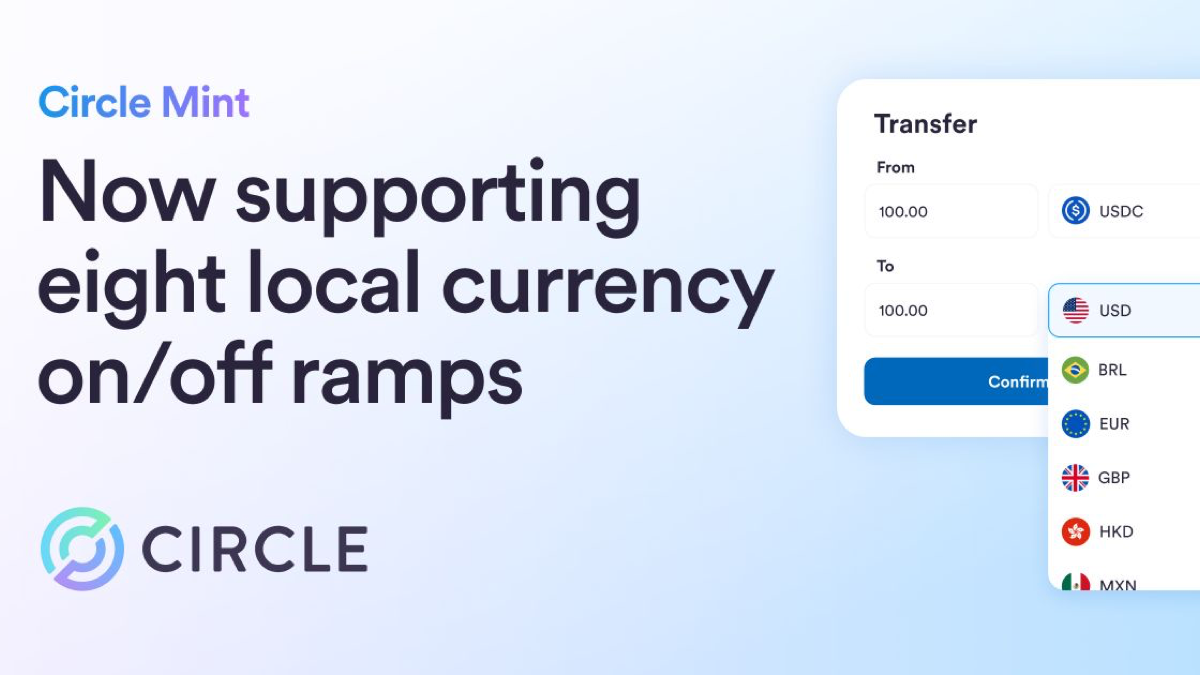


Circle announced in August the expansion of Circle Mint's local currency deposit and withdrawal capabilities, adding 8 new local currency channels. The core of such updates is how institutions can convert fiat funds into on-chain stablecoins, followed by redemption and settlement; this is not a retail wallet feature available to all individual users. Circle also emphasizes in its public statement that Mint is primarily aimed at institutions, with specific services subject to regional restrictions, account qualifications, banking partnerships, and compliance requirements. Describing "new channels" as "free withdrawals for everyone" is both inaccurate and overlooks the most important access barriers in the use of stablecoins.
The significance of local currency channels lies in reducing the reliance on a single US dollar route, manual reconciliation, and multiple intermediaries during cross-border settlements. For enterprises with qualified accounts, direct funding in local currency may reduce the need for currency exchange, shorten the time to receive funds, or simplify operational complexities; however, the actual effects depend on local bank cooperation, exchange rates, service fees, transaction limits, business hours, and due diligence requirements. The expansion of infrastructure provides options, rather than a guaranteed reduction in costs. Payment systems and regulatory rules vary greatly from country to country, and the available features of the same product may also differ.
Stablecoins being "1 to 1" does not mean that there is no friction in any process.
The issuance and redemption mechanisms of stablecoins, secondary market trading, and transfers between individual wallets are at different levels. Even if a certain type of stablecoin is designed to be redeemable at a 1:1 ratio as specified, whether users can directly redeem it from the issuer, what accounts are required, what is the minimum amount, and where the funds need to be transferred from are all determined by the service terms and eligibility requirements. The functions that institutional Mint accounts can have are not the same as those that ordinary individuals can obtain through exchanges or wallets. For cross-border enterprises, compliance reviews, sanctions screenings, information on beneficial owners, and explanations of the source of funds also affect the actual user experience.
Adding a local currency channel may also change the way companies manage their liquidity. In the past, companies might hold a balance in US dollars first and then transfer it onto the blockchain; if accessing the local currency becomes more convenient, they can reallocate funds based on the payment location, receipt location, and foreign exchange exposure. However, this does not mean that exchange rate risks disappear: converting local currency into stablecoins, and then stablecoins into another local currency, may still involve issues such as pricing, market liquidity, and time differences. Financial teams need to set limits, reconciliation rules, approval processes, and procedures for handling exceptions, and cannot simply equate "accessibility" with "unattended operation."
To evaluate the effectiveness of expansion, it is necessary to consider both compliance coverage and actual settlement.
The subsequent indicators for such product updates include which regions and institutions have actually obtained the necessary permissions, whether the inflow and outflow of funds are stable, what the settlement times and failure rates are like, whether customers can reduce manual operations, and whether risk control has been simultaneously improved. It is easy to overestimate the impact by simply looking at the number of supported currencies, as each currency requires continuous support from banks, compliance measures, and operational capabilities. For the Web3 industry, the inflow and outflow of fiat currency is a key link that connects on-chain assets with the real economy. The difficulty often lies not in the smart contracts themselves, but in the last mile of compliance, account management, and payment networks.
The most prudent principle for users remains to confirm the service provider, regional qualifications, and fee structure before conducting any financial transactions. Institutions should verify the available channels through formal applications and official documentation; individuals should not transfer funds to unknown addresses based on press release titles or trust so-called “Mint direct access” services. Infrastructure upgrades are indeed worth paying attention to, but they will only truly translate into long-term use when they provide reliable settlement under clear rules.
From a risk management perspective, the expansion of domestic currency channels also requires companies to re-examine their concentration of funds. A greater variety of currencies and banking partners can increase flexibility, but it may also lead to increased complexity in reconciliation, operational permissions, and reliance on third parties. Mature teams will incorporate controls such as account balances, conversion limits, approval thresholds, sources of exchange rates, and procedures for handling abnormal transactions into their systems, and they will regularly verify the records on the blockchain with those kept by banks. Without these basic controls, even the fastest settlement pathways could amplify losses or cause delays in times of anomalies.
The market should also distinguish between "supporting a certain currency" and "the currency being available around the clock in all regions." Services may be affected by holidays, bank cut-off times, local regulatory adjustments, and the operational status of partners. Product announcements typically outline the ideal capabilities, but it is still necessary to read the latest terms and status pages before actual transactions. For stablecoin issuers, the credibility of expanding their channels ultimately depends on their ability to maintain continuity in redemptions, transparency, and customer support under pressure, rather than simply adding more names to the list of supported currencies.
From the perspective of corporate accounting, the conversion between on-chain assets and bank balances also involves timing of recognition, frequency of reconciliation, and audit evidence. After funds enter or leave the blockchain, the finance team needs to be able to explain the business purpose of each transaction, the authorized person, the source of the exchange rate, and the ultimate beneficiary. Automated interfaces can reduce manual entry, but they also require stricter separation of permissions and enhanced monitoring for exceptions. If multiple departments share the same wallet or account, any mistake in permission settings can potentially amplify operational risks.
For cooperative banks and payment partners, adding new channels means more responsibilities for integration and ongoing operations, including rules for rejecting transactions, fault notifications, settlement reconciliation, and customer support coordination. The truly valuable infrastructure is not one that never makes mistakes, but rather one where, in the event of delays or compliance interceptions, users know what has happened, where the funds are, and who will handle the next steps. Only when these off-chain components are also reliable can stablecoin settlements transform from technical demonstrations into everyday financial services.