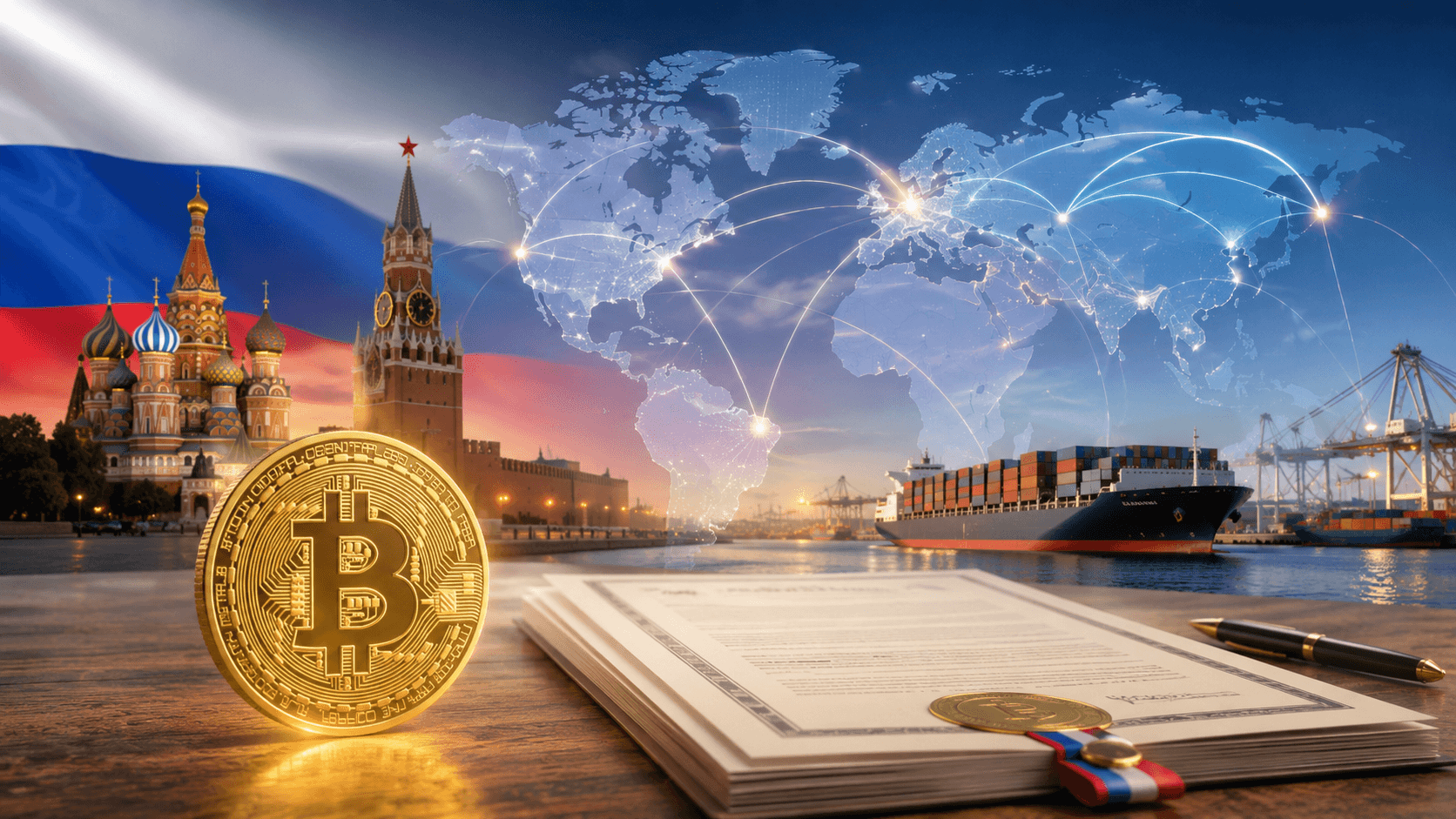


Russia is preparing to incorporate more crypto transactions into its domestic financial system. As banks and brokers join the new framework, the regulated crypto market will launch on September 1st, with market attention focused on Bitcoin, USDT, and the liquidity of ruble settlements.
The estimated first-year transaction volume is up to 4 trillion rubles.
Russia's largest bank, Sberbank, expects that in the first year after the implementation of the new framework, the transaction volume processed by local compliant trading platforms will reach 3.5 to 4 trillion rubles, which is approximately equivalent to up to 46 billion US dollars. By 2029, the annual transaction volume may rise to about 7.5 trillion rubles.
This means that Russia is attempting to transfer some of the encrypted transactions that were previously conducted through off-exchange and offshore channels to regulated platforms for completion.
Ordinary investors are allowed to participate, but there is a quota threshold in place.
According to the new regulations, both qualified investors and ordinary investors can access crypto assets through regulated intermediaries.
Among them, ordinary investors are required to pass a knowledge test first, and the annual purchase limit for each intermediary institution is 300,000 rubles. Qualified investors are not subject to this quota restriction.
However, this arrangement has not turned Bitcoin or USDT into a daily payment tool within Russia. The new framework mainly focuses on encrypted investments, custody, and some cross-border usage scenarios.
Sberbank is still preparing encrypted asset pledge loan products. According to their plan, in the future, once the regulatory framework is perfected, loans will be available using Bitcoin, Ethereum, and USDT as collateral.
The ruble will become the entry point for local cryptocurrencies.
The $46 billion transaction volume forecast provided by Sberbank does not equate to an equivalent increase in the demand for rubles, as the transaction volume includes multiple exchanges of the same funds, which are counted repeatedly.
However, if more transactions are directed to Russian domestic compliance platforms, the market's demand for liquidity in converting rubles to Bitcoin, and rubles to USDT, may still increase. At the same time, this will also drive the use of domestic settlement accounts and compliant custody services.
The article also mentions that Russia has previously accumulated some experience in pegging the ruble to digital assets. A7A5 Stablecoins have still processed a large volume of transactions amidst Western sanctions and scrutiny.
Cross-border settlement is also being advanced in parallel.
In addition to domestic transactions, both Russia and India are pushing to reduce their dependence on the US dollar settlement system, and India is also encouraging the international use of the rupee. This makes the INR / RUB exchange rate an auxiliary indicator for observing changes in non-US dollar settlement systems.
However, in the short term, this exchange rate trend is still mainly influenced by the ruble itself, oil prices, central bank policies, and global interest rates, rather than being driven solely by crypto transactions.
What is more noteworthy is the structural changes. Russia is simultaneously advancing regulated crypto exchanges, crypto-backed loans, as well as digital settlement infrastructure related to the ruble. After its launch on September 1st, the market will observe whether transactions of Bitcoin and USDT can further transition from offshore and peer-to-peer markets to a domestic compliance system that primarily uses the ruble as the medium of exchange.