

Shein has relied on a low-cost direct mailing model that connects with overseas consumers through China's supply chain for years, but this model is now under continuous pressure due to changes in tariffs and import regulations. As the United States and Europe tighten benefits for low-cost parcels, the company's cost advantage is beginning to weaken, and the market response in Hong Kong IPO has also cooled down accordingly.
The United States and Europe simultaneously raise costs
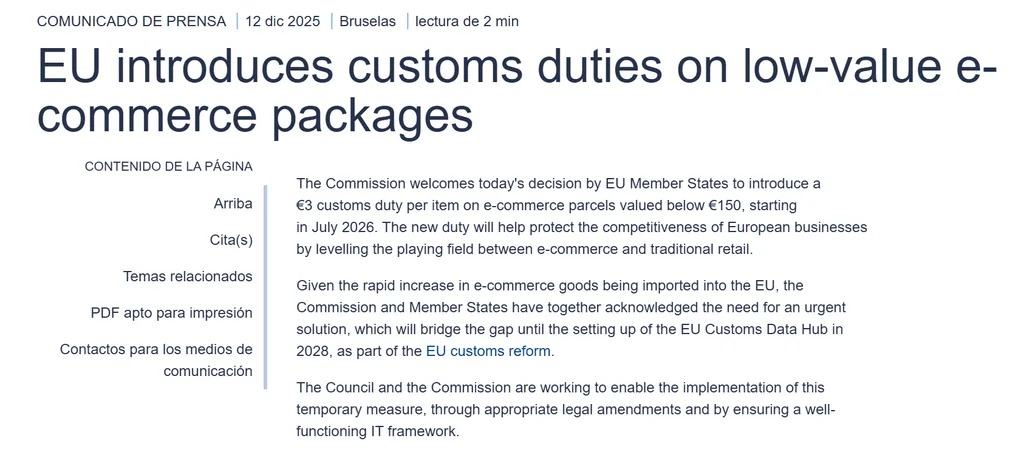
In the past, a large number of low-cost parcels from Shein benefited from the small-amount import exemption policy, allowing them to enter major markets at lower costs. Now, with the adjustments to the rules in the United States de minimis, more low-value parcels are subject to import tariffs. The European Union is also working to increase the costs for low-price e-commerce parcels entering their local market.
This has a direct impact on Shein. Its competitiveness has always been based on low product prices and low delivery costs, but the geopolitical tensions in the Middle East have pushed up air freight prices, which in turn increases the pressure to fulfill contracts.
Losses become apparent, and profit margins are under pressure.
The impact of rising costs has already begun to be reflected in the financial data. Reports indicate that Shein incurred a loss of $99 million in the first three months of the current上半 year. This figure has heightened market concerns regarding its profit margin.
Investors are not only concerned about sales volume but also whether the company can maintain its original profitability after costs increase. For a platform that relies on high turnover and low gross margins, changes in shipping fees, tariffs, and compliance costs can quickly affect profits.
Valuation has fallen by over 70% from its peak.
Centering around this IPO, the most notable aspect is the downward revision of its valuation. Shein had a valuation of nearly $10 billion in 2022, making it one of the highest-valued unlisted consumer and technology companies in the world at that time. This time, the valuation of the Hong Kong-based IPO is approximately $27 billion, which represents a reduction of over 70% from its peak.
At the same time, Temu and AliExpress are also competing for the same group of price-sensitive consumers, while Shein is facing regulatory scrutiny from the United States and Europe. In recent years, the company has attempted to expand beyond ultra-low-priced clothing, including developing third-party platform business, and has increased investment in technology, branding, and international expansion.
According to reports, Shein will have approximately 273 million active customers in 2025, covering around 160 countries and regions. Despite the still large user base, the initial response to its listing in Hong Kong was lukewarm, indicating that the capital market's criteria for evaluating such platforms are no longer solely based on growth rate; cost control and profit quality are also given greater importance.