

After the renewed escalation of tensions between the United States and Iran, expectations for energy prices and interest rates both strengthened, putting pressure on the crypto market, which saw a decline. Bitcoin fell below $77,000 on Tuesday evening, and Ethereum also lost its support at the $2,400 level, with a clear increase in market risk aversion.
Watcher.Guru Data shows that during market downturns, the clearing volume in the crypto market within 60 minutes was approximately 100 million US dollars. However, this figure changes quite rapidly and is more suitable as a snapshot of the situation at that time rather than representing the total for the entire day.
Oil prices and U.S. Treasury yields are exerting pressure simultaneously
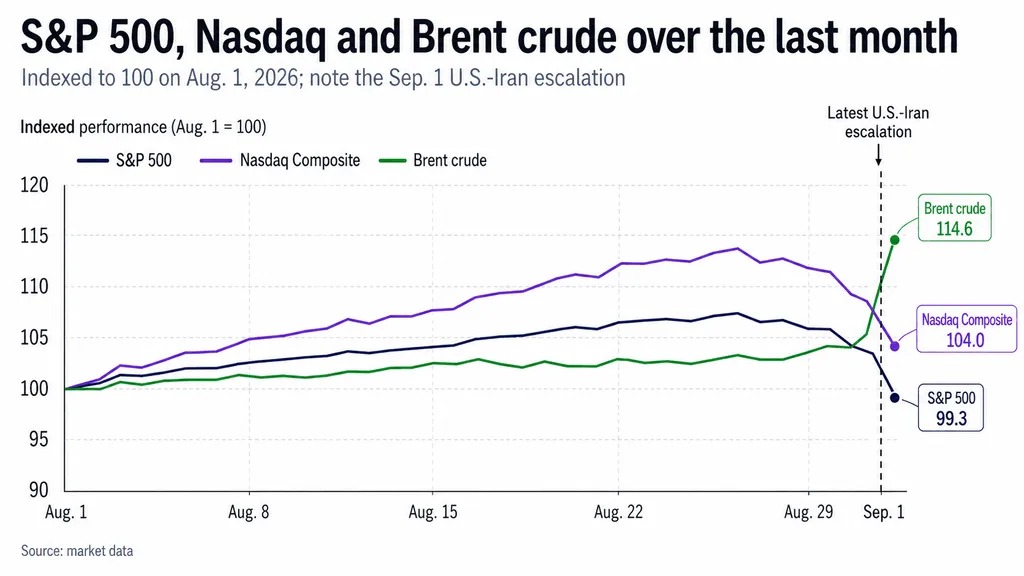
The direct background for this round of decline is the US-Iran conflict, which has driven up crude oil prices rapidly. The market is concerned about the increased transportation risks near the Strait of Hormuz, with Brent crude oil once rising above $94 per barrel, and earlier, Reuters reported a intraday price of around $93.93 per barrel.
Meanwhile, the yield on 10-year U.S. Treasury bonds rose to around 4.79%. Rising energy prices have exacerbated inflation concerns and also increased market expectations for the Federal Reserve to maintain a tight policy stance. For assets such as Bitcoin that do not generate fixed income, rising yields typically increase the holding cost.
The same pressure is also present in the growth sector of the U.S. stock market. The article mentions that risk assets such as NASDAQ were also dragged down on that day, indicating that this decline in the crypto market is not an isolated event, but rather part of a broader decline in risk appetite.
ETF The capital flow back failed to stop the downward trend
Despite the weakening prices, there has been a turnaround in the capital flow for US spot Bitcoin ETF. On August 31, such products attracted a total of approximately $217 million in net inflows, reversing the outflow from the previous trading day.
Among them, IBIT under BlackRock contributed approximately $205.9 million, accounting for almost all of the net inflows on that day. Previously, in August, Bitcoin ETF had recorded buying orders for 9 consecutive trading days, attracting a total of about $3 billion in a single month.
However, the additional funds did not immediately translate into price support. Bitcoin briefly surpassed $81,000 in August before falling back to around $78,500 by the end of the month. Coinpaper Previous statistics showed that BTC had a cumulative increase of about 24% in August, but the momentum at the end of the month began to slow down.
Geopolitical conflicts once again change market sentiment
The article also mentioned that a similar situation had occurred earlier in August. As tensions related to the Strait of Hormuz escalated, Bitcoin once fell below $64,000, but then quickly recovered after the situation eased.
The current focus of the market is whether the demand for ETF will be able to continue to absorb a new round of macroeconomic shocks. If Brent crude oil remains around $95 per barrel and U.S. Treasury yields continue to stay high, Bitcoin may still be closer to being considered a high-volatility risk asset in the short term, rather than a tool for hedging against geopolitical risks.