





The SecondFi security incident in June 2026 emptied 374 crypto wallets overnight.
This is another wake-up call: have you really chosen the right wallet for your crypto? With private key vulnerabilities, blind signing traps, and chip backdoors posing layered risks, which crypto wallet is best? Rather than starting from a generic feature list, we approach this from three hardcore criteria, EAL6+ secure chips, transparent signing to prevent blind signing, and open-source auditable code, and combine them with the latest authoritative 2026 rankings to hand-pick four security wallets that can withstand real-world testing.
What Makes a Crypto Wallet Safe and Reliable?
Before discussing "which crypto wallet is best," we must first clarify one question: what makes a wallet safe and reliable?
Consider this data: in the first half of 2026, wallet thefts caused approximately $450 million in losses, accounting for 33.8% of all Web3 losses. The average loss per incident exceeded $13.4 million, and attack targets have shifted from smart contracts to key management systems.
In our view, a safe and reliable crypto wallet must simultaneously meet three conditions: non-custodial architecture, hardware-level isolation, and secure chip certification.

Therefore, a secure wallet must first be non-custodial, private keys are held by the user, not reliant on third-party custody. Second, a hardware wallet should store private keys offline in a CC EAL6+ certified secure chip. Finally, and critically, the wallet code must be third-party audited and open-source, allowing users to independently verify the core algorithm implementation.
2026 Crypto Wallet Latest Rankings & Recommendations
Based on the above security standards, and combining the latest 2026 reviews from authoritative institutions such as The Block and Coinspeaker, the following four wallets stand out in terms of security, feature completeness, and user reputation.
Table: 2026 Crypto Wallet Latest Rankings
| Ideal For | Recommended Wallet | Key Reason |
|---|---|---|
| Large long-term holdings, maximum security | Trezor Safe 7 | Post-quantum cryptography + fully open-source dual secure element |
| Hardware wallet beginners, balancing price and experience | Ledger Flex | E-Ink touchscreen + mature ecosystem |
| Beginners seeking portability and simplicity | Tangem | No seed phrase + ultra-low $54.90 price |
| High-frequency DeFi trading, cross-chain interactions | Rabby | Transaction simulation + multi-chain gas accounts |
Trezor Safe 7
Strengths & Features
In our view, Trezor Safe 7 is the world's first fully open-source dual secure element wallet and the first hardware wallet equipped with post-quantum cryptography. It features a 2.5-inch color touchscreen, supports Bluetooth connectivity, and is compatible with over 9,000 assets. The TROPIC01 chip is EAL6+ certified, and the chip itself is open-source and not subject to NDA restrictions, allowing security experts worldwide to audit it publicly.
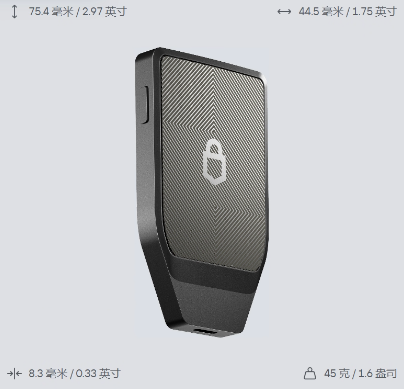
Trezor Safe 7
Ideal For
Geeky users who hold large assets long-term and pursue the highest level of code transparency.
Our Review
In our testing, we found the Trezor Safe 7's 2.5-inch touchscreen operates smoothly, with clear transaction detail display. While Bluetooth connectivity is convenient, it is actually a downside for users seeking "physical isolation." The $249 price tag is on the higher side, making it more suitable for users with larger asset holdings. Overall rating: 9.0/10.
Ledger Flex
Strengths & Features
Ledger Flex is equipped with an EAL6+ secure chip and supports over 5,500 digital assets. Compared to traditional button-based devices, transaction addresses, token approvals, and transaction details are easier to read, significantly reducing the risk of mistaken signing. The accompanying Ledger Live software ecosystem is mature, supporting seamless switching between desktop and mobile.
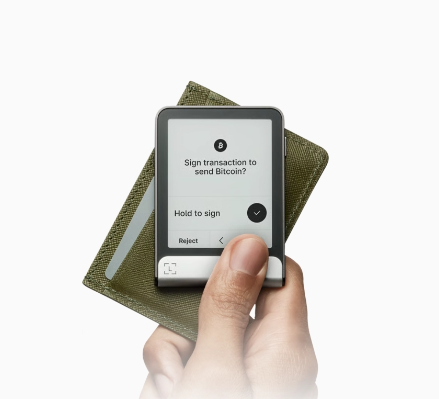
Ledger Flex
Ideal For
Active users who have already decided they need a hardware wallet, sign transactions frequently, and often switch between desktop and mobile.
Our Review
In our view, Ledger Flex strikes an excellent balance between "price" and "experience." However, Ledger's firmware is not fully open-source. Overall, it is one of the most worthwhile choices for most entry-level hardware wallet users in 2026.
Tangem
Strengths & Features
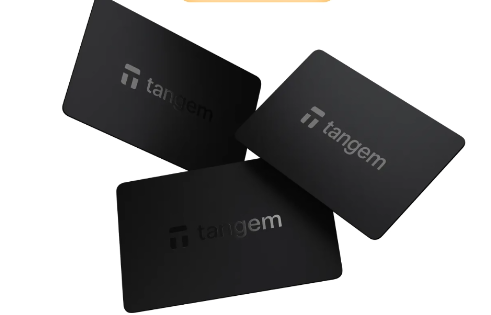
Tangem uses the NXP SE050 EAL6+ secure chip. Private keys are generated during chip initialization and never leave the chip. Its most disruptive design is the default no-seed-phrase mode, it does not generate mnemonic phrases, fundamentally eliminating the risk of seed phrases being phished, photographed, or physically stolen. A full set of three cards sells for just $54.90, with a credit-card form factor that is extremely portable.
Tangem
Ideal For
Users who pursue ultimate portability and want to carry a cold wallet with them.
Our Review
In our view, Tangem is the most disruptive product in the 2026 hardware wallet space. The "no seed phrase" design is a double-edged sword. We recommend users always store the three cards separately in different locations. At $54.90, the barrier to owning a hardware wallet has dropped to a historic low, offering extremely high overall value.
Rabby
Strengths & Features
Rabby is an EVM wallet built specifically for deep DeFi users. In The Block's 2026 review, it scored 4.5 and ranked first among all software wallets. Its core advantages include multi-chain gas accounts, deep DeFi protocol integration, and transaction simulation, previewing transaction outcomes before signing, effectively guarding against malicious contracts. Rabby is developed by the DeBank team, non-custodial, and open-source.
Rabby
Ideal For
Professional users who frequently engage in DeFi interactions and cross-chain operations.
Our Review
In our view, Rabby's functional depth in the software wallet space is unmatched. But it is, after all, a hot wallet, private keys exist in a networked environment. On-chain security monitoring data shows that over 85% of large asset losses occur in hot wallet environments.
Our advice: Rabby is suitable for storing a small amount of assets needed for daily interactions. Large holdings still require a hardware wallet.
FAQ
Q1: Is a wallet with an EAL6+ chip definitely safe?
Not necessarily. EAL6+ certifies the chip itself, not the entire wallet product. It's like a safe with a great lock, if the welds on the box are faulty, it can still be pried open. Firmware vulnerabilities are that "faulty weld." Open-source firmware and independent audits are equally critical.
Q2: Why was my asset transferred away even though I confirmed the transaction?
You likely encountered "blind signing," signing a foreign-language contract with your eyes closed. You thought you authorized "transfer $1," but actually signed an "unlimited transfer." Transparent signing technology translates obscure code into plain language, letting you see every authorization detail before confirming.
Q3: What practical benefit does an open-source wallet give me?
Open-source is like publishing a recipe, chefs worldwide can check if it's poisonous. Reproducible builds allow you to verify whether the app on your phone was truly made from that recipe, ruling out the possibility of the manufacturer secretly "adding ingredients" and avoiding supply chain backdoor risks.
Our View
Back to the core question: which crypto wallet is best? In our view, the answer is not unique, it depends on your asset size and use case.
For long-term large holdings, choose Trezor Safe 7. For hardware wallet beginners, choose Ledger Flex. For beginners seeking portability, choose Tangem (no seed phrase, $54.90). For high-frequency DeFi trading, choose Rabby.
Whichever you choose, always adhere to the iron rules of tiered storage and risk diversification. Keep "spending money" in a hot wallet and your core "nest egg" in a cold wallet. Security is not a one-time choice, but continuous prudent management.
Disclaimer: Readers are advised to strictly comply with the laws and regulations of their location. This content is based on publicly available market information and is for informational and educational purposes only. It does not constitute any investment advice. For the latest updates, follow CoinMeta.