

Canadian construction investment accelerated again in July, but this growth does not represent a full recovery in the real estate sector. Data released by Statistics Canada on September 21st indicates that, after seasonal adjustment, national construction investment increased by C$270.9 million month-on-month, a rise of 1.2%, to C$23.6 billion; year-on-year, it increased by 8.1%. Non-residential investment grew by 3.2%, while residential investment only increased slightly by 0.3%. Excluding price changes and calculated at 2023 constant prices, total investment amounted to C$21.2 billion, with a month-on-month increase of 1.0% and a year-on-year increase of 4.7%. The gap between nominal and real growth rates suggests that price factors still contributed a significant portion of this increase.
If one only looks at the total amount of 23.6 billion Canadian dollars, it is easy to conclude that "the construction industry is generally strengthening." However, upon closer examination, a different picture emerges: public and institutional projects have contributed the most momentum, with single-family residences seeing a rebound, while multi-unit residences have declined. The direction of construction investment is becoming more diversified, as long-term projects such as hospitals and schools face different financing, inventory, and demand conditions compared to the housing market.
The main driver of non-residential growth are institutional projects, not a sudden resurgence in commercial real estate.
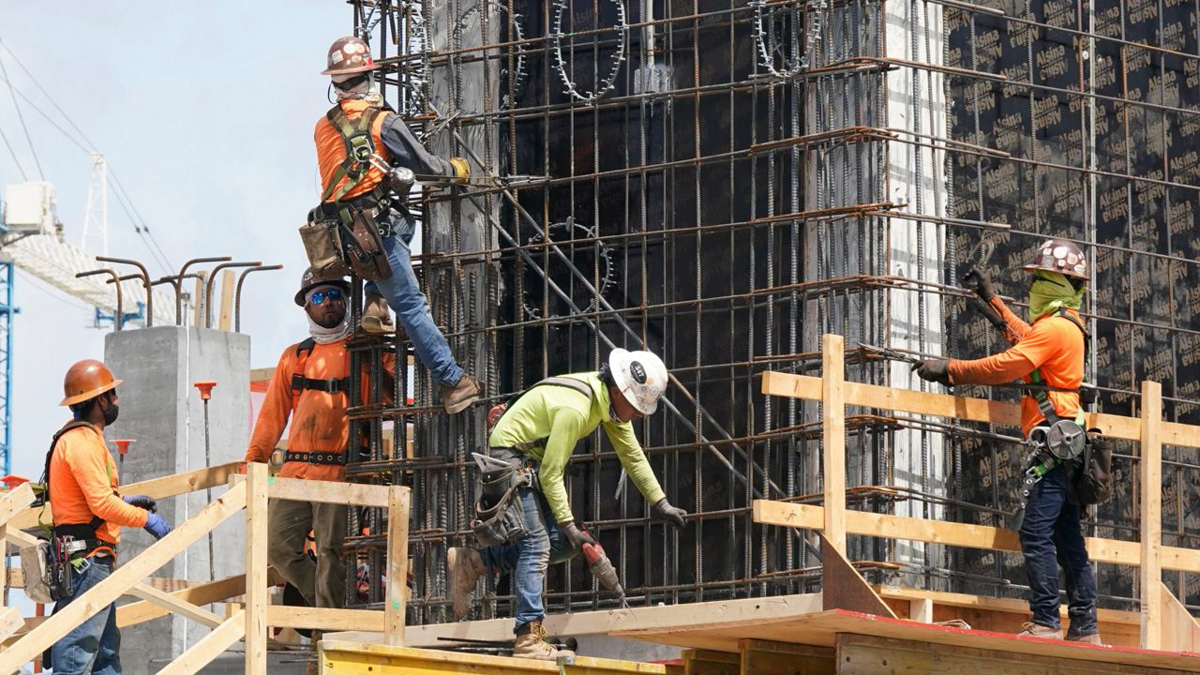
In July, investment in non-residential construction increased by C$226.9 million to reach C$7.4 billion. All three subcategories saw growth, but the magnitudes varied significantly: institutional construction grew by 7.4%, industrial construction by 2.8%, and commercial construction by only 0.8%. In other words, most of the momentum behind non-residential development came from government and public service-related construction, rather than a collective surge in commercial projects such as office buildings and shopping malls.
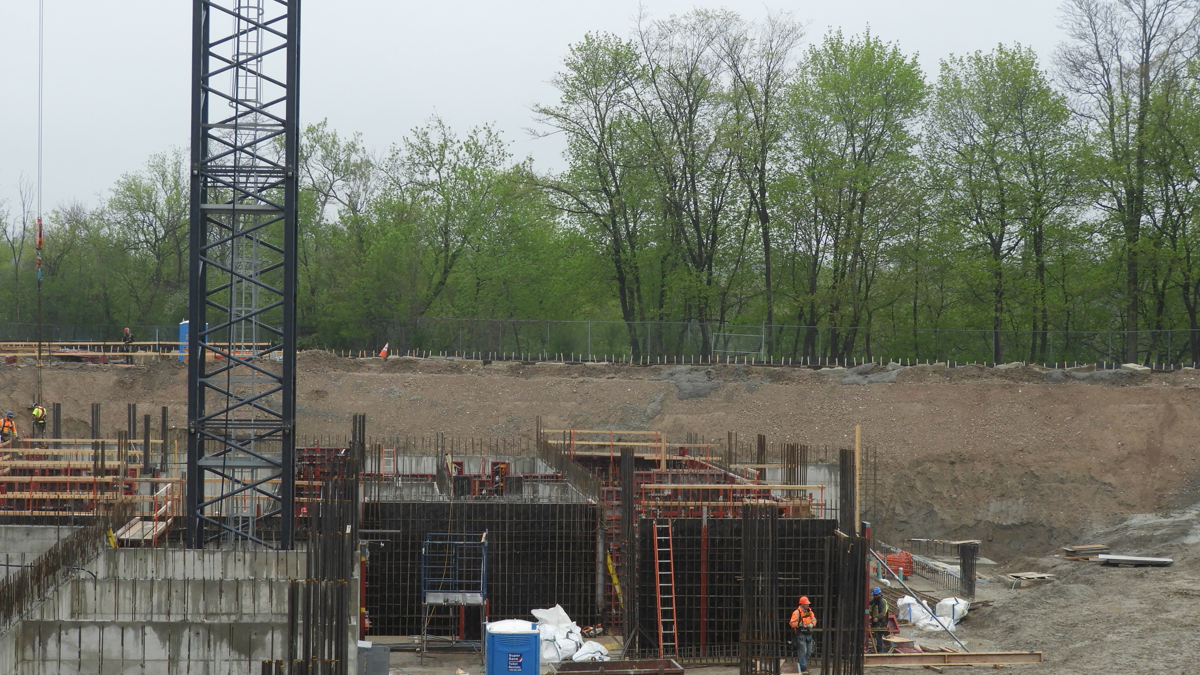
Institutional investment increased by C$159.3 million in the month, rising to C$2.3 billion. Ontario alone saw an increase of C$151 million, mainly driven by the construction of new hospitals. Large hospital projects often have long construction periods and high individual costs, and once they enter the construction phase, they can significantly affect monthly data. This indicates that public capital expenditure is resulting in tangible work volume, but it cannot be directly inferred as a full recovery of confidence in the private sector.
Industrial building investment increased by 40.6 million Canadian dollars to 1.5 billion Canadian dollars, with Saskatchewan and British Columbia contributing 20.3 million and 12.5 million Canadian dollars respectively. Industrial projects are usually related to manufacturing, warehousing, energy, or supply chain layout, and the range of growth is more dispersed than that of hospital projects in a single province. Commercial building investment increased by 27 million Canadian dollars to 3.5 billion Canadian dollars, with a total increase of 42.6 million Canadian dollars across six provinces and one region, but British Columbia saw a decrease of 14.6 million Canadian dollars, which offset part of the increase.
This set of data reminds the market that non-residential construction cannot be treated as a single entity. The financing entities behind institutional, industrial, and commercial projects, as well as their sensitivity to return cycles and interest rates, vary. Hospital construction is primarily determined by public budgets and long-term planning, industrial facilities are more closely related to corporate expansion and supply chain considerations, while commercial real estate has to deal with vacancy rates, rent levels, and refinancing pressures. The strength of one segment does not necessarily mean that the other two segments are also in the same cycle.
Single-family residences have seen a rebound, but this has been largely offset by the decline in multi-unit residences.
Residential construction investment increased by C$44 million in July, reaching C$16.2 billion, which on the surface still represents positive growth. However, there is a clear divergence within this figure: investment in single-family residences grew by 3.5%, increasing by C$265.2 million to C$7.8 billion; investment in multi-unit residences decreased by 2.6%, falling by C$221.2 million to C$8.4 billion. As a result, the net increase that remains is only C$44 million.
The growth in single-family residences is widespread across all provinces, with Ontario seeing an increase of 93.5 million Canadian dollars and Alberta an increase of 68.6 million Canadian dollars, leading the nation. This widespread rise indicates that it is not caused by a single major project. However, the rebound in single-family investment should not be directly equated with an increase in transaction volumes or housing prices. Construction investment records the value of construction activities and is affected by the progress of projects, labor and material costs, as well as any lag in permits issued previously.
The decline in multi-unit residences is of greater concern. British Columbia saw a reduction of 76.7 million Canadian dollars, Quebec of 70.9 million Canadian dollars, and Ontario of 43.9 million Canadian dollars; these three regions together constitute the main drag. Apartments and rental residences are large in scale, and there is a noticeable time lag between project approval, commencement of construction, and the peak construction period. Therefore, a one-month decline does not prove that the long-term supply trend has reversed. However, the simultaneous decline in provinces with concentrated populations at least indicates that residential growth in July lacked support from multi-unit projects.
From the perspective of newly constructed residential structures without seasonal adjustment, apartments and rental apartments still account for the largest share. An information chart from Statistics Canada shows that investments in this category amounted to approximately C$4.7603 billion, accounting for 56.7% of new residential investments, a year-on-year increase of 1.0%; single-family homes accounted for about C$2.5624 billion, representing 30.5%, with a year-on-year decrease of 6.2%. Townhouses accounted for 9.8%, with a year-on-year increase of 9.6%; semi-detached houses accounted for 3.0%, with a year-on-year decrease of 9.4%. Therefore, the rebound in single-family homes in the monthly seasonally adjusted data is not contradictory to the year-on-year structure without seasonal adjustment: the former describes recent changes, while the latter reflects the level compared to a year ago.
It is also important to note the revisions in statistics. According to Statistics Canada, data may be adjusted due to late reporting, delays in the commencement of large-scale projects, and updates to classification and price indices; unseasonalized data has been retrospectively revised back to 2021, while seasonalized data has been revised to 2018. The base period used for calculating constant prices has also been changed to 2023, and some data from early 2017 should be used with caution. The next set of construction investment data, scheduled for August, is planned to be released on October 21st.
For macro observers, the July data does not merely reflect a "prosperous construction sector"; rather, it indicates a short-term rebound in public institution projects and single-family residences, which overshadowed the weakness in multi-unit housing. To determine whether this growth is sustainable, three additional factors need to be monitored: whether there will be new institutional projects following those in hospitals, whether industrial investment can spread to more provinces, and whether multi-unit housing can accelerate again in areas where demand for housing remains high. 23.6 billion Canadian dollars is a substantial amount, but what truly determines the direction of the cycle is whether these sub-items can all show upward trends simultaneously.