

The U.S. Internal Revenue Service (IRS) has begun to collect more data on encrypted transactions through new forms, but this has not made tax filing any easier. For many American taxpayers, the 1099-DA forms sent by exchanges only show the amount sold, and they still have to provide the purchase cost themselves, which is what truly determines their profits and losses.
Report the selling amount first in 2025.
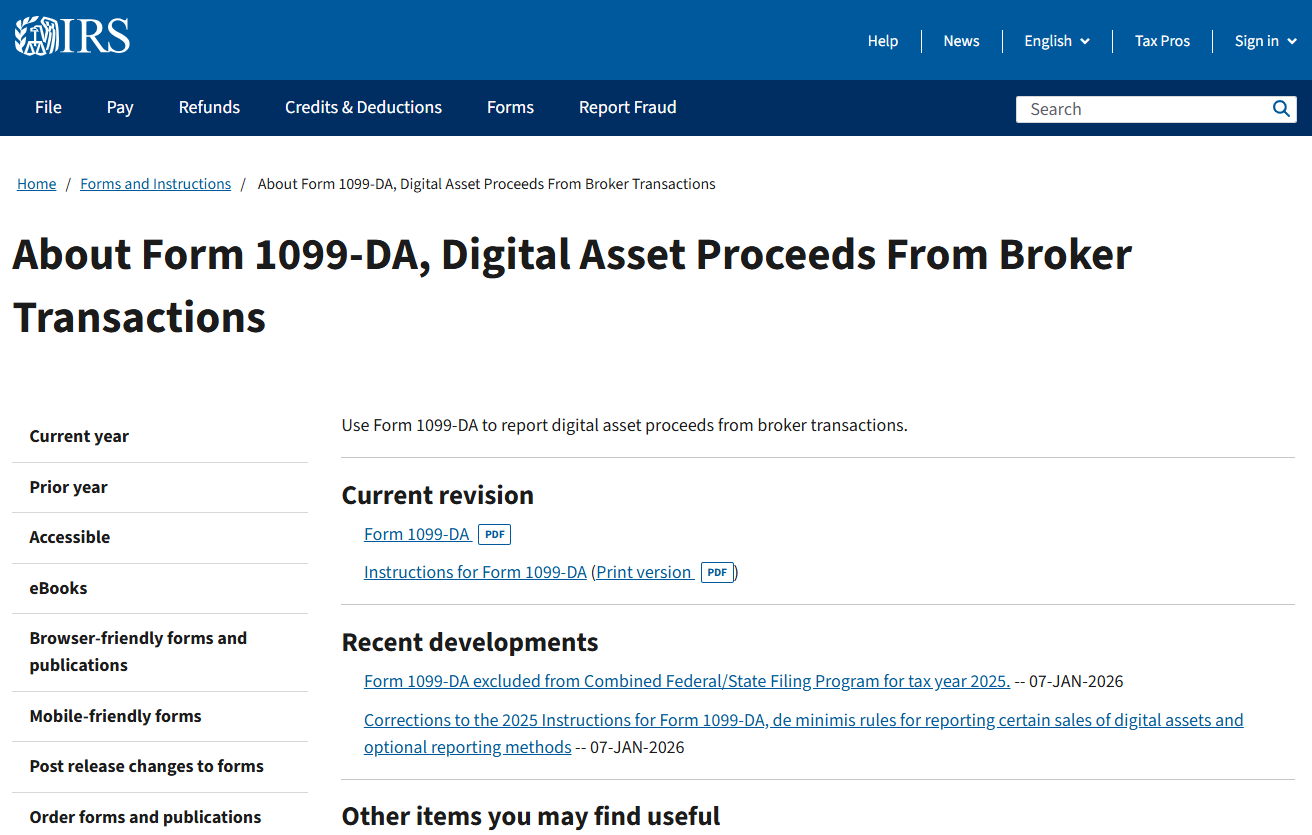
According to the new regulations, brokers are required to report the proceeds from the sale of certain digital assets to the United States Internal Revenue Service (IRS). For the 2025 tax year, the key figure is proceeds, which refers to the total amount at the time of asset sale; as for cost and basis, which represent the initial purchase cost, these are generally not subject to mandatory reporting in that year.
This means that regulatory authorities can see how much money has been earned from the sale of an asset, but they may not necessarily know the actual profit made by the taxpayer. If an investor has transferred assets between multiple exchanges and wallets before selling them in batches, calculating the true profit and loss becomes significantly more complicated.
A tax service provider Awaken Tax conducted a survey in August among 1,000 American crypto investors. The survey found that among those who had applied or planned to apply for an extension in filing their taxes, 21% stated they were still waiting for the required information to be provided by exchanges or platforms. Additionally, about one-fifth of the respondents mentioned that the 1099- DA forms they received were incomplete, or they were unable to confirm whether they accurately reflected their transaction activities.
It is difficult to reconcile the tables with the transaction records.
Multiple tax professionals stated that the most common issue for taxpayers at present is the difficulty in verifying 1099- DA forms against personal transaction records.
The founder, Sharon Yip, stated that their team has discovered discrepancies between the 1099- DA received by customers and the tax reports. Some tables do not cover all of the customers' transactions for the year 2025; moreover, the format of the statements provided by different exchanges is inconsistent. Additionally, some platforms list the cost basis for certain transactions while omitting it for others, which further complicates understanding.
She gave an example, stating that a client conducted stablecoin transactions worth over $300,000 on a certain exchange in 2025, yet the total amount of stablecoins sold as displayed on the exchange’s 1099- DA was less than $100,000.
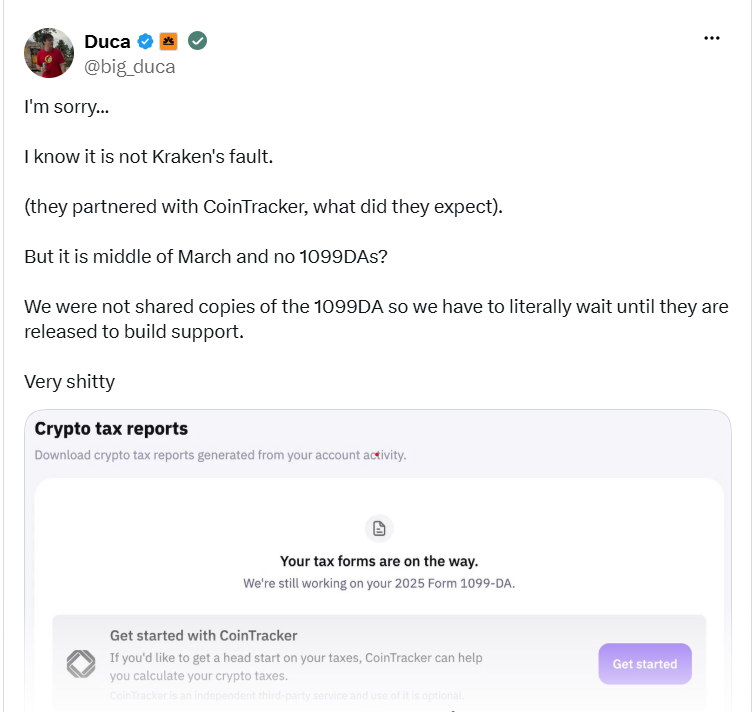
The founder, Andrew Duca, also mentioned that some users received the forms only in the later stages of the tax filing season. He pointed out that Kraken did not send out the 1099- DA forms to users until two weeks before the tax filing deadline on April 15th. Duca also showed a Kraken form from the same period, which did not list any transaction information. Kraken did not respond to related interview requests.
The cost base will be supplemented in 2026.
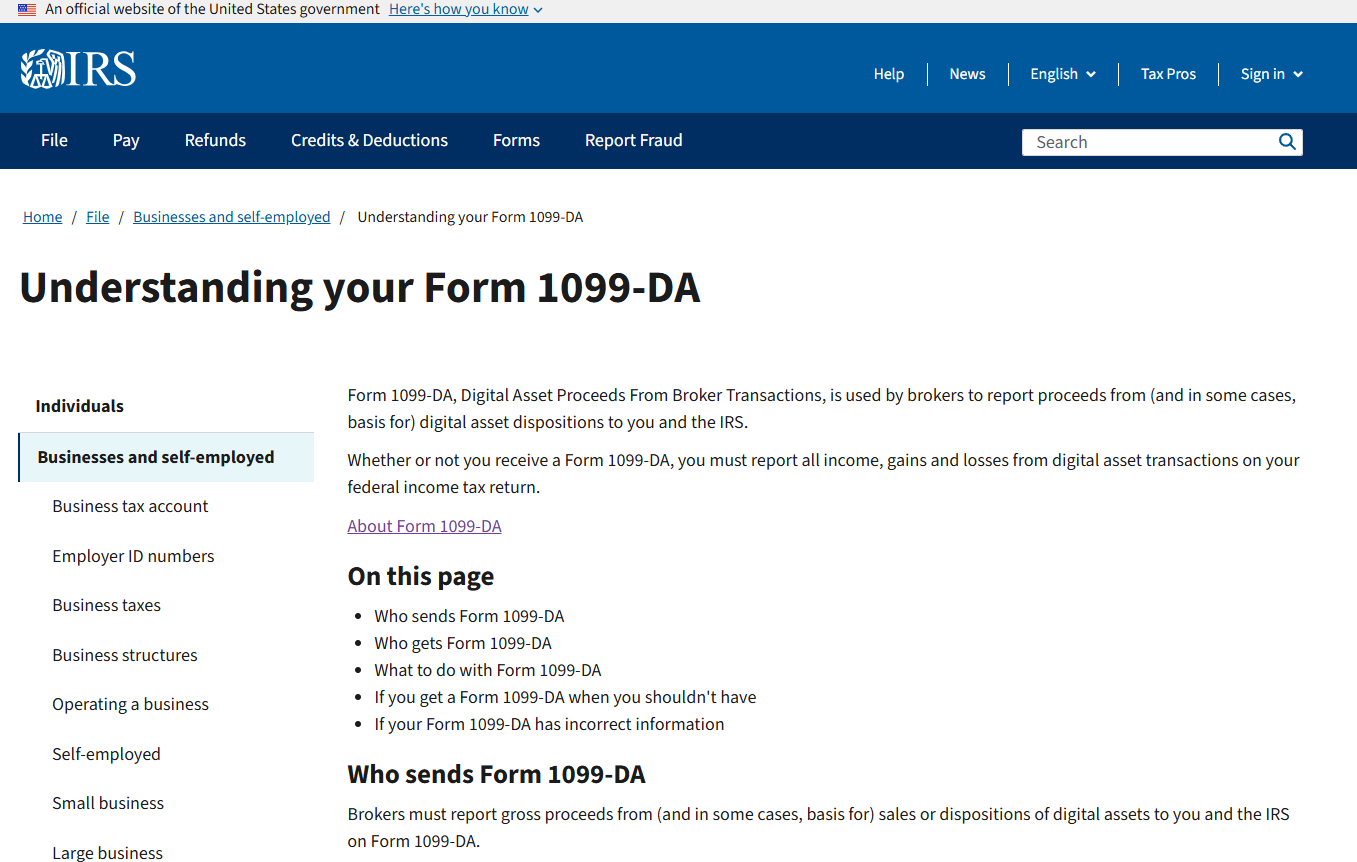
According to the IRS, taxpayers are required to report digital asset income as well as capital gains or losses, regardless of whether they receive a 1099-DA form or not. In other words, this form is not a complete basis for tax filing, but rather serves as a tool for regulators to track transaction details.
Tax service agencies believe that taxpayers still need to retain a complete transaction history, including purchase and sale records, handling fees, recharge and withdrawal details, transfer paths, as well as relevant wallet identifiers. This is because when an asset is transferred between different platforms, the original purchase cost should also be carried over; if any part of this history is missing, there may still be errors in calculating profits and losses when selling the asset on another platform several years later.
Executive Director Andrew Gordon stated that many encryption tax software programs currently lack the functionality to directly import and verify 1099- DA. Even if such functionality is available, manual entry is often required, as the forms provided by many brokers in 2025 are not in a machine-readable format. For high-frequency traders, this may mean having to manually enter hundreds of data entries one by one.
According to the current arrangements, starting from 2026, brokers will also be required to report the cost base for digital assets within their coverage, which will provide more information for taxpayers to calculate their profits and losses.
However, if assets are transferred to the current platform from other exchanges or private wallets, the relevant information may still not be within the scope of automatic reporting. In other words, even though the data visible to regulators continues to increase, investors still need to keep and verify their cross-platform holdings and transaction records on their own.