


Shanghai, September 30th / PRNewswire / -- According to SMG.
The 48th WorldSkills Competition opened in Shanghai on September 22nd, bringing together young skilled talents from all over the world to compete in dozens of trades and vocational categories. One of the new events this year is "Unmanned Aerial Vehicle Systems" ( Unmanned Aerial Systems ), which reflects the rapid growth of the unmanned aerial vehicle industry and the increasing demand for workers with multidisciplinary technical capabilities.
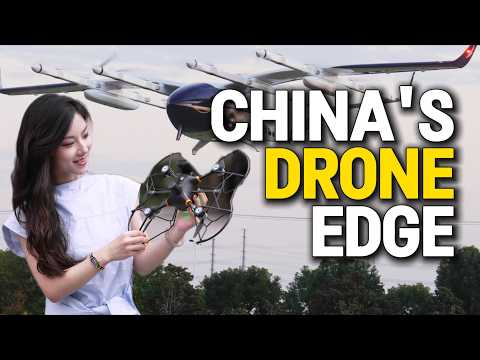
In this new project, participants are required to assemble a drone from over 200 parts within 18 hours, program its flight control system, and make it fly autonomously. The task integrates mechanical assembly, electronics, computer programming, and artificial intelligence.
At the time of adding this project, China's drone industry was still in continuous expansion. By 2025, the output value of China's civil drone industry reached 176.1 billion yuan, a year-on-year increase of about 20%, among which industrial drones accounted for more than 70% of the total.
In Shanghai, drones are being used for inspecting power transmission lines, replacing some of the work that previously required workers to climb towers. He Bing, a professional engineer from the State Grid Shanghai Electric Power Company, stated that approximately 100 drones are deployed for inspections in the city of Shanghai every day.
"In the past, it might have taken an hour for a person to climb a tower. Now, we can inspect the tower using drones in just 10 minutes," said He Bing.
This technology is also entering the entertainment, engineering, and overseas markets. Aoying Technology, headquartered in Shanghai, has already organized drone light shows involving over 14,000 drones, while Vertaxi has deployed industrial drones overseas, including for applications such as YouTube inspections.
Industry growth is also giving rise to a demand for new types of skilled talents.
Vice President Yue Tingting of Vertaxi estimates that the Chinese drone industry is facing a talent gap of over one million people, covering positions such as hardware engineers, R&D engineers, drone operators, and test engineers.
Vocational schools are also responding to this demand. Shanghai Industry and Commerce Information School plans to introduce new majors in drone assembly, debugging, and maintenance, with the expectation of training around 100 students.
For students like Chen Yixuan, drone training is no longer just about learning how to operate a flying vehicle; it also includes assembly, welding, programming, flight control, and autonomous flight algorithms.
"The first module is assembly. The second is test flight. The third is coding – making it fly on its own," said Chen Yixuan, "Autonomous flight is one of the greatest challenges."
Therefore, the debut of the drone system project at the World Skills Competition in Shanghai reflects broader changes that occur beyond the competition venue itself.
As drones move from being consumer products to being used in areas such as power grid inspection, engineering, agriculture, emergency response, and manned transportation, companies increasingly need not only people who can operate the aircraft, but also talents who understand how to manufacture, program, test, and maintain entire unmanned systems.
For the World Skills Competition, this change has given rise to a new competition event; for China's rapidly expanding drone industry, it also presents a new question: who will possess the skills necessary to build and operate the next generation of drones?
21%