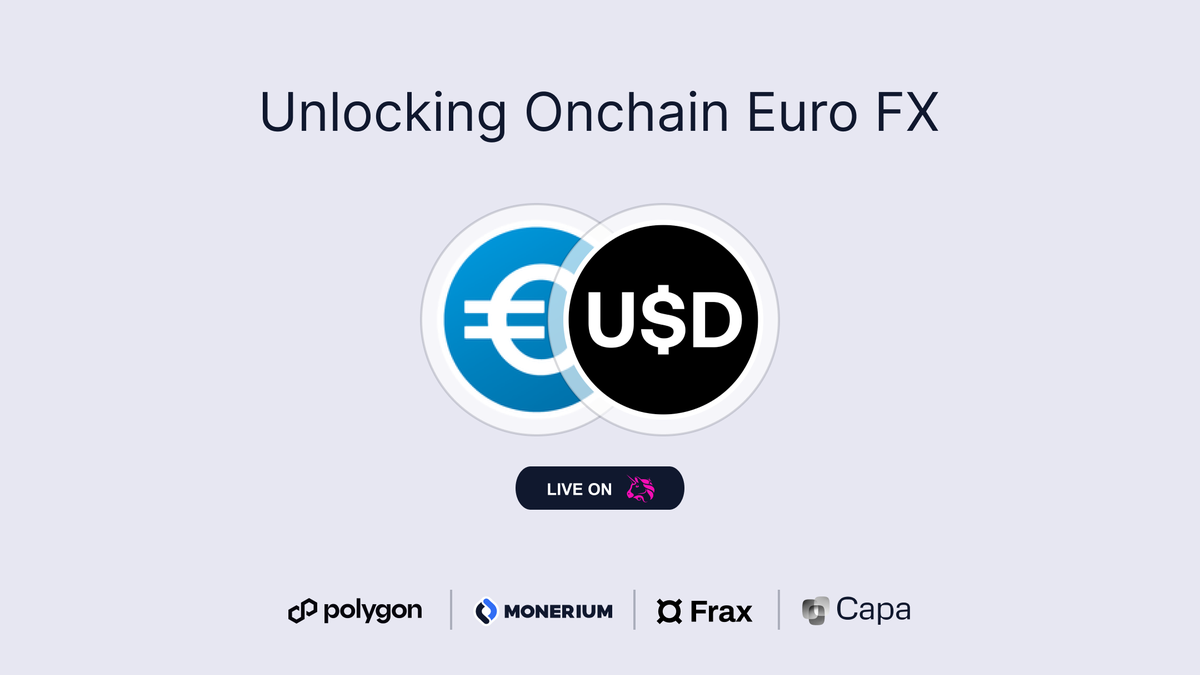


On October 1st, Polygon disclosed that the euro token EURe of Monerium and the US dollar stablecoin frxUSD of Frax have formed a direct exchange pool on Polygon's Uniswap v3, connecting liquidity with payment scenarios. Unlike the merchant cryptocurrency settlement product announced yesterday, the core of this event is how euro funds can enter the blockchain through bank accounts and then be exchanged for US dollar assets. The launch of this pool does not mean that cross-border payment applications are automatically commercialized, nor can the few seconds of confirmation for an on-chain exchange be equated with the end-to-end account settlement time on the bank side.
The official description begins with a standard euro transfer: eligible Monerium customers transfer euros from their SEPA account to their own IBAN euro account. Subsequently, Monerium issues EURe to the associated wallet; users can then exchange EURe for frxUSD through an exchange pool. Uniswap provides the exchange mechanism, while Polygon is responsible for on-chain settlement. This process connects bank accounts with the open on-chain market, but bank transfers, identity verification, token issuance, and on-chain exchanges remain separate steps, each with its own processing times and failure conditions.
What kind of friction does a trading pool solve?
Applications that previously required conversion between euros and US dollar stablecoins might have to transfer euros to a trading platform first, complete the exchange rate conversion, and then withdraw the US dollar assets back to the target network. The direct exchange pool allows eligible users to exchange tokens on the same blockchain, making it easier for developers to integrate this step into wallets or fund management tools. It has potential value for cross-currency balance adjustments, small, high-frequency payments, and corporate financial operations, but each use case requires independent solutions for compliance, liquidity, and financial recording issues.
EURe is a blockchain-based euro digital currency token issued by Monerium. Polygon claims that it meets the requirements of MiCA, is backed 1:1 by secured euro reserves, and can be redeemed at face value; frxUSD represents the US dollar side and is officially described as a stablecoin fully supported by assets such as cash equivalents. Although both tokens contain the name of a fiat currency in their names, they differ in issuer, reserve composition, redemption channels, and risk exposure. The exchange rate is not always exactly equal to a certain interbank foreign exchange rate, and the supply and demand in the pool, as well as transaction fees, will affect the actual amount received.
The liquidity of Uniswap and v3 is provided by participants within specific price ranges. Just because the pool is available does not mean that any amount can be traded at a low slippage. If someone exchanges a large amount of EURe at once, the price may deviate from the reference exchange rate; liquidity providers face risks such as price fluctuations, asset decoupling, and smart contract issues. For payment applications, it is crucial to clearly display quotes, handling fees, and the minimum amount to be credited before user confirmation, and to provide understandable solutions in case of exchange failures or price spikes.
The inclusion of Capa is positioned by the project team as a means to support liquidity and genuine payment traffic, however, the announcement does not disclose the current number of locked positions, trading volumes, or the number of institutional clients within the pool. Therefore, the statement "with partners" cannot be directly interpreted as "forming a deep market." True market depth should be measured by slippage at different trading scales, bid-ask spreads, daily transactions, and the convertibility under pressure. These indicators change over time and cannot be judged solely based on the promotional figures from the day of release.
The final step of cross-border payments is still off-chain.
After the on-chain exchange is confirmed, if the recipient wishes to convert frxUSD into US dollars in their bank account, they still rely on the issuer, platform, or payment institution for redemption and local withdrawal services. The reverse process is similar: converting US dollars back into EURe does not automatically result in euros being credited to the bank account immediately. Polygon also clearly states in the announcement that bank transfers are a separate step with their own processing time. This restriction is very important; otherwise, "instant settlement" could easily be misunderstood as meaning that the entire cross-border remittance is available within just a few seconds from initiation.
Payment institutions also need to address issues related to exchange rate transparency and responsibility allocation. At which point do users accept quotes? Who bears the slippage during periods of severe market volatility? What are the remedies in cases where wallet addresses are incorrectly entered, compliance reviews are interrupted, or on-chain transactions are completed but bank withdrawals fail? Without clear answers to these questions, it will be difficult for merchants and businesses to sustain their operations on such platforms, no matter how inexpensive the underlying networks are. The competition in on-chain foreign exchange products will ultimately shift from whether technology can support exchanges to whether the services provided are stable and understandable to users.
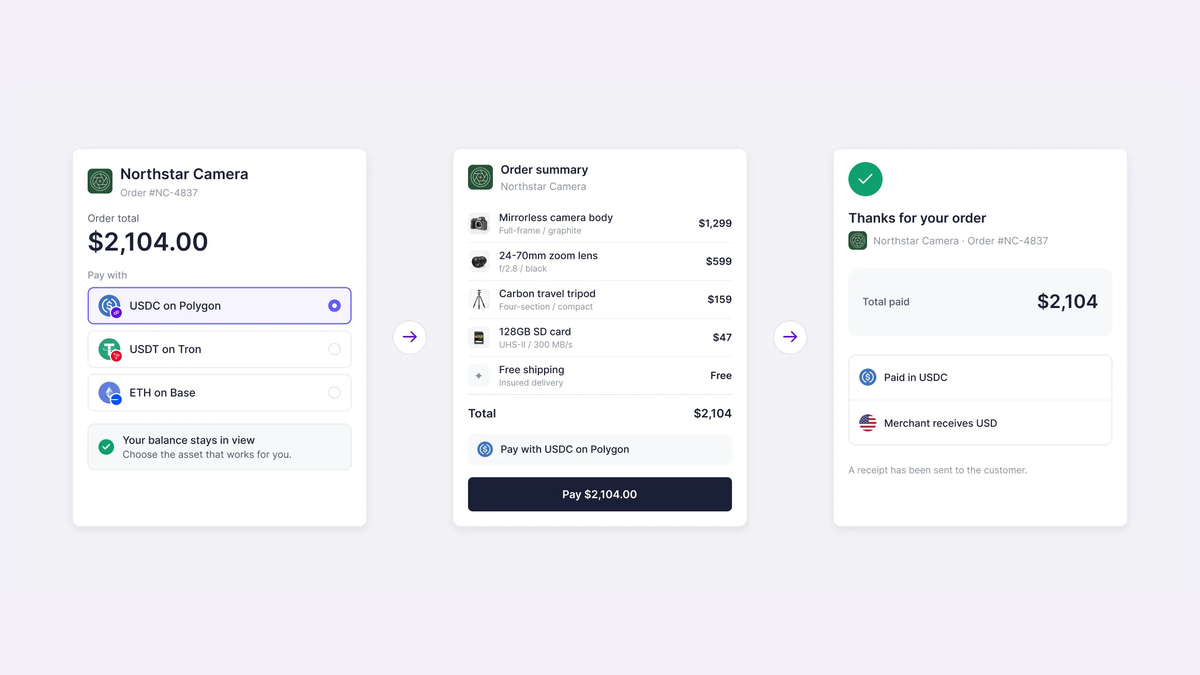
This event belongs to the same ecosystem as yesterday's Checkout announcement by Polygon, but it is not the same product; it has just been given a different title. Checkout is aimed at merchant settlement, addressing the differences in payment preferences between consumers and merchants; EURe / frxUSD pools focus on the exchange of euros and US dollars tokens, serving the foreign exchange aspects of the payment and finance chains. These two aspects could potentially be combined in the future, but the current announcements do not prove that they have already been integrated in end-to-end transactions with any particular merchants.
What can be confirmed now is that the exchange pool is operating on Uniswap and v3 of the Polygon chain. Eligible customers have an open path to deposit funds from SEPA, proceed with issuance on EURe, and then carry out exchanges on the chain. In the next phase, what is more noteworthy are sustained liquidity, the actual exchange rate costs, the time required for bank deposits and withdrawals, and the handling of risk events. Only when these data withstand the test of daily transactions will there be a chance for the bridge between euros and dollars on the chain to evolve from an available technology into a reliable payment infrastructure.