On October 3rd, according to a post by a technology media outlet Tom, OpenAI announced that it has internally deployed its self-developed Jalape No ASIC chip, which is used in conjunction with AMD EPYC Turin hosts equipped with 1.5TB of memory.
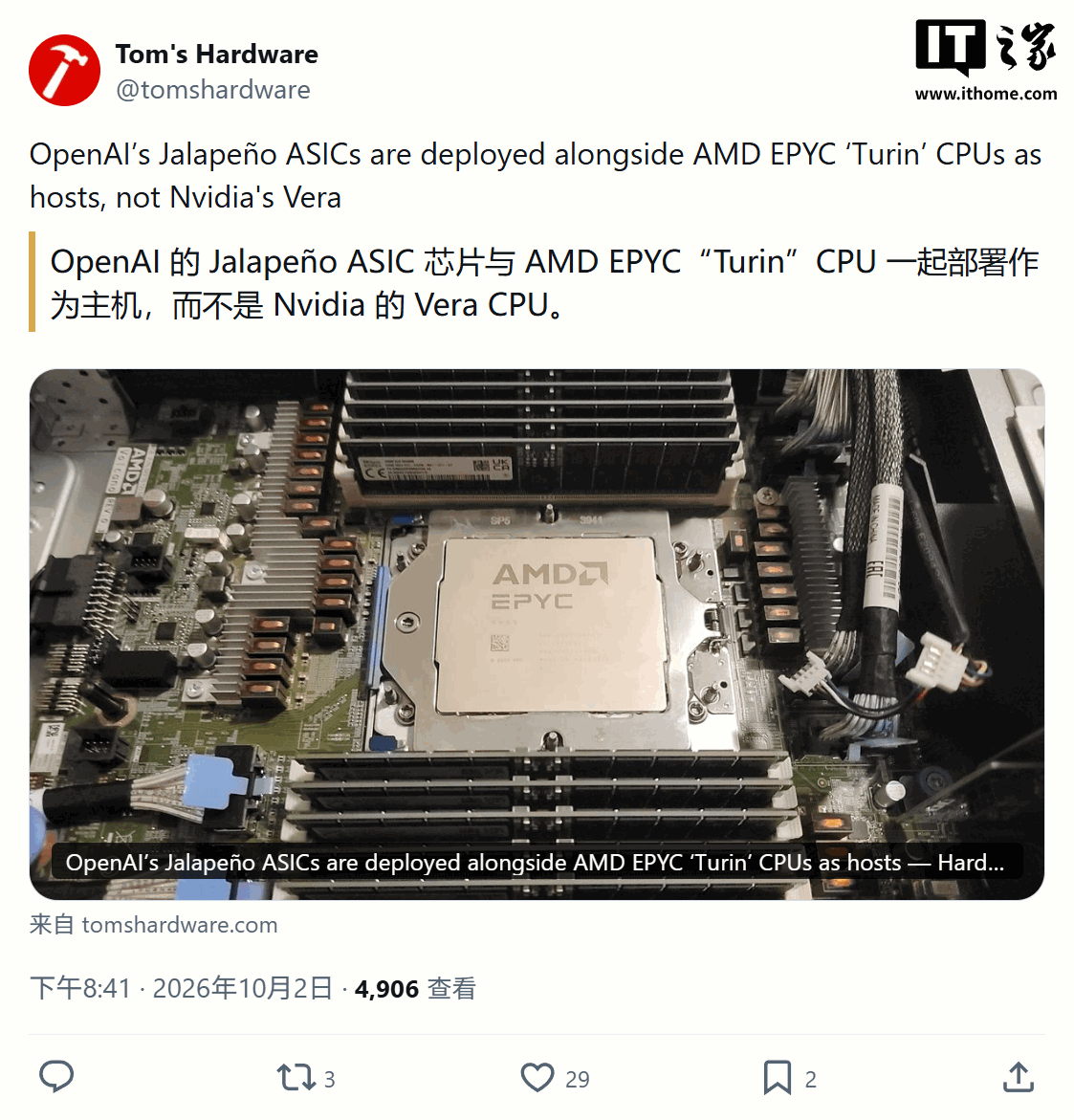
In an interview with that media outlet, Richard He ( Richard Ho ), Vice President and Head of Hardware at OpenAI, stated that the choice of Turin was based on "practical" considerations, and pointed out that NVIDIA's new Vera CPU was "slightly behind" in terms of maturity.
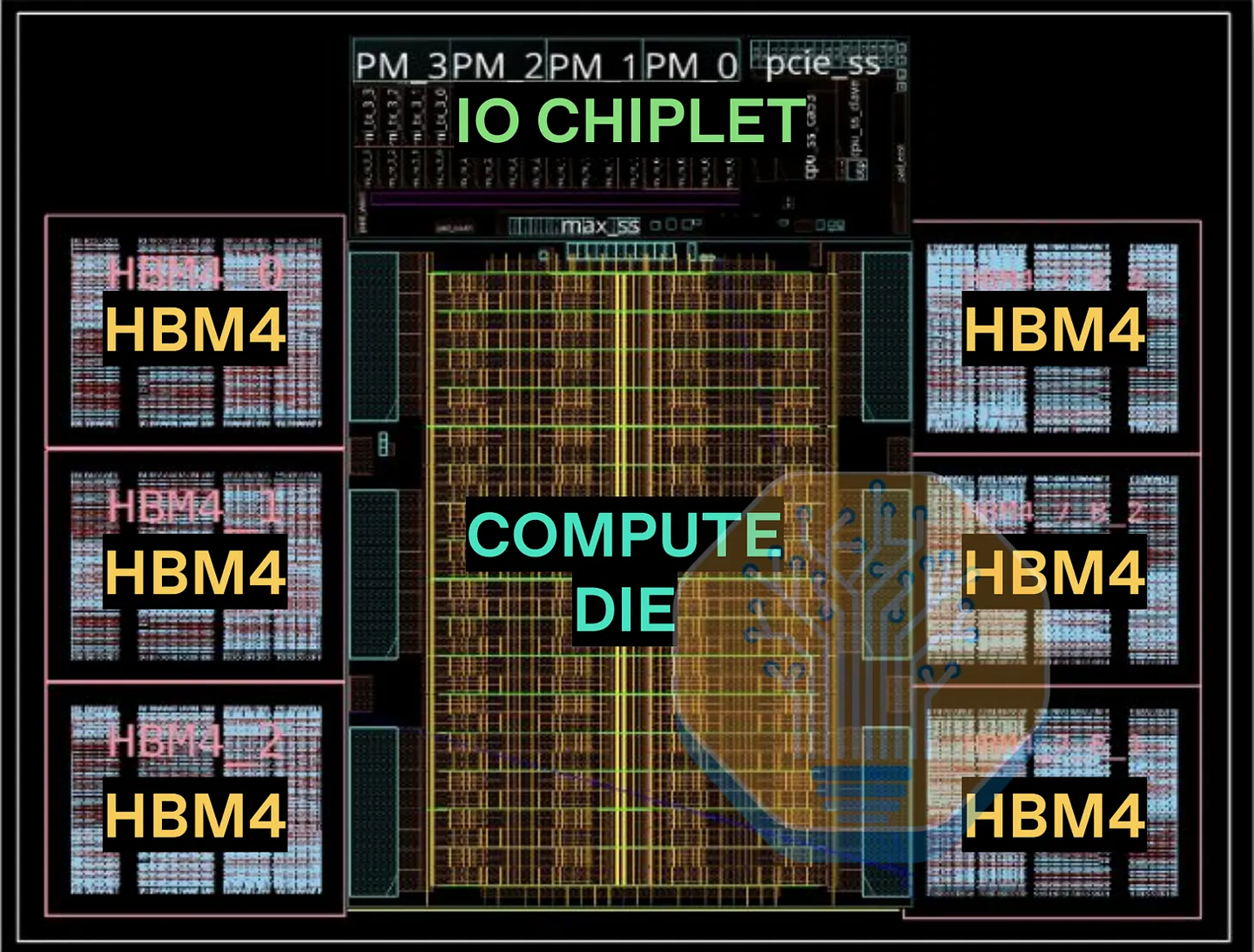
Ho indicates that the Turin chip of AMD has strong performance and is already capable of meeting all the requirements of the Jalape project. Moreover, our partners have extensive experience with this platform, which will help to accelerate the deployment process.
For the Jalape project, the OpenAI team clarified two main principles during the design phase: "risk reduction" and "rapid implementation." Ho emphasizes that the company aims to be aggressive in terms of performance indicators and cost control, but the choice of platform must comply with the existing engineering decision-making framework to ensure that the project remains controllable.
Jalape ño ASIC Currently, it is only for internal use within OpenAI. The company has not planned to sell it to the public yet. However, Ho indicates that in the future, if resources permit, there is no exclusion of the possibility of promoting it to a wider range of scenarios.
IT's home attaches the relevant interview videos as follows:
Related Reading:
- OpenAI's First Self-Developed Chip: Jalape Performance Debut: DeepSeek R1 With a AI throughput that is 1.7 times that of GB300
- OpenAI Show off muscles! The Jalape chip jointly developed with Broadcom will challenge NVIDIA GB300.
- Reports claim that OpenAI and Broadcom have collaborated on Jalape chips, which utilize TSMC's 3nm manufacturing process.
- OpenAI and Broadcom jointly create the AI chip, making its Jalape debut, claimed to be comparable to NVIDIA Blackwell.