


It is worth noting that, on the surface, the national employment data in the United States remains relatively stable. The unemployment rate is at 4.2%, and manufacturing employment actually increased by 9,000 people in September. However, these overall figures may conceal significant regional levels of unemployment.
A single factory could outweigh local employment growth.
These layoffs also illustrate a broader issue with national salary and employment data: such data measures the overall situation of the entire economy. Small growth in industries such as machinery, plastics, or healthcare may offset large-scale unemployment in individual factories, even though this unemployment is economically significant for the affected communities.
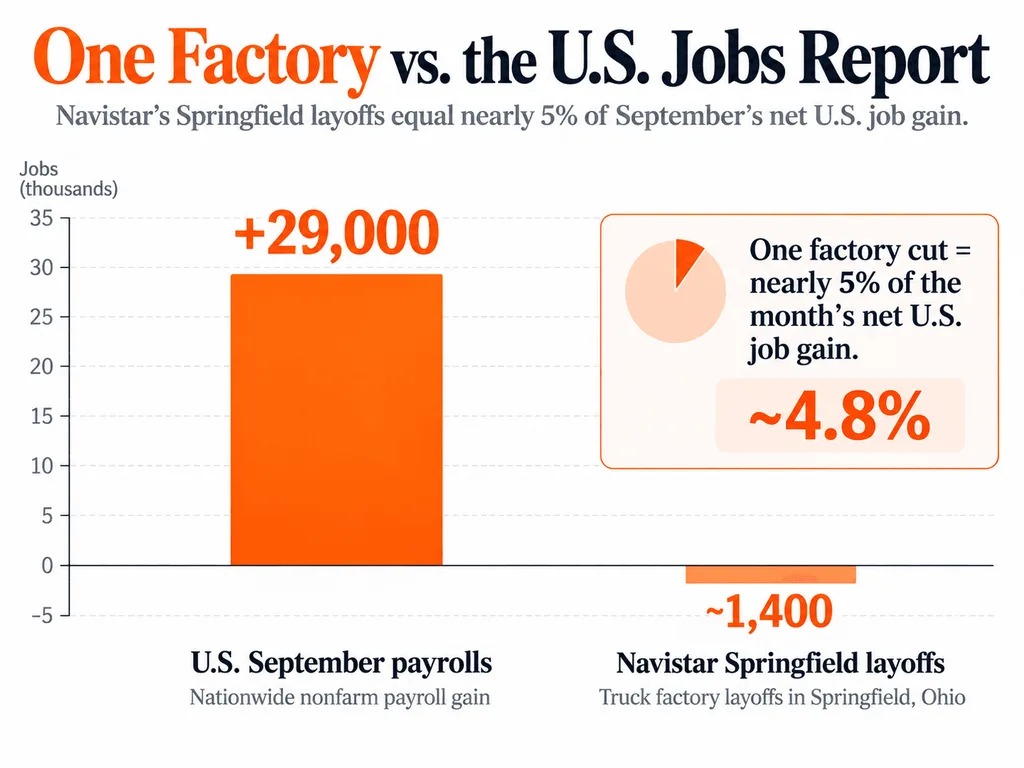
The manufacturing sector is not generally weak, but rather shows differentiated performance.
The situation of the manufacturing industry across the country is not uniformly weak.
Data from the U.S. Bureau of Labor Statistics ( BLS ) shows that manufacturing added 9,000 new jobs in September, an increase of 72,000 jobs from the low point in December 2025. The machinery manufacturing sector added about 5,000 jobs, and the plastics and rubber products industry also added about 5,000 jobs.
Coinpaper Previous reports on the weakening of small-cap stocks have shown that a similar pattern exists in the market: large companies dominated by artificial intelligence still exhibit resilience, while smaller enterprises that are more sensitive to interest rates are under pressure.
Marcus Hale
Marcus Hale is an author in the field of cryptocurrencies and financial markets, covering topics such as Bitcoin, Ethereum, digital assets, regulation, ETF, and institutional adoption. His work focuses on driving market developments, investor trends, and shaping the broader forces of the crypto economy.