

At the age of 19, Zain Javaid once aspired to become a quantitative trader, using mathematics and data to guide investment decisions. He indeed tried this for a while, but soon found it boring. After the release of ChatGPT in 2022, he said he "experienced an unprecedented and fundamentally exciting feeling."
This interest in the individual AI ultimately led him to found Ghost. The company announced on Monday that after a year of development, it has officially ended its stealth period and completed a $11 million seed round of financing, led by Andreessen Horowitz. Other investors include Abstract, Audacious Ventures, SV Angel, and Nova. The founding team of Javaid consists of 19-year-old Nicholas Chua, 24-year-old Yifei Chen, and 23-year-old Gautam Sharda.
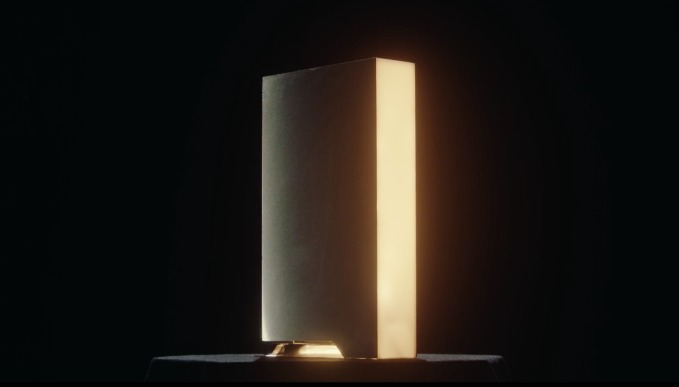
The first product of Ghost is Core, which is a personal computer designed specifically for AI agents to execute operations on behalf of users. Javaid indicates that the concept is to centralize a person's data in one piece of hardware, including desktop content, applications, and smart home devices, and to allow the AI agent to run continuously, acting as an assistant, performing tasks, and understanding the user's life.
He said, "You can run the model on existing hardware, but the experience is terrible on many levels." Javaid is also the CEO of Core.
According to Javaid, Core is equipped with Nvidia RTX Pro 4000 SFF Blackwell GPU, which is a type of chip commonly used in running AI models. He added that this GPU is already included in the device's selling price, so users do not need to purchase it separately. Core also comes with its own software layer, browser, and file system, enabling it to continuously process information and tasks without the need for constant prompts.
Core is priced at $3,499. Reservations for the first batch of products will open on Monday, with shipments expected to begin in the last week of October.
Javaid describes Core as a “brain in a box” without a screen, which users access through their phones or applications. It also supports voice mode, but users must speak within the Core application, rather than speaking directly to the device itself. Core comes pre-installed with three models: Qwen-3.8-Next, Qwen-3.8-27B, and Gemma-4-31B. Javaid mentions that users can also install other models from Hugging Face or load models they have trained themselves.
When asked about the differences between Core and Mac Mini – the latter being a small desktop computer from Apple that some people use to run AI tools – Javaid stated that the hardware and software of Core are specifically designed for running AI proxies, and it comes pre-installed with the necessary models; whereas Mac Mini is a general-purpose computer that can be configured for AI.
Javaid said that as new models or improved versions of existing models are released, the company can perform upgrades through over-the-air updates, just like Tesla does. He added that if a new generation of models emerges, the company will ask users whether they would like to switch. "Users can also enable automatic updates so that they always run the latest version of a particular model."
Currently, the team is assembling these devices in their facilities in San Francisco. Javaid indicates that the company's goal is to sell computers that can work properly without the need for complex setup or configuration. He said that the models and personal memories run locally, and all personal information is encrypted, so cloud service providers or third parties, including Ghost, cannot gain substantial access to this information. He also mentioned that users can control how much autonomy they grant to the Core agent, and even if Ghost is turned off, the device will continue to operate.
He said, "All the source code, logic, and model weights are on the device, not on the server. We created this device precisely to avoid relying on external entities for service maintenance."
He also stated that the team is developing a firewall to restrict how proxies use their credentials, such as login information and passwords. This firewall “will monitor every outgoing network request on the computer; if it detects that a proxy is performing an authorized operation or transmitting data that should not be shared, it will reject that request and mark it for user review.”
He said, "Users own all of this." Here, it refers to devices, memories, and data. "Once you buy the hardware, all the content will be stored, processed, and run on that device."
He said that he isn't too worried about competition, including that from large tech companies. “Sometimes people attribute credit to established companies for having these elements already in place,” he said. He praised Apple for having excellent hardware and a disruptive capability, but noted that many of the problems Core needs to solve are actually at the software level: “How the models infer from your life, how they remember, how they take action, how they know when to contact you,” he continued.
Javaid provided an example of Core's work: “Core will proactively notify you that you might be getting sick, as it notices an increase in your resting heart rate, sees from your computer history that you stayed up late the previous night working on a project, and it also takes into account the season, knowing that San Francisco is currently in the flu season.”
He said that the company's current main focus is to create a product that people will love. “If we fail to do so, then Apple is not the reason for our failure,” he said.
The image above shows the founding team of Core, which includes Nicholas Chua, Yifei Chen, and Guatam Sharda.