The Dilemma of Costco: Parking Lots are Full, Yet Stock Prices Are Falling
Businessinsider
43m ago
Ai Focus
Costco and Walmart are both considered defensive assets when consumers become more cautious, but after the market assigns them higher valuations, they become more sensitive to growth and performance setbacks. Costco had a decent financial report last month, yet it only led to a limited rebound in stock price; after Walmart's previous profit forecasts fell short of expectations, neither stock was able to recover its losses.
Helpful
No.Help

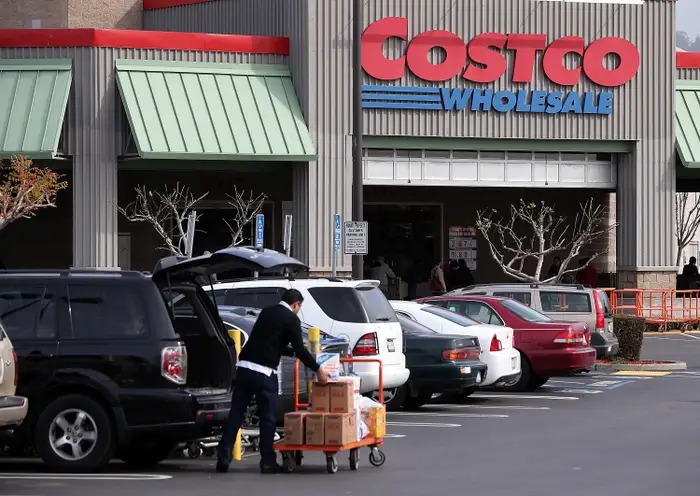
When you drive past Costco, you'll see that the parking lot is packed with cars. The left-turn lane leading to the store is lined with a long queue, stretching all the way over 50 yards. The gas station is also crowded with people, and after filling up their tanks, they prepare to go inside for shopping. This is the busiest intersection in town.

Poor stock price performance is not just a problem for Costco. Walmart – another retailer that consumers often turn to when looking to spend less – although it continues to attract more customers, has also shown an astonishingly similar recent stock price trend.

Why is that? Shouldn't they be the stable winners during periods of consumption contraction?

From a certain ironic perspective, the reputation of Costco and Walmart as defensive assets may actually be holding them back. As concerns about consumer prospects in the market intensify, investors are assigning a premium to their stocks. This, in turn, reduces their margin for error and makes them more sensitive to any further signs of weak consumption.

As shown in the figure below, since May 19th when both stocks closed at their historical highs, their performance has been much worse compared to the broader market and the consumer goods sector as a whole.

On the second day, President Trump stated that the Iran war negotiations had entered the "final stage," which caused oil prices to plummet and also weakened the aura of defense trading for Costco and Walmart. Subsequently, on May 21st, Walmart reported second-quarter profits that fell short of analysts' expectations, triggering a sell-off across the sector. Since then, neither stock has been able to recover those losses.
Is it good enough now?

When Costco released its quarterly financial report last month, it brought several positive aspects for investors. Both total sales and same-store sales increased compared to the same period of the previous year. The company also stated that it plans to open another 33 warehouses in the next fiscal year.

However, after the financial report, the stock price only rose by 3%. Compared to the decline that needed to be made up for, this increase is merely a drop in the bucket.

However, there are also some minor flaws. The profit of Costco exceeded expectations, partly due to a one-time tariff refund, while the growth in membership fee revenue has slowed down. When a stock is already priced quite high, investors tend to pay attention to every detail, including any footnotes.

Defensive, but not invulnerable

The ultimate contradiction faced by Costco and Walmart is that the more their stocks are regarded as defensive assets and pushed higher in price, the more investors focus on their growth potential; however, when they release their financial results, the market's expectations for them also become greater.

After all, the story of Costco and Walmart in the stock market is not about empty parking lots and empty shelves. On the contrary, the more people flock to these stores in search of discounts, the higher the barriers the market sets for them. They may be great places to shop, but that does not automatically mean their stocks are worth buying.

Tip
$0
Like
0
Save
0
Views 21
HQYC reminds readers to view blockchain rationally, stay aware of risks, and beware of virtual token issuance and speculation. All content on this site represents market information or related viewpoints only and does not constitute any form of investment advice. If you find sensitive content, please click“Report”,and we will handle it promptly。
Submit
Comment 0
Hot
Latest
No comments yet. Be the first!
Related
Why Did the Deep Red State of Kansas Suddenly Become a Battleground in the Senate?
In Kansas, a state where no Democratic senator has been elected since 1932, Republican Senator Roger Marshall is facing a fiercely competitive campaign just weeks before the 2026 midterms. Inflation, a reversal in trade policy, and the cross-party appeal of Democratic challenger Adam Hamilton are pushing this traditionally red-state into an unexpected Senate battleground.
CNBC
·2026-10-06 19:04:55
12
Redhawk Federal Solutions Secures Financing from Regions Bank to Support the Acquisition of Geneva Software and Accelerate Growth
Redhawk Federal Solutions announces the establishment of a new banking partnership with Regions Bank to support its acquisition of Geneva Software and to drive subsequent growth. The arrangement includes new credit lines, enhanced financial management tools, and extended terms for regular loans (DDTL), to facilitate future acquisitions.
PR Newswire
·2026-10-06 19:04:52
10
The difficult acquisition of Warner Bros. by Paramount to be completed on Tuesday: A review of the process
This CNBC timeline report outlines the process of Paramount Skydance acquiring Warner Bros over a period of more than a year, which included multiple rounds of rejections, bidding wars, regulatory approvals, antitrust lawsuits from state attorneys general, and ultimately a settlement. After the transaction was completed, the merged company will be renamed Skydance and will trade under the stock code SKYD.
CNBC
·2026-10-06 19:04:50
11
Dr Pepper to launch new flavor ice cream float soda in 2027
Keurig Dr Pepper announces that Dr Pepper will add Ice Cream Float to its permanent flavor lineup, with plans to launch it nationwide in the United States in February 2027. The company also stated that 7UP Miami Vice, Canada Dry Raspberry Lemonade, as well as more than 25 new products in the energy drink category, are also in the process of being developed.
Coinpaper
·2026-10-06 18:53:22
18
Bitcoin Falls Below $86,000, ETF Capital Outflows Suppress Rebound
Bitcoin fell below $86,000 on Tuesday, after having risen for three consecutive weeks and rebounded by more than 12% since mid-September. The US spot Bitcoin ETF saw a net inflow of $241.09 million last week, but there was a net outflow of $90 million on Monday; at the same time, weak US employment data caused the market to lower expectations for a rate hike in October.
CoinJournal
·2026-10-06 18:53:21
22
View More