


Cal AI's co-founder, Zach Yadegari, has launched a new AI incubated startup company, Persona, which has already raised 10 million US dollars in funding. This round of financing was led by Vine Ventures, with Z Fellows founder Cory Levy and Collective Global also participating.
In March this year, MyFitnessPal acquired Cal AI for an undisclosed amount. At that time, Cal AI quickly surpassed this older calorie-tracking app in the app store rankings. MyFitnessPal told TechCrunch that the size of this transaction was sufficient to convince Yadegari and his co-founders to sell the company, as the company had already achieved annual revenues of over $30 million in less than two years.
Yadegari and his co-founders initially started working at the new employer to continue developing Cal AI, but he told TechCrunch that he left this larger company in June. Subsequently, he immediately began to pursue his next idea. (He is currently collaborating with another co-founder whose identity has not yet been revealed.)
The idea is Persona, a personal AI assistant, similar to Instinct or Meta, but it will come equipped with a newly launched hardware component: a wearable bracelet priced at $179.
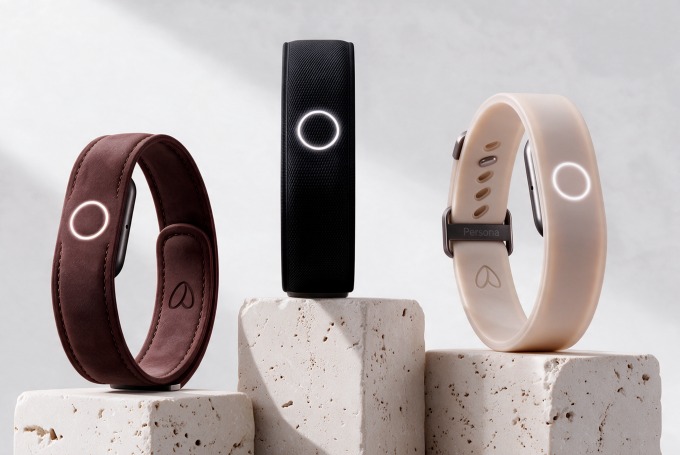
This makes Persona more similar to Bee in some ways – the wearable AI device that Amazon acquired in 2025 – but Yadegari tells TechCrunch that Persona's device differs in several aspects. First of all, it is not ambient AI; that is to say, it does not continuously monitor or record audio. There will be a button on the bracelet to activate the assistant, or it can also be set to wake up with a swing of the wrist.
Yadegari also indicates that Persona takes user privacy into consideration in its design. Persona will not run the AI model on the device, nor will it store user data on the device. Instead, the model runs in the cloud of Persona, and user data is sent there. The assistant protects privacy by encrypting both transmitted and static data. The company states that users can also delete their own data.
Yadegari mentioned that the team has also built-in protective measures to safeguard assistants against phishing and prompt injection attacks. Both of these types of issues can trouble proxy products, and OpenAI and other AI laboratories have also mentioned these risks.
In addition, he promised that the agents of Persona would not be able to see users' credit card information. Purchase transactions require user approval, and payments are processed through external providers such as Stripe Link. Link is a secure wallet designed by Stripe for use by agents.
Although user data is not sold to advertisers, the current business model of this startup does rely on advertising. Yadegari says that the company displays advertised products during the shopping research process. However, he claims that the agents provide unbiased recommendations because they are not aware of which products are advertisements. For example, if someone is researching office chairs, he says, “The agents know their preferences” and will display chairs that match those preferences, some of which may be the result of sponsorship.
These bracelets are expected to be launched in December, and the corresponding applications are also under development. Meanwhile, Persona has been made available in a free trial version, with users interacting with the assistant through text messages via iMessage. Yadegari indicates that the product has attracted “thousands of test users,” and the bracelets have also generated “tens of thousands of dollars in pre-order revenue.”
Like other consumer-grade AI assistants, he stated that Persona can place orders for meals or taxis, take notes, book trips, answer questions and handle emails, as well as perform other tasks.
Yadegari said, "All the practical applications you use on your phone on a daily basis, whether they are shopping apps, Uber, DoorDash, or even your email – they will all eventually merge and converge into a single super-app driven by a AI assistant."
In the end, he hopes to make Persona more proactive. "It can offer help and solve problems before you even realize there's a problem, and it will integrate more seamlessly into your life, so you won't have to stare at that rectangular screen all day long."
TechCrunch also invited Zach Yadegari to give a speech at the Disrupt conference, with the theme being "How to Create Viral Growth and Leverage It." Disrupt will be held from October 13th to 15th in Moscone Center, San Francisco. Before founding Cal AI, Yadegari started his first company in the ninth grade and sold it for $100,000 at the age of 16.