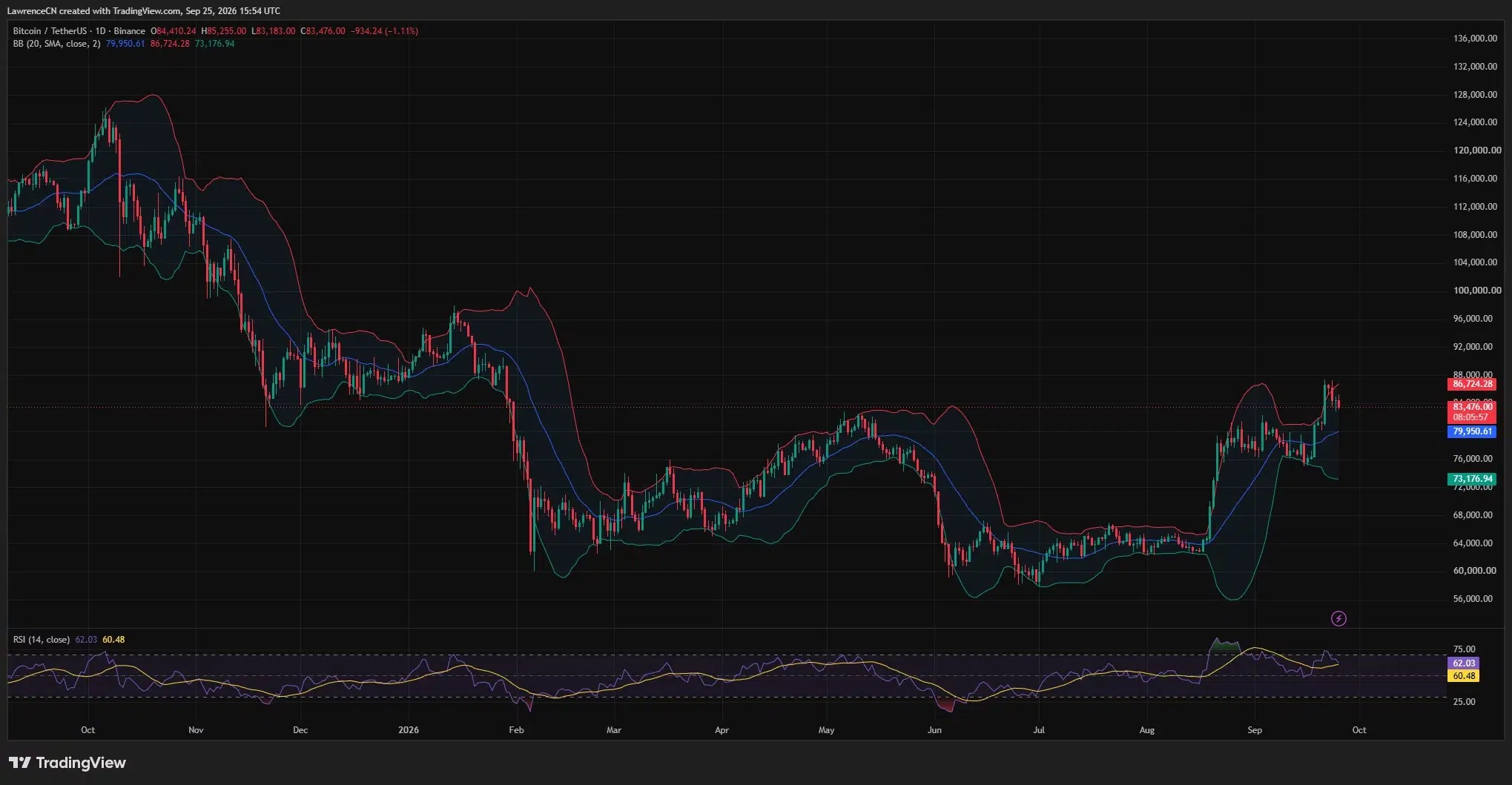


JPMorgan Chase: As ETF recovers, funds flow into crypto assets reaching $50 billion
JPMorgan analysts said that since the beginning of this year, crypto assets have attracted approximately $50 billion in capital inflows. With the resumption of ETF capital flows and an increase in futures positions, the investment momentum entering the fourth quarter has strengthened.
- $50 billion in capital inflows means that the annual inflow rate of digital assets is approximately $66 billion.
- After the cash flow began to recover in August, ETF, it turned positive in 2026.
- Banks stated that the Bitcoin futures positions on CME have exceeded previous peaks.
- Bitcoin miners have sold a net $1.8 billion this year, with listed companies being the main sellers.
Analysts from JPMorgan Chase, led by Nikolaos Panigirtzoglou, stated in a report released on Wednesday that investment activities in the third quarter no longer relied as heavily on corporate purchases of Bitcoin and venture capital funds as they did in the first half of the year; in the first half of this year, these two types of funds provided the majority of inflows.
Calculated at approximately $66 billion, the annualized inflow for this sector is estimated to be higher than the $52 billion recorded in May. Nevertheless, analysts still believe that the current rate is only about half of what it was during the same period last year.
In the latest estimates, the team expanded the scope of coverage to include digital assets purchased by private corporate treasuries, individual miners, and government-related entities. The report states that previous calculations took into account the flow of crypto funds, CME futures implied activities, venture capital financing, as well as purchases by listed miners and corporate treasuries.
Encrypted ETF capital flow rebounded after withdrawal in the first half of the year
The report indicates that after a large-scale outflow of funds in May and June, the capital flow of the crypto ETF began to improve in August and has turned positive this year. Analysts pointed out that redemptions from funds in the first half of the year weighed on the inflow of capital, while purchases of Bitcoin with Strategy and risk financing provided most of the investment capital.
However, if a different starting date is used, it is found that since the market correction began on October 10, 2025, the cumulative ETF cash flow has remained negative. Therefore, while the report records positive capital flows for the calendar year in question, it also retains the conclusion that there is still a shortfall since that period of decline.
September's fund activities in the United States provided the backdrop for this recovery. In a report on September 24, crypto.news mentioned ETF's buying and leverage situation, and cited Bitfinex data stating that $999 million flowed into US spot Bitcoin ETF on September 21, and another $714.7 million on September 22.
In that report, Bitcoin treasury, the strategic advisor of BTCS S.A., Wojciech Kaszycki stated that cash purchases supported the initial stage of the rise, followed by the accumulation of leveraged positions. He estimated that the number of open futures contracts increased by about 7% within a month, and the financing rate, calculated on an annualized basis, approached 8%.
However, there have also been significant redemptions during recent trading sessions in the United States. A report on October 8th regarding the withdrawal of funds from Bitcoin ETF cited Farside Investors data, which indicated that on October 7th, $484.9 million flowed out of these funds, representing the largest single-day net outflow since June 25th.
According to these data, BlackRock's IBIT saw an outflow of 207.7 million US dollars, Fidelity's FBTC had an outflow of 105.1 million US dollars, and ARK's 21Shares ARKB experienced an outflow of 101.7 million US dollars. Data from Farside also shows that on that day, there was an outflow of 160.9 million US dollars in spot Ethereum ETF from the United States, marking the seventh consecutive trading day of capital withdrawal.
CME Futures positions increased within two months
In addition to the ETF rebound, JPMorgan's report also indicates that in the past two months, institutional holdings of Bitcoin and Ethereum on CME have risen again, following a relatively slow start to 2026.
Analysts say that Bitcoin holdings have surpassed previous peaks, while Ethereum holdings are close to the highs seen in October 2025. Momentum indicators also indicate that trend-following traders, including commodity trading advisors, are re-establishing long positions in both assets.
"In the third quarter, ETF saw both cash flow and futures positions increase," wrote the analyst, describing this combination as "positive capital momentum before the fourth quarter."
For overseas perpetual futures, the team compared the open positions with the market values of Bitcoin and Ethereum. According to their calculations, after the pullback on October 10th, both leverage indicators had fallen from their peaks, but they were still higher than the historical average levels.
In the view of this line, the increase in ETF cash flow and futures positions in the third quarter indicates that the participation of retail and institutional investors is higher than in the first half of the year, when corporate treasuries were more dominant.
The majority of corporate Bitcoin buying orders come from listed companies.
In terms of corporate treasuries, JPMorgan Chase believes that the majority of purchases come from listed companies. Analysts stated that Strategy rapidly bought Bitcoin at the beginning of the year and contributed a significant portion to the total inflow of digital assets.
Private enterprises purchase in smaller volumes, and the team attributes this to fewer financing options and a lower tolerance for Bitcoin price fluctuations.
The report states that the listed treasury company funds the purchase through the issuance of common stock, debt, and preferred stock. The financing structure is gradually shifting towards preferred stock, although analysts point out that interest and dividend payments remain ongoing financial obligations.
JPMorgan Chase studied these obligations earlier this year. A report on Strategy regarding larger cash reserves, dated July 17th, stated that the bank had increased its dollar balance from $2.55 billion to $3 billion, which is sufficient to cover approximately 20 months of preferred stock dividends.
In that July assessment, JPMorgan Chase stated that the additional cash reduced concerns that Strategy might need to sell Bitcoin to fulfill its payment obligations. Analysts had previously believed that if reserves were sufficient to cover two to three years of preferred stock dividends, it would help alleviate concerns about forced sales.
Venture capital tends to focus on larger rounds of financing, while miners are selling their assets.
Outside of corporate treasuries, the latest reports indicate that financing from venture capital in the crypto sector has improved since 2024. However, capital is increasingly flowing towards fewer but larger rounds of financing, and these often involve more mature companies.
For infrastructure companies with clearer cash flows, analysts have observed an increase in the use of debt financing, rather than relying on equity financing. The report also finds that venture capital's interest in tokenization is on the rise, especially for projects targeting corporate clients.
On the supply side, JPMorgan Chase estimates that Bitcoin miners have net sold $1.8 billion this year, and analysts say this amount is not large. The report indicates that listed miners account for the majority of this change.
This line indicates that listed miners are no longer continuing to hoard Bitcoin, but have begun to sell the newly mined tokens. In some cases, they are also reducing their existing holdings in order to provide funding for expenditures on artificial intelligence infrastructure.