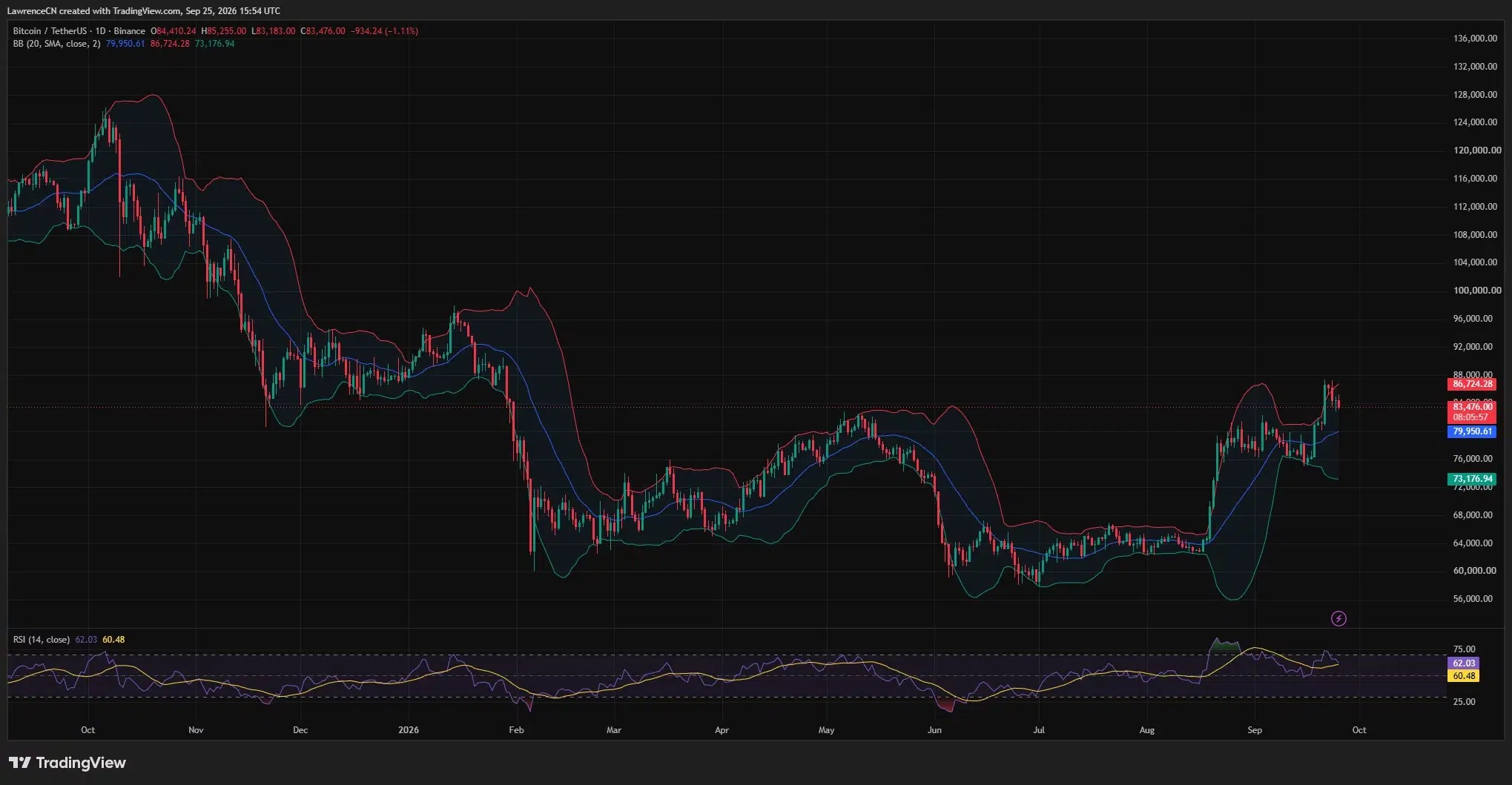


CoinShares indicates that as concerns about the U.S. government debt intensify, Bitcoin could become one of the beneficiaries. The institution warns that the next move for Bitcoin in the future may be more influenced by rising yields on U.S. Treasury bonds than by the Federal Reserve's interest rate decisions.
According to CoinShares, since mid-July 2026, digital asset funds have attracted $11.1 billion in capital, but in the most recent trading week, the inflow of funds has significantly slowed down. The research institution noted that the yield on 10-year U.S. Treasury bonds rose above 5.3%, and the yield on 30-year bonds rose to 5.7%, levels not seen in over two decades.
CoinShares believes that concerns surrounding government borrowing may increasingly affect investors' valuation of Bitcoin.
This analysis comes after the U.S. employment data in September fell short of expectations, leading to a decrease in the market's probability of the Federal Reserve raising interest rates again in October. However, institutional buying has not yet returned to a level that would confirm a sustained rebound in demand for Bitcoin investment products.
Bitcoin funds have slowed down after $11.1 billion in capital flowed in
According to CoinShares, digital asset investment products attracted approximately $11.1 billion in funds from mid-July to early October, but subsequently, during the most recent trading week, demand began to lose momentum.
The previous buying activity occurred as investors returned to cryptocurrencies during a phase of lower valuations. CoinShares believes that concerns about the U.S. government's fiscal situation may have driven this trend, but the latest capital flows have not confirmed this explanation.
This slowdown comes after institutional investors have increased their exposure through regulated crypto investment products over the past few months. However, changes in inflation, borrowing costs, and economic growth expectations have made the outlook more complex.
CoinShares describes the current weak inflow of funds as an uncertain period, during which investors are weighing weak employment data, ongoing inflation, and rising government borrowing costs.
The findings of this institution are consistent with recent assessments regarding the prospects of Bitcoin: Bitcoin is under pressure against the backdrop of high yields on government bonds. In September, the yield on 10-year bonds rose above 5.2%, and despite continuous investment through spot exchange-traded funds, Bitcoin has struggled to maintain its gains.
In the analysis on October 8th, CoinShares did not specify exactly how much capital had withdrawn in the most recent week. The figure of $11.1 billion refers to the cumulative inflow since mid-July, rather than the amount invested during the current reporting period.
Despite the intervention of the Treasury Department, U.S. Treasury bond yields are still rising.
After the long-term government borrowing costs rose to levels not seen in over 20 years, the U.S. bond market has become a core focus in the CoinShares assessments.
According to the report, the yield on 10-year U.S. Treasury bonds rose above 5.3%, and the yield on 30-year bonds was around 5.7%. September was particularly challenging for government bonds, with the yield on 10-year bonds increasing by more than 50 basis points that month.
Despite the U.S. Treasury Department's efforts to provide liquidity through government bond repurchases, yields continued to rise.
In August, the Ministry of Finance expanded its long-term bond repurchase program, doubling the maximum scale of certain operations to at least $4 billion. The bond repurchase program was originally scheduled to last until early November, and the expanded scale will be maintained thereafter.
CoinShares believes that the limited impact on yields indicates that investors are still concerned about the government's fiscal situation and the scale of debt that Washington will have to undertake for financing.
U.S. Treasury Secretary Scott Bessent admitted that government intervention cannot directly control bond yields. He pointed out that higher oil prices are one of the factors driving up borrowing costs.
Market trends are not entirely one-way. Following strong demand in the U.S. Treasury auction on October 8th, the yield on the benchmark 10-year bond fell to around 5.23%, while the winning bid yield for the 30-year Treasury auction was 5.618%.
Auction results show that even as yields have risen to multi-decade highs, investors continue to purchase long-term government debt.
If concerns about U.S. debt intensify, Bitcoin could become more attractive.
CoinShares believes that the factors driving up bond yields may determine Bitcoin's performance in the coming months.
When government bond yields rise due to increased economic activity or expectations of tighter monetary policy, higher returns on U.S. bonds can put pressure on cryptocurrencies.
However, in an analysis on October 8th, the institution proposed another possibility: if investors are demanding higher yields because they are increasingly concerned about the sustainability of the U.S. public finance, then Bitcoin could attract funds as an alternative to government-issued currency.
This judgment is still conditional. CoinShares has not yet confirmed whether the recent rise in U.S. Treasury yields is mainly driven by fiscal concerns, nor has it been confirmed that investors have switched to Bitcoin as a result.
CoinShares Research Supervisor James Butterfill stated that the bond market may ultimately have a greater impact on Bitcoin than the next decision made by the Federal Reserve.
CoinShares believes that continuous inflows of funds are needed to support this argument. If buying interest related to fiscal concerns strengthens, it will help to prove that investors are increasingly viewing Bitcoin as an alternative monetary asset.
Currently, the institution believes that conflicting economic signals are hindering the formation of a clearer direction for fund demand.
Inflation remains a concern, while the probability of the Federal Reserve raising interest rates has decreased.
After the weakening employment data in September sparked concerns about employment, while inflation remains high, the Federal Reserve faces a difficult policy decision.
According to CoinShares, the implied probability of a rate hike in October has dropped to 23%, compared to 71% three weeks ago.
This decline occurred after weak employment data, leading traders to expect that monetary tightening might be paused. However, economic activity remains relatively resilient, as data from the Purchasing Managers' Index indicates that the economy is still expanding.
Previously, the probability of another round of Federal Reserve interest rate hikes decreased, which supported the expectation that Bitcoin would benefit from reduced monetary policy pressures.
Fed Vice Chairperson Philip Jefferson stated on October 2nd that, given the changes in economic conditions, policymakers may need more time before raising interest rates again.
Inflation continues to complicate decision-making. Tensions related to Iran have partly driven up oil prices, exacerbating concerns about energy costs; at the same time, consumer spending and business activity have performed better than the labor market.
Bitget Wallet Research Lead Lacie Zhang pointed out in another assessment on October 5th that if bond yields fall, inflation cools down, and investment demand increases, the price of Bitcoin could be in the range of $90,000 to $93,000.
CoinShares focuses on different aspects, believing that the changes in the bond market and the reasons behind the rise in borrowing costs are just as worthy of attention as central bank policies.
Investors will receive the September Consumer Price Index data on October 14th, at which time they will be able to obtain new inflation figures before the Federal Reserve's next policy meeting later this month.
According to the economic calendar cited in recent market analyses, on October 29th, the preliminary figures for the third quarter of the United States GDP as well as September's personal consumption expenditure data will also be released. These data will provide additional information regarding consumer spending, inflation, and economic growth after the weakening of employment in September.