

As of October 11, 2026, the Bitcoin redemption for Liquid Network is still on hold, 35 days after a vulnerability exploitation event depleted its reserves. The transfer function has been restored, but holders are still unable to redeem L-BTC for Bitcoin; the reserves only cover about 85.8% of the circulating tokens.
Key Points
- The reserve gap for Liquid is approximately 602.53 BTC.
- Transfer services were resumed on September 10, 2026; however, Bitcoin withdrawals are still frozen.
- Reopening requires complete support reserves, software upgrades, and completion of security reviews.
According to The Defiant, on October 11, 2026, the Liquid browser run by Mempool displayed that the Federal Reserve held 3,632.23 BTC, while the number of L-BTC in circulation was 4,234.76. Based on this, the report calculated a shortfall of approximately 602.53 BTC.
Liquid Network Bitcoin redemption awaits full reserve support
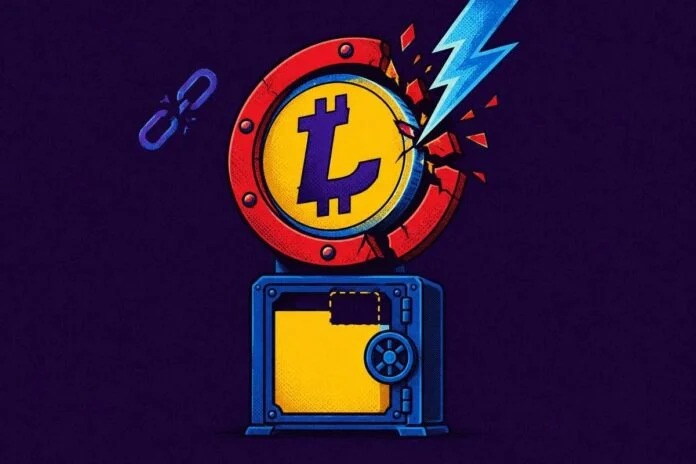
Before resuming redemptions, that is, before peg-out, it is required that each L-BTC have one Bitcoin as reserve support. Software updates, testing, and independent security reviews must also all be completed.
This Bitcoin sidechain uses a federal mechanism, where reserves are jointly controlled by members through multi-signature. Users lock their Bitcoins within this federation and receive L-BTC. L-BTC is designed to be redeemable at a 1:1 ratio.
Normal block generation and user transactions were restarted on September 10, 2026, allowing holders to send and receive L-BTC within the network. However, this recovery did not re-enable the redemption of Bitcoin for Liquid Network.
Crypto Briefing reports that during the period of vulnerability exploitation, approximately 3,996 to 4,000 BTC were transferred out, valued at around $320 million at the time. The report indicates that the reserve amount was about 4,205 BTC before the funds were transferred out, and it dropped to a low of 197 BTC. Other assets issued on Liquid, including USDT and tokenized real-world assets, were not affected and have since returned to normal operation.
Elements Verification failure has been addressed in the software update.
In the event assessment on September 23, 2026, Blockstream attributed this vulnerability exploit to a verification failure regarding the caching of previously verified cryptographic proofs in Elements. The attack on September 6, 2026, caused the software to accept an invalid transaction, resulting in the generation of approximately 4,000 L-BTC that lacked reserve support.
These tokens were subsequently redeemed for Bitcoin through the standard peg-out process, by the federal member SideSwap. Blockstream indicates that this process trusts the status of the sidechain verification, without conducting a separate reserve check.
Elements v23.3.4 This version has strengthened the range proof cache keys and provided an option to disable caching. Liquid In the update on September 29, 2026, it was mentioned that an independent external security audit is underway to help verify peg-out security recovery.
The federal authorities are also replacing the entries in the peg-out authorized key list and storing the peg-out key in cold storage. This supplementary report indicates that the signature keys of federal members, as well as the Peg-out of SideSwap, have not been compromised.
Asset recovery continues; the ransom has not been paid.
On September 7, 2026, approximately 3,400 BTC were returned. However, the incident assessment of Blockstream indicated that there were still about 602 BTC that were under ongoing recovery efforts. This supplementary report attributed the returned funds to white-hat actors.
According to this supplementary report, Blockstream CEO Adam Back assured stakeholders that the 1:1 anchoring will ultimately be implemented. Full reserve support remains one of the conditions for reopening withdrawals, and the same applies to technical safeguards.
“Blockstream will not pay a ransom to retrieve the stolen funds,” the company stated on September 11, 2026. The company said it will cooperate with law enforcement agencies, exchanges, and forensic experts to track down and recover the funds.
This article was generated with the assistance of artificial intelligence and has been reviewed by an editorial team.