A bank in South Korea has started accepting Bitcoin as collateral for loans. What would happen if BTC falls?
Bank of North Korea ( Jeonbuk Bank ) has begun to issue won loans to corporate borrowers, using bitcoins held by professional custodian institutions as collateral. If the value of BTC falls, these tokens will not be included in the bank's own balance sheet; however, this will test the lending institution's method of valuation, its ability to monitor collateral, and its capability to recover cash through a sale process supervised by the court.
- According to reports on October 12th and statements from the bank's spokesperson, the Full North Bank has launched a limited service of Korean won loans for corporate working capital that are linked to Bitcoin.
- The collateral is held by a registered crypto custodian institution; the bank neither owns nor directly controls the bitcoin that is pledged.
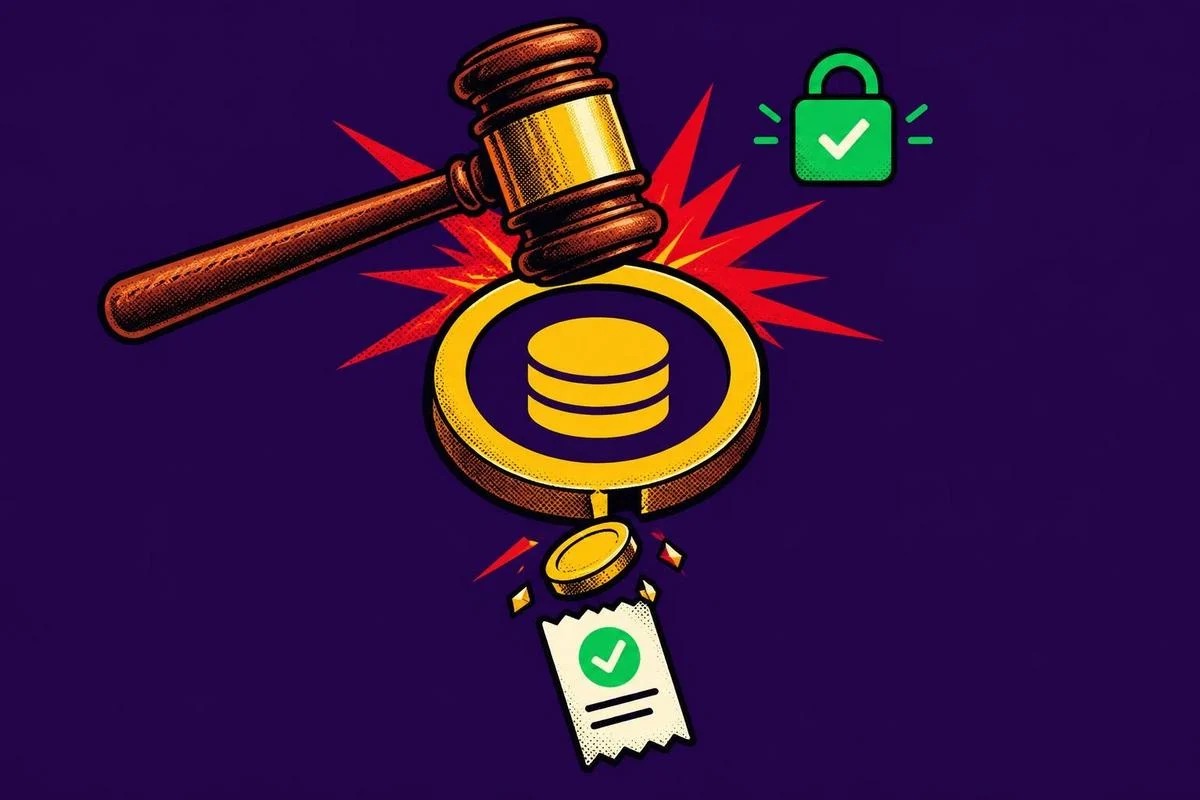
- South Korea's revised civil enforcement procedures provide a mechanism for seizing and selling virtual assets in the event of borrower default.
- Bank of North Korea uses an index that extracts prices from multiple exchanges and claims to have conducted stress tests for a significant decline in Bitcoin, but has not yet disclosed the initial loan value ratio ceiling or the trigger line for additional margin requirements.
- This product may enable companies to obtain financing without having to sell BTC immediately; however, public information is not yet sufficient to prove the scale of the first loan, nor can it demonstrate a substantial impact on the demand for Bitcoin.
Edaily The initial reports described it as South Korea's first such bank loan, and it was only available to corporate customers seeking working capital. IT Chosun Citing a bank official, it was confirmed that the loan was indeed disbursed, but the identity of the borrower was refused to be disclosed. The only eligible digital asset is Bitcoin. The bank stated that the relevant Bitcoin is held by professional institutions, and in the event of a default, the bank will recover the loan by selling it, rather than transferring the Bitcoin into its own wallet.
According to the market page on CoinGecko from October 12th, the trading price of Bitcoin was around $83,500 at that time, but the real-time price is subject to continuous fluctuations. Lenders that use BTC as collateral must decide on a response mechanism before market disorder causes what was already a small discount to turn into insufficient recovery. Bank of North Korea has outlined its general legal and valuation framework, but has not yet disclosed the loan amount, collateral ratio, margin call trigger points, grace period, sale schedule, or the identity of the custodian. The absence of these terms determines the respective downside risks faced by borrowers and the bank.
Banks issue Korean won loans, and BTC is held by other parties.
BNP Bank is a subsidiary of JB Financial Group. Compared to general encrypted credit products targeting retail customers, it has chosen a narrower pilot scope: businesses can use the borrowed Korean won for working capital, and only BTC can be used as collateral. The bank stated that it chose Bitcoin due to its scale, trading volume, and price discovery mechanism. There is no public indication that other tokens will be added in the future, nor that applications will be opened to households/individuals.
According to the description of this product provided by Edaily, the pledged tokens remain under professional custody arrangements. The Bank of Northern Korea does not claim direct ownership or operational control over them. Instead, the bank relies on the security interests and legal rights regarding requests related to these custodial assets. It has not been disclosed whether the borrowers transfer the tokens to isolated addresses or whether the custodian keeps track of them in internal accounts. Neither the wallet addresses nor the names of the service providers have been made public.
Placing assets with a custodian institution reduces a type of risk for banks: banks no longer need to manage Bitcoin private keys themselves, nor do they have to perform on-chain transfers from their own systems. However, this does not eliminate the custodian risks for borrowers. The quality of asset isolation, internal accounting, access control, methods of bankruptcy disposition, and the authority to freeze or transfer pledged BTC are still important factors. Registered custodian institutions may be subject to regulatory constraints and audits, but they can still experience downtime, operational errors, or disputes over ownership.
The report cites Korean regulations that require registered service providers to fulfill obligations related to information security and travel rules. South Korea's framework for protecting virtual asset users imposes requirements regarding asset isolation, cold storage, as well as insurance or reserves. However, before it becomes clear how the assets of this loan are actually held, it is still necessary to individually verify the official legal texts with the registration status of the specific custodians. The banks did not name any custodian service providers in their public statements.
For borrowers, one practical distinction is very important: even if the bank does not own these BTC, pledging BTC may still prevent the enterprise from freely selling or transferring them. Borrowers should be aware of who has the authority to issue instructions to the custodian, how forked assets or related earnings are to be handled, whether BTC can be reused, and when the restrictions will be lifted. Public reports have not yet provided these contract terms, and gaps should not be filled in by assumptions based on the products of other lending institutions.
What would happen if prices fell by 30%?
LTV (Loan-to-Value ratio) (LTV) refers to the ratio of the unpaid principal to the current value of the collateral. Suppose a company uses a BTC valued at 100 million Korean won as collateral to borrow 50 million Korean won. Then the initial LTV would be 50%. If the price falls by 30%, the market value of the collateral will drop to 70 million Korean won, while the principal remains at 50 million Korean won, so the LTV will rise to approximately 71.4% before considering interest and fees. If the price falls by 50%, the same principal amount will equal the book value of the collateral.
These numbers are merely examples and do not represent the underwriting restrictions disclosed by Bank of North Korea. The bank has not yet announced the initial LTV, the allowable fluctuation range, the margin call trigger level, the supplementary collateral period, or the forced liquidation levels. A lower initial LTV may leave more room for price declines; a higher initial LTV could trigger actions sooner. Even if the BTC price remains unchanged, the accumulation of interest will increase the amount due. Whether a company can add Korean won or BTC after receiving a margin call notice is just as important as the initial collateral ratio.
A sharp plunge during trading is more difficult to handle than a gradual decline. By the time staff identify a default, notify the borrower, wait for a payment, and obtain an executable sale order, the price may have fallen further. Bitcoin also trades on weekends and does not wait for South Korean banks' business hours. The way the index is compiled, the operating hours, and the access rights for custody will determine whether the bank's valuation corresponds to the actual cash price that can be obtained when selling in accordance with the law.
Bank of North stated that it has conducted stress tests on scenarios of sharp declines and believes that Bitcoin has sufficient liquidity to support such situations. This statement describes its internal work, not public historical performance records. The assumptions of the stress tests, the historical time periods used, the liquidity discounts, and the results of the scenarios have not been made public. Customers cannot infer that every sharp drop will allow lenders to come out unscathed just because they see that stress tests have been conducted, nor can they assume that they will be able to sell at the index price when forced to do so.
Bitcoin may have sufficient liquidity on a global scale, but the actual executable disposal pathways are still subject to limitations. Court orders, custodian procedures, available trading venues, trading hours, exchange compliance reviews, and temporary suspensions of withdrawals can all delay the realization of funds. If an order is too large relative to the available buy orders at the time, the slippage will also increase. The amount of the first disclosed loan is not available, so estimating the market impact based on assumed liquidation sizes would be overly precise.
The sale by the court will change the order of default disposition.
According to Edaily, the revised civil enforcement rules that came into effect on October 1st provide a pathway for seizing and realizing the "right to request the transfer of virtual assets," which includes the issuance of sale orders. The design goal of the Bank of Korea is to enforce secured interests without directly receiving BTC. In the event of a default, the bank will seek cash recovery through enforcement procedures and use the proceeds to repay outstanding loans. Earlier judicial studies have discussed such a scenario where virtual assets are held by a third party, while the debtor has the right to request their transfer.
The importance of court proceedings lies in the fact that BTC continues to trade, and the execution process may take time. The speed at which prices fall could be faster than the speed of hearings, rulings, transfers, and sales. Prudent lenders may maintain a buffer or require additional collateral before a formal default occurs. However, public reports do not indicate whether Bank of North Korea adopts automatic collateral recovery, privately agreed-upon sales as stipulated in contracts, additional guarantees, or sets early maturity clauses before court enforcement. The institution has described the recovery path but has not published a timeline for the liquidation process.
A bank spokesperson told IT Chosun that as the system develops, the monitoring and recovery mechanisms will continue to be improved. This statement implies that this arrangement should be viewed as an early-stage operational model. It proves that the first loan has been disbursed, but it does not prove that the bank has successfully sold the collateral after a default occurred. Currently, there are also no statistical data on any actual recoveries that have been made.
If the proceeds from the sale are not sufficient to cover the principal, interest, and costs, the borrower may face a shortfall. Whether the bank can pursue other assets of the enterprise depends on the loan contract and local laws, neither of which are provided in public information. If there is a surplus after satisfying the creditor's rights, it is also subject to legal restrictions and costs. Describing this arrangement as a "non-recourse loan" or promising that the borrower can walk away simply by paying BTC are terms that do not exist in any publicly described agreements.
The rule changes mentioned in the report for October provide a procedure, rather than a price guarantee. Courts can authorize the enforcement of relevant rights, but during this period, BTC may still continue to depreciate. Similarly, legal avenues cannot resolve ownership disputes, such as custodians misrecording customer balances, or other creditors claiming priority. Banks have designed their systems to avoid direct holding of assets, but they still rely on valid and enforceable security interests.
Why Reference Prices Need to Be Carefully Examined
Bank of North Korea stated that its reference price is based on a weighted average of prices from multiple global exchanges, combined with the median of volatility indicators. The goal is to avoid relying on any single trading venue that may provide distorted quotes. Edaily mentioned that this formula and its composition have been publicly disclosed, but the report did not provide a direct link to the metodological document. To verify this information, interested parties should request the document and record the specific list of exchanges, weights, refresh frequencies, and failure handling rules.
The weighted average price of exchanges may be relatively stable during normal trading, but it can also be vulnerable in the face of global shocks. If an exchange suspends withdrawals, displays outdated transactions, or loses access to local banking channels, the BTC price displayed may not equal the actual cash price that can be realized. Different trading pairs also introduce exchange rate risks. Lenders selling through local Korean or global trading venues may face different quotes, fees, and tax conditions compared to the comprehensive valuation.
Volatility is related to the discount rate. The greater the observed volatility, it may indicate that a similar loan requires a lower lending ratio or a larger safety margin. However, the median volatility calculated based on past intervals does not guarantee the ability to capture future gaps in prices. The latest transaction prices from multiple sources are not necessarily definitive buying prices for all pledged positions. What should be examined in stress scenarios is: how much can actually be sold within the time required by legal and custody procedures.
Borrowers also need to know when the valuation occurs. This is different from continuous monitoring, as it is based on a single closing price. It is also different from a weighted index that continues to decline when a single candlestick's lower shadow breaks below the trigger line. A margin call issued during the overnight period may result in companies having less time than expected to provide additional collateral. Northern Bank of Canada has not yet made public the timing of these operations.
This line only accepts BTC as collateral, which reduces the range of asset risks, but it does not mean that BTC will be as stable as cash collateral. Bitcoin could experience a significant drop within hours, especially during periods of liquidity shifts between different trading venues. The banks' own stress tests may have covered a range of possible declines, but neither the scope nor the safety margins have been disclosed. Before these figures are made public, responsible statements can only acknowledge the sensitivity of the issue, but they cannot claim that the bank risks have been quantitatively proven.
Who might use this type of loan?
Enterprises holding BTC reserves may need to pay salaries, purchase inventory, or cover other operating costs in Korean won, while also wishing to maintain their BTC exposure. Pledged tokens can provide financing without the need for immediate spot sales. This use case is economically different from borrowing money to buy BTC, although enterprises may also arrange for other resources and exposures in ways that banks cannot infer from the description provided. Bank of Korea has stated that the purpose of the loans is limited to business operations.
Whether to use it or not depends on the cost. Borrowers need to compare the interest, custody fees, mortgage discount, and possible additional costs for collateral reinforcement to determine which option is more advantageous compared to selling some of the BTC now. Any tax implications will depend on the specific circumstances of the borrower and Korean law. The published terms do not disclose the interest rates or fee schedules, so it is not possible to calculate whether borrowing is necessarily cheaper than selling for a particular company.
Loans secured by BTC could increase overall market sensitivity. If a company already holds these tokens and relies on their book value to support its operations, then a market downturn would not only erode the collateral but also tighten its working capital. When forced to add additional collateral, companies are often in even greater need of cash. This arrangement may be useful for companies with sufficient liquidity buffers, but the scale of those buffers, loan terms, and concentration limits have not yet been announced.
For the banking system, a confirmed loan can only prove that this model has been implemented within a limited scope of disclosure; it does not prove that a new large-scale credit channel has been established. Full North Bank has not yet disclosed the number of borrowers, the total risk exposure, or the upper limit of the credit line. Other banks that wish to follow suit must also establish their own custody and legal arrangements. To claim that there will be a nationwide boom in Bitcoin mortgage loans in South Korea, there is still a need for commitments and lending data that have not yet been made public.
Other lenders have different options regarding the collateral recovery mechanism.
The term "Bitcoin mortgage loans" may refer to contracts that behave quite differently during market crashes. The loan product with the identifier Strike cancels the usual notifications for additional margin requirements, but this is accompanied by different interest and risk arrangements. A loan integration from the wallet with the identifier Ledger is connected to a decentralized market, where the margin ratio could trigger liquidation. Neither of these arrangements can determine the contract terms of Northern Bank of Canada. However, this comparison illustrates that readers cannot infer the margin call rules of such loans based solely on the fact that they involve Bitcoin as collateral (indicated by BTC).
Other borrowers may face a fixed maturity date, rather than a continuously maintained mortgage rate. Some loans require the replacement of collateral when the price reference falls below a certain threshold; others may offer a longer grace period and compensate for this with a lower initial loan-to-value ratio or higher interest rates. Even if a product claims to have "no additional margin notice" policy, failure to pay interest or repay the loan upon maturity can still trigger default clauses. The public description provided by Full North Bank does not make clear enough distinctions among these mechanisms, making it impossible to determine when customers may lose their pledged tokens.
Regarding qualified custody in Bitcoin lending, there is another independent issue: whether it is the lender or an independent third party that has the authority to move BTC. Multi-party approved wallets, institutional custody accounts, and smart contracts may all impose different restrictions on reuse. Bank of Northern Ireland stated that the collateral is held by professional institutions, and the bank does not directly control the wallets; however, this does not disclose the signature mechanisms, contract instructions, or reserve proofs in the actual arrangements.
Banks may also consider this loan as corporate credit, rather than merely a pure asset-backed position. Income, cash flow, guarantors, and other collateral can all affect the final loan amount. Korean media reports emphasize the collateral structure linked to BTC, rather than the complete credit profile. A borrower with good profitability, who only uses a small amount of BTC as collateral and for whom the bank has extensive recourse rights, poses a completely different risk to the bank than a borrower facing operational difficulties whose only significant asset is these tokens. Based on this announcement alone, it is not possible to reconstruct the balance sheet or recovery rights of that unnamed borrower.
These comparisons are most important when prices are falling rapidly. Decentralized clearing robots can sell in just a few seconds, but they may suffer from slippage; whereas taking the legal route through courts may provide judicial procedural safeguards, it also means that the collateral may continue to be exposed to price fluctuations before it is sold. Neither approach can be simply deemed safer. The ultimate outcome depends on contractual buffers, legal priorities, operational availability, and the true market depth of the collateral. The first loan issued by Full North Bank provides a new institutional case study, but its non-public terms prevent outsiders from assessing the relative risk levels of different products.
Will this change the outlook for Bitcoin prices?
Banks accept the BTC that enterprises already hold; this loan itself does not require Bank of North to purchase BTC from the spot market. If the borrower chooses to pledge rather than sell, it may marginally reduce immediate selling pressure; however, if a default occurs and the collateral is sold, the effect could be the opposite. In either case, the extent of the impact depends on the loan amount, what the borrower originally intended to do, and how it is actually carried out, all of which have not yet been disclosed.
The real-time price of approximately $83,500 on October 12 for CoinGecko is merely used to illustrate the sensitivity of the collateral valued in BTC; it is not the trigger price disclosed by Bank of Korea. Assuming a 30% market decline from this price, the book value of one BTC would drop to about $58,450, not including differences and fees between various trading venues. If the borrower pledges 100 BTC, their book value would decrease from about $8.35 million to about $5.845 million. This example describes the change in the value of the collateral and does not refer to the scale of South Korea's first loan.
To argue in favor of a bullish market, evidence is needed to prove that the service has the potential to expand and that a considerable number of token holders can finance their expenditures without selling their tokens. Conversely, to argue for a bearish market, evidence is required to demonstrate the existence of large-scale leverage and forced selling that occurs repeatedly during downturns. Based on the first reported transaction alone, it is not possible to draw either conclusion. Compared to a pilot project of unknown scale, broader macroeconomic demand, ETF capital flows, and exchange liquidity are likely to continue to dominate the short-term price of BTC.
More direct results are related to the credit infrastructure. A regulated bank has combined traditional lending with separately held crypto-backed assets and the process of recovering Korean won. Whether this model can be sustained will depend on the terms of the loans made public, the needs of borrowers, the performance of the custodian, and how it performs during the first real stress events, rather than on the daily price movements of Bitcoin.
Which data can truly answer questions about risk?
The initial LTV and maintenance thresholds of the contract will determine how much decline the borrower can withstand. The publicly available interest rates and custody fee schedules will show the cost of maintaining an BTC open position. The identity and registration status of the custodian can be used to verify asset isolation and operational controls. None of this information was disclosed in the initial reports.
The execution timeline is equally important. If the borrower fails to meet the requirements for collateral recovery, readers should be able to track the entire process, including notifications, remedies, court applications, sale orders, and distribution of funds. If the initial discount is significant, waiting for the court to sell the assets may be reasonable; however, if the discount is small and the execution is slow, it can become dangerous. It is also important to publicly describe the safety margin that has not yet been quantified or the time it takes to do so.
As time goes on, disclosing the outstanding balances can also show whether the initial loan can develop into a replicable product. If the Bank of Korea announces the number of corporate borrowers, the total amount of Korean won loans issued, and the size of BTC pledged, analysts would be able to estimate the scale of this lending channel without disclosing individual customer information. Default and recovery data could reveal what happens under stressful circumstances. However, these details are not visible in today's announcement.
Matters of note
- Loan terms: Before estimating the borrower's liquidation risk, it is necessary to obtain the initial LTV, maintenance threshold, interest rate, fees, and remedial period from the Bank of North.
- Host: Confirm the identity of the registered service provider, and verify the actual isolation and control arrangements for the pledged BTC.
- Valuation Index: Obtain the trading venue weights, volatility indicators, calculation time, and failure policies behind the bank reference prices.
- Court proceedings: Tracking how security interests are notified, executed, sold, and repaid, especially during periods of rapid price declines.
- Scale: Observe whether banks disclose the number of loans, the total principal, and the total value of collateral; a single transaction does not necessarily prove that it will have an impact on the overall market price.
Frequently Asked Questions
Has Bank of North Korea already issued a Bitcoin mortgage loan?
IT Chosun quotes a bank official as confirming that a loan was indeed disbursed. The bank refuses to disclose the identity of the corporate borrower or the principal amount of the loan.
Can an individual apply for a loan using their own BTC?
It is reported that the first phase of the service is limited to corporate borrowers, and the Korean won borrowed must be used for working capital. Retail products have not yet been announced.
Do banks hold these bitcoins?
Do not hold. According to the reporting arrangement, the pledged BTC is held by a professional registered custodian institution, while the Bank of Korea retains the loan claims and mortgage rights.
What will happen if BTC breaks below the threshold set by the bank?
The specific terms for maintenance and additional collateral requirements have not yet been disclosed. In the example, the value of LTV will increase as the book value of the collateral BTC declines, but the bank has not yet announced the trigger point or grace period for this.
Who will sell these tokens after a breach of contract?
Bank of North stated that it will seek to recover the assets through a disposal process under court supervision and collect the cash proceeds, rather than directly acquiring ownership of BTC. The party responsible for actually executing the sale and the timeline have not yet been made public.
What price do banks use to value Bitcoin?
It is reported that the bank uses a weighted price index composed of multiple global exchanges, combined with a volatility median indicator. The specific exchanges, weights, and real-time update rules still need to be further confirmed.
Will this type of loan drive up the market price of BTC?
Using the existing BTC as collateral for a loan does not equate to purchasing the asset in spot. The impact on the market depends on whether the borrower avoids selling as a result, the final size of the loan, and whether forced sales occur thereafter.
What content is still not publicly verified at present?
The loan scale, borrower's identity, custodian's name, discount rate, interest rate, margin call terms, as well as a complete case of recovery from a default, have not yet been confirmed in public information.