According to CPCA data, in the first nine months of 2026, Tesla sold 381,088 cars to Chinese buyers, a decrease of 11.9% compared to the same period last year. During the same time, the export volume from the Shanghai Gigafactory increased to 361,972 cars, more than doubling from the same period last year.
Today, nearly half of the cars produced by Tesla in China have left the country. Meanwhile, Beijing has just announced that it will reduce the export tax rebate for electric vehicles next year.
"Affordable cars must be manufactured on the continent where the customers are located."
When Tesla broke ground for its Gigafactory in Shanghai in January 2019, Elon Musk made it clear who this factory was built for.
"Shanghai Super Factory will produce an affordable version of Model 3/Y for the Greater China region," Musk wrote at the time. He added that the "higher-cost versions" of Model S, Model X, as well as Model 3 and Model Y will still be "produced in the United States, targeting global markets, including China." In another post from the same week, he summarized this concept: "Affordable cars must be manufactured on the continent where the customers are located."
This situation lasted for about one and a half years. By the end of 2020, the Shanghai factory began producing the right-hand drive version of Model 3 for Australia and New Zealand, and exporting Model 3 to Europe. Today, it supplies products to Europe and the Asia-Pacific region, and since this year, under the new import quotas for Chinese electric vehicles in Ottawa, it has once again started supplying Canada.
None of these customers are from the continent where Shanghai is located.
Tesla's sales in China continue to decline.
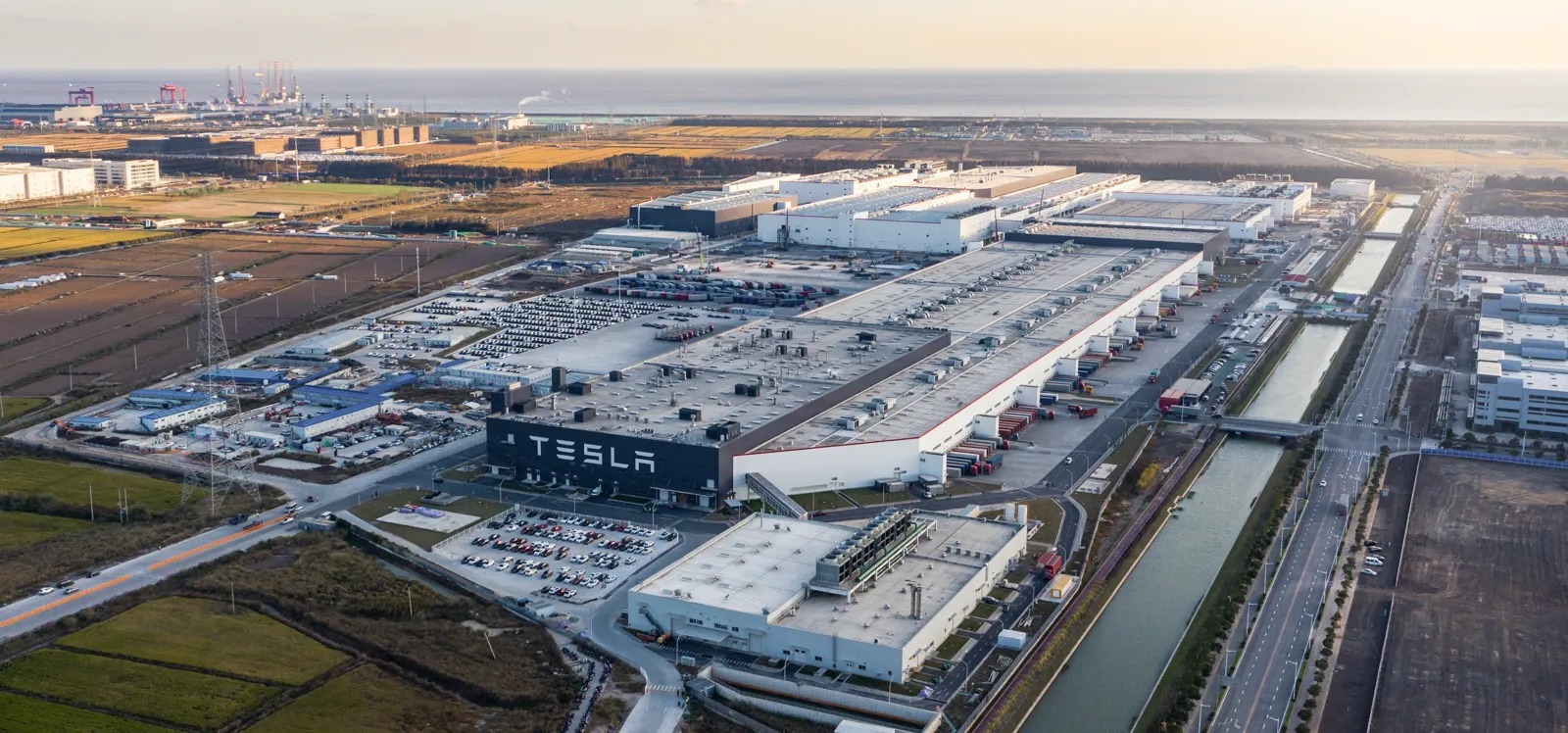
The following is the performance of Tesla's business in China as of September, based on data from CPCA:
Domestic sales volume is at the lowest level for Tesla in China in the first nine months of the year for at least four years. Compared to 460,203 vehicles sold during the same period in 2024, there has been a 17% decline.
The situation in the third quarter was even worse. Tesla's retail sales in China declined by 16% to 142,133 units, and in July alone, there was a 33% drop. In September, sales amounted to 64,837 units, a year-on-year decrease of 9.4%, which was the best month for the quarter, but the overall trend remains downward.
This year, the entire electric vehicle market in China has been contracting, so this trend is not unique to Tesla. CPCA data shows that after Beijing halved the tax exemption for car purchases on January 1st, the retail sales of new energy vehicles in China decreased by 12.8% as of September. Therefore, Tesla has generally followed the market trend so far this year. However, in the third quarter, while the market declined by about 10%, Tesla's sales fell by 16%.
Wholesale data obscures this point.
If you only look at Tesla's headline wholesale data in China, you wouldn't be aware of these facts. This year, wholesale volumes (including domestic sales and exports) have increased by 22.5%, and the 93,579 units sold in July represent the best performance for that factory in July to date.
But all of these are exports. Tesla has already exported 361,972 vehicles from China this year, exceeding its total exports for 2023 which were 344,078 units, as well as surpassing the figures for 2024 (259,548) and 2025 (226,034).
As we pointed out in our analysis in the first half of the year, Shanghai has become a "pressure valve" for Tesla. Even if Chinese buyers turn away, it can still operate near full capacity, as the cars will be shipped to other places.
Moreover, it is the backbone of the entire company. The wholesale volume of the Shanghai factory in the third quarter was 275,111 units, which accounts for 57% of Tesla's global deliveries of 486,532 units. Chinese buyers accounted for only 29%.
Beijing is cutting export tax rebates
On Monday, China's Ministry of Finance and the State Taxation Administration announced that the value-added tax (VAT) export rebate rate for new energy vehicles will be reduced from 13% to 9% starting from April 1, 2027. This policy applies to pure electric vehicles and plug-in hybrid vehicles, with the tax rate based on the export date stated on the customs declaration form.
This is also part of a series of policy adjustments. Beijing abolished the export tax rebate for solar panels in April, and the tax rebate rate for batteries was reduced from 9% to 6%, which will be further reduced to zero on January 1, 2027.
The mechanism is quite simple. When Chinese exporters send their products abroad, they can get back the value-added tax (VAT) that has been paid. The portion that cannot be refunded becomes part of the cost. Therefore, starting from April, car manufacturers will have to bear an additional cost equivalent to 4% of the export value for each electric vehicle they export.
For Tesla, this is real money. Assuming the average export value of each Model 3 or Model Y is about 220,000 RMB, then this cost reduction will increase the cost by approximately 8,800 RMB (1,235 USD) per vehicle. Calculated based on Tesla's current annual export volume of around 480,000 vehicles, this amounts to an annual cost of about 600 million USD. This cost either has to be absorbed by Tesla itself or passed on to buyers in Europe, Canada, and Asia. This is our estimate, not the figure provided by Tesla.
It's not just Tesla that's affected. Data from the China Association of Automobile Manufacturers shows that in the first nine months of this year, China exported over 4 million new energy vehicles, more than doubling from the same period last year. All Chinese automakers that rely on exports to offset weak domestic demand will face the same consequences.
However, there are not many companies that are as exposed as Tesla: half of its production in China is exported overseas, while domestic sales are on the decline.
There is another impact that deserves attention. Since the tax rate depends on the customs declaration date, it is expected that automakers, including Tesla, will try to export as much as possible before the deadline in the fourth and first quarters. This means that Tesla's wholesale data in China may be very impressive in the next two quarters, but the cost impact will not become apparent until the second quarter of 2027.
Views of Electrek
Elon Musk once said that the Shanghai Gigafactory would produce affordable cars for China. It indeed managed to do so for about a year. Subsequently, it became a hub for Tesla's exports, and now it is more than just that: it plays a significant role in supporting Tesla's data operations in China and global deliveries.
This change is a response to the declining demand. Tesla's product line in China still consists only of the Model 3 and the Model Y, while companies like BYD, Xiaomi, Xpeng, and more than a dozen other automakers launch cheaper new models every few months. Chinese buyers have many options, and fewer and fewer people are choosing Tesla. Exporting allows Tesla to keep its factories running without having to cut production, which naturally leads to "record-breaking" wholesale data.
Beijing's reduction in tax refunds has made this model more expensive. Tesla has three options, none of which are ideal: it could raise the overseas selling price, but sales in markets like Europe are already weak; it could absorb a year-on-year profit margin impact of about $600 million, at a time when its automotive business's profit margin is not high; or it could reduce production at its Shanghai factory.
The Berlin factory can handle a larger production volume of Model Y for the European market, but this is of no help to Model in China, Canada, or the Asia-Pacific region.
So, the question for 2027 is: What will happen to Shanghai's Super Factory when both the domestic market and export channels shrink at the same time?
If you are purchasing an electric vehicle, using home solar power to supply it can bring the fuel cost down close to zero. With electricity prices rising by nearly 10% last year and expected to continue to climb, installing solar energy is one of the best ways to counter these increasing costs. Through leasing and the PPA program, you can even start with zero down payment and start saving money immediately. If you want to find the best option, you can check out EnergySage. This is a free service, and hundreds of pre-approved installers will compete for your order, so you can save 20% to 30% compared to searching on your own. There will be no sales calls before you choose an installer. Click here to get a free quote.
FTC: We use automatic affiliate links with revenue sharing. For more information.