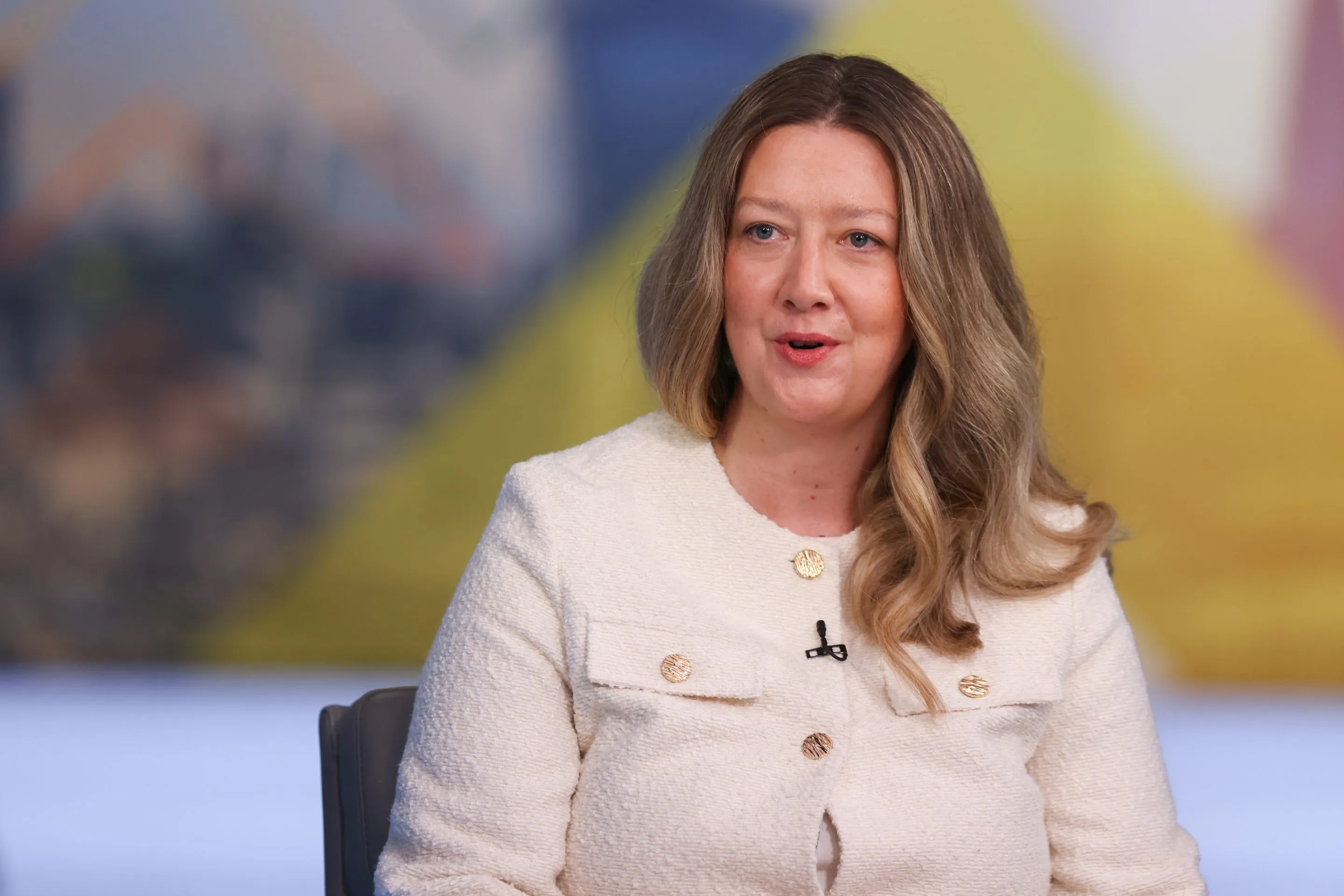


AirAsia co-founder Tony Fernandes warned that as the airline's hedging contracts expire one after another, the cost of aviation fuel is about to rise.
Fernandes is also the Chief Executive Officer of Capital A Group. During his speech at the Global Tourism Economy Forum (GTEF) held in Macau on October 16, he stated: 'It's very difficult. No one who says the situation is good is telling the truth. Many people's hedges are about to expire, and prices will rise significantly.'
After the war between the United States and Iran, Asian airlines are still struggling to cope with high fuel costs. The disruption in oil supply through the Strait of Hormuz has kept jet fuel and diesel prices at a high level. According to calculations by the International Air Transport Association, the current price of jet fuel in Asia is more than twice the average level of last year.
Low-cost airlines have less room for price increases, so a rise in fuel prices will directly impact their profit margins. This is especially true for AirAsia, which has been bearing the costs of higher jet fuel prices and a heavy debt burden. The stock price of this airline has fallen by nearly 75% this year.
The company plans to raise $1 billion for debt refinancing. Last week, Reuters cited unnamed sources as reporting that Fernandes recently met with Malaysian government officials to discuss providing financial support for the airline. He denied the need for assistance and stated that he did not seek help from the government – however, he acknowledged to Reuters that he would accept it if the government offered it.
On GTEF, Fernandes estimates that the current period of volatility will last for about 12 months, but also acknowledges that this time estimate is merely a guess. "When will this war end?" he asked when discussing the current conflict in Iran. "We actually don't know."
Unlike the last impact on the tourism industry – the COVID-19 pandemic – there is no clear indication of when normality will be restored this time. “You can’t vaccinate Donald Trump,” said Fernandes. “For now, we can only coexist with it.”
Expansion that deviates from the main trunk
Fernandes It is expected that the next phase of growth in Asia's tourism industry will focus on second- and third-tier cities, which are often not served by many airlines.
"The GDP growth rate in these cities is much faster than that of the capital cities," he said. "There is a large amount of disposable income there, and many populations have not been connected before."
On stage, Fernandes recounted an experience where the governor of Guangdong Province requested AirAsia to launch flights to Shantou. The governor referred to Shantou as a “small city,” but by Chinese standards, that means it has a population of 5 million people. “I said, ‘That’s even larger than my capital city. We’ll fly there tomorrow.’” Fernandes recalled. AirAsia currently operates three flights to Shantou from Kuala Lumpur every day.
However, the existing models may not be suitable for covering a wide range of flight routes. As a narrow-body aircraft, Airbus A320 has a range of about 4 hours; longer routes require wide-body aircraft such as the Airbus A330, which can carry nearly 400 passengers under the configuration of AirAsia, whereas the A320 can carry about 180 passengers. There are very few routes that can justify the economic efficiency of such large aircraft.
Airbus has launched a new generation of narrow-body aircraft with longer ranges. AirAsia is using the A321LR on its Seoul routes and has tripled the number of flights. The updated A321XLR can fly for up to 9 hours in different configurations. AirAsia is also the first customer of Airbus' new 160-seat A220 model, and Airbus hopes this model will be certified by 2028.
"160 seats can give you access to a huge market," said Fernandes.
"We believe in small aircraft and high-frequency flights," he added. "We think that frequency is the key to the solution."