Key Points
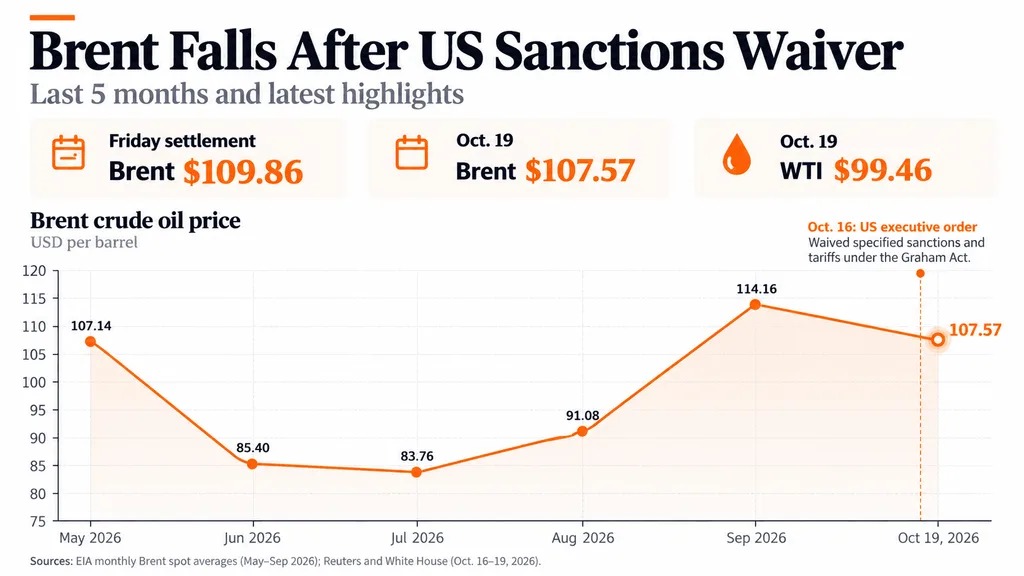
- Brent crude oil fell more than 2% from its five-month high
- Trump relaxes new sanctions and tariffs against Russia
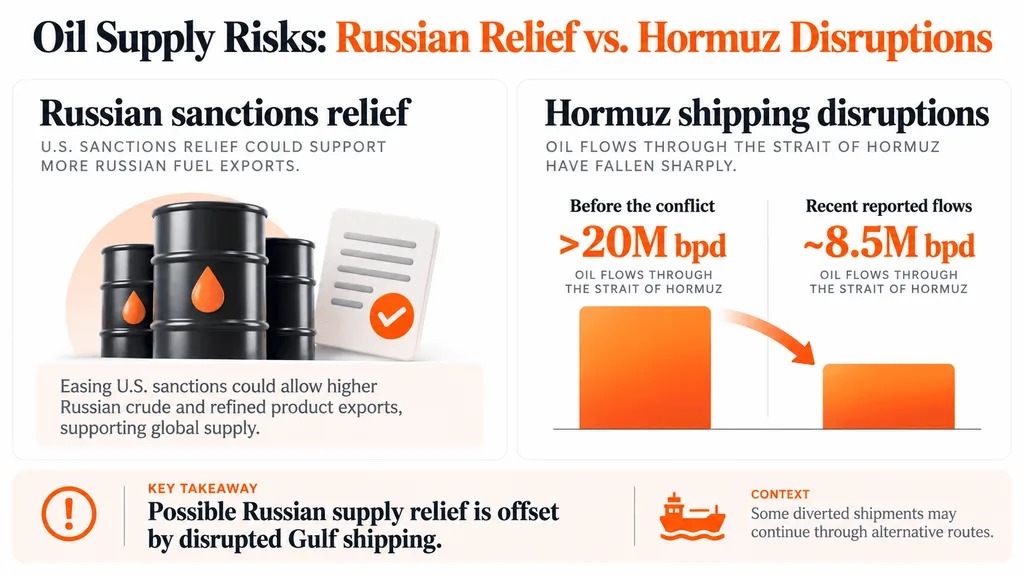
- The disruption of shipping through the Strait of Hormuz continues to threaten global oil supply.
Due to U.S. President Donald Trump's relaxation of new sanctions and tariffs against Russia, markets expect Russian fuel exports to increase further, leading to a drop in oil prices of over 2% on Monday, October 19th. However, ongoing attacks on oil tankers in the Middle East have kept the price of Brent crude oil above $107 per barrel.
This decline occurred after Trump signed an executive order on October 16th. That executive order suspended the sanctions and tariffs under the Lindsey O. Graham Act on Sanctions against Russia and Iran, marking a significant shift in policy as Washington attempts to curb rising energy costs.
Trump Eases Sanctions on Russia, Opening the Door for More Fuel Exports
According to a presidential executive order from the White House, Trump exempted certain sanctions and import tariffs stipulated by the Graham Act, including measures targeting countries that purchase Russian energy.
This decision does not lift all of the existing sanctions imposed by the United States on Russia, but it does reduce the threat of additional trade penalties in the short term, which could have otherwise limited Russia's energy sales.
U.S. Secretary of State Marco Rubio stated that the government may need up to 60 days to assess the economic impact before deciding on further actions.
Prior to this, Trump had agreed to allow Russia to increase diesel exports, a move that had previously contributed to a decline in oil prices on October 13th.
However, an increase in Russian fuel exports does not necessarily equate to a corresponding rise in global crude oil production.
Russian refining infrastructure has been damaged on multiple occasions, and the International Energy Agency warns that despite efforts by all parties to restore supplies, the diesel shortage may continue until 2027.
The attack on oil tankers in the Strait of Hormuz keeps Brent prices above $100
The impact of policy changes in Washington is still constrained by the ongoing disruptions around the Strait of Hormuz.
According to Reuters, the volume of oil flowing across the strait is still far below pre-conflict levels, having dropped from over 20 million barrels per day to around 8.5 million barrels per day.
Although exports from the Gulf region had previously recovered due to producers developing alternative transportation arrangements, ongoing attacks have made efforts to restore stable transportation even more complicated.
These risks have also increased freight and insurance costs. It is reported that some oil tanker operators have offered crew members bonuses of up to $25,000 for undertaking dangerous voyages through the Gulf.
Therefore, a decline in benchmark oil prices does not mean that refiners will immediately obtain crude oil at lower prices.
Will oil prices continue to fall?
The current market is facing two opposing forces: the potential increase in Russian energy supply, and the ongoing risk of disruptions to supplies from the Middle East.
If shipping through the Strait of Hormuz further recovers, especially with more Russian exports actually being delivered, crude oil prices may weaken. However, if another major tanker accident occurs, the decline on Monday could also quickly reverse.
The pressure on the physical market remains particularly important. Chevron CEO Mike Worth recently warned that due to shipping risks and regional shortages, the cost of crude oil shipped to Asia could be significantly higher than the benchmark futures prices.