

If a tokenized assets platform wants to allow users to buy and sell different products, it first has to answer a simple question: where does the money stay before a transaction, and how is it settled when crossing chains or products? On October 20th, the American RWA platform tx announced the launch of its native US dollar stablecoin USTX, which is supported by the stablecoin infrastructure company Brale for issuance and reserve management. tx stated that the new coin will first be available in their own wallet, and then it will be extended to the market and more real asset products. This is not just “another US dollar token”; it attempts to unify the dispersed deposits, balances, and transaction units within the platform. However, what has been announced so far is a phased rollout, and not all of the anticipated assets and networks have already been launched.
According to the press release issued by tx, users can currently deposit USDC from four supported networks: Ethereum, Base, Polygon, and Solana in order to mint USTX and redeem USTX for USDC. The company plans to include Arbitrum, Optimism, Avalanche, and Celo in the expansion scope in the future. The report must distinguish between these four currently supported input networks and the four networks planned for expansion. The press release also states that USTX is being rolled out to tx wallet users; however, "being rolled out" does not replace the need for verification of availability by specific region, eligibility criteria, and account type.
The problem of fragmented funds that tx aims to solve is a common issue in many on-chain markets. Users may hold USDC from different blockchains, or they may prepare separate balances for transactions involving different assets. If the platform allows each type of payment asset to go directly into the order book, quoting, settlement, and liquidity management would become more complicated. A unified account unit helps to convert these dispersed sources into a single payment object, allowing wallets, markets, and subsequent products to function around the same balance. However, the cost of this is that the platform has to introduce new processes for issuance, reserve management, and redemption: users who previously trusted USDC now also have to evaluate USTX and its operators.
Whose liability is the unified balance in the wallet actually?
tx states that each USTX is backed by reserve assets denominated in US dollars at a one-to-one ratio, including cash, bank deposits, government money market funds, and short-term US Treasury bonds. The reserves are supervised by Brale. It is important for readers to note that this is a public statement from the issuer and its partners, and it does not provide independent verification of the daily reserve amounts or redemption capabilities. Although different types of reserves are denominated in US dollars, their liquidity, custody methods, and risks are not entirely the same. True trust also relies on the frequency of reserve disclosures, audits or certifications, asset segregation, and the redemption order in times of crisis.
Brale provides issuance and financial infrastructure in the collaboration, while tx is responsible for wallets, markets, and user experience. This division of labor allows the trading platform to avoid having to build all aspects of stablecoin operations from scratch, but it also creates new dependencies. What users see is the balance of the tx brand, yet the backend needs to clearly identify who is the token issuer, who is responsible for reserves, and who handles redemptions and compliance reviews. If users mistakenly assume that a "platform-owned stablecoin" is naturally protected by deposit insurance like bank deposits, their understanding of risk would be incorrect. The press release does not make such a commitment, and we should not fill in that gap on their behalf.
Currently, the minting process starts from USDC. This indicates that USTX is more akin to an internal settlement and accounting unit of the platform at this stage, rather than being intended to replace all external stablecoins overnight. Whether users are willing to continue holding USDC after it is replaced by USTX will depend on factors such as tradable assets, the convenience of fund transfers, redeemability, and secondary market liquidity. If a wallet can only accept deposits but not allow for smooth withdrawals when needed, the unified balance may instead become a source of new friction. It should be noted that tx refers to native wallet rewards, which may be provided depending on qualifications and availability, and cannot be considered a guarantee of unconditional earnings for all users.
tx connects USTX with its real-world asset markets. The press release mentions starting with products based on U.S. stocks and then expanding to other asset classes. Different RWA products may involve securities, brokerage, custody, and access rules vary by region. The emergence of stablecoins does not automatically make these products accessible to users worldwide. Technically, it is possible to store balances in wallets, but whether it is legally permissible to sell specific assets is a different matter. The future product roadmap presented by the platform should be evaluated item by item after each product is launched and its applicable conditions are disclosed.
First, look at redemptions and real transactions, then at the so-called “ecosystem liquidity.”
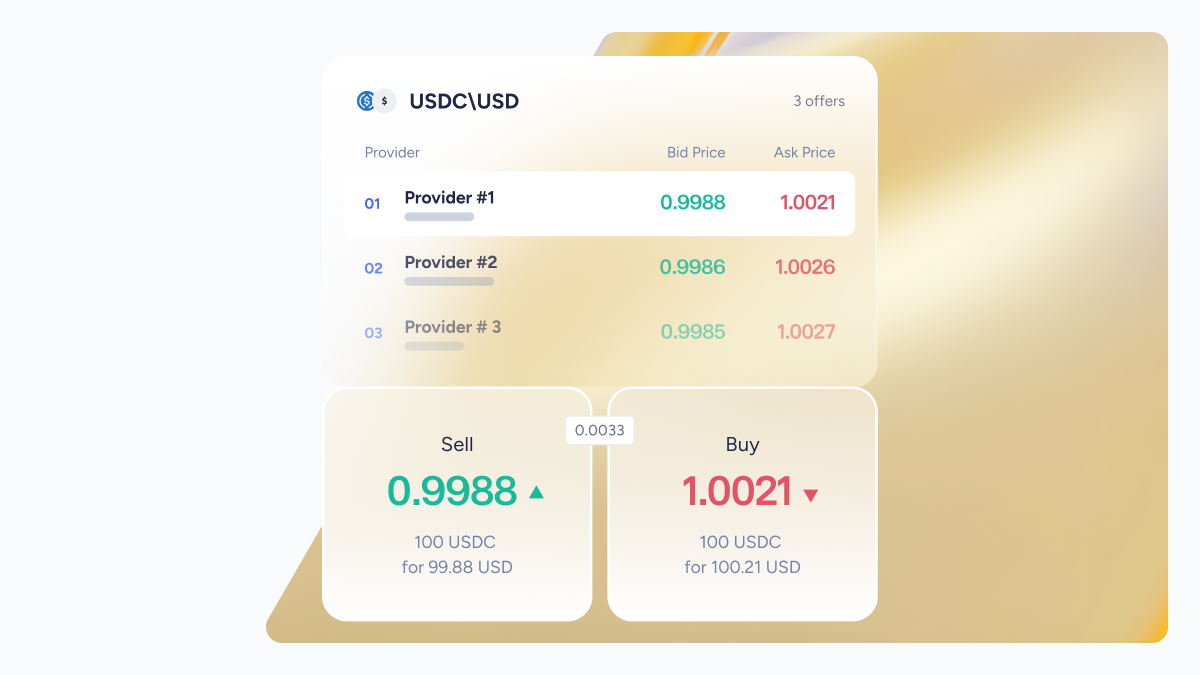
Native stablecoins are often described as the “liquidity centers” within a platform, but liquidity does not arise automatically just by issuing a symbol. Users must be willing to exchange USDC for USTX, market makers must be willing to provide quotes, and merchants or asset markets must be willing to accept them. Additionally, the issuance and redemption processes must continue to function smoothly under pressure. tx claims that its goal is to pool funds within the ecosystem and reduce the dispersion caused by multiple chains and assets. This is a understandable business design, yet its effectiveness still needs to be proven through actual trading volume, price spreads, and redemption records.
For potential users, what is most important to check is not whether USTX states "one to one," but rather at what price redemption is possible, how long the redemption process will take, what fees are involved, and what limits there are on amounts that can be redeemed. After USDC is used for cross-chain storage, it is crucial to determine who will bear the risks associated with bridging and contracts. The existence of four input networks means a wider range of entry points, but it also implies that protection against faulty networks, fake tokens, and abnormal transactions becomes even more important. Wallets should clearly display the supported contract addresses and user qualifications; they should not allow the list of networks mentioned in press releases to become a guide for users to guess on their own when making transfers.
The platform should also disclose the settlement details regarding transactions between stablecoins and RWA. For example, whether an asset purchase must first be converted into USTX, when it can be redeemed after sale, and how the balance of USTX will be handled when the platform suspends trading of a certain asset. These details directly determine whether users will face short-term payment frictions or longer-term risks associated with the issuer and the platform. The press release does not explain all these mechanisms in detail; therefore, the media should consider them as issues to be verified later on and should not assume a complete service commitment based on the concept of a "unified account."
Explanation of the launch of USTX; The RWA platform begins to compete in the currency layer of the transaction process: whoever controls the balance and redemption relationship within the wallets will have an easier time integrating subsequent products into the same interface. At the same time, the new stablecoins also bring to the forefront issues such as reserve transparency, issuance responsibility, cross-chain access, and compliance boundaries. Today, it can be confirmed that tx and Brale have announced and begun to launch USTX in phases, with the first batch of USDC being deployed on four networks; other networks and the broader RWA market are still part of subsequent plans. To determine whether this attempt is successful, we need to wait for real-world usability, reserve disclosure, redemption performance, and continuous transaction data, rather than relying solely on the product vision at the time of release.
Source: tx / TX Labs Official Press Release, October 20, 2026 https :// www.globenewswire.com / news-release /2026/10/20/3384548/0/ en / tx-launches-ustx-a-native-stablecoin-built-to-power-its-rwa-ecosystem.html